
Compare models
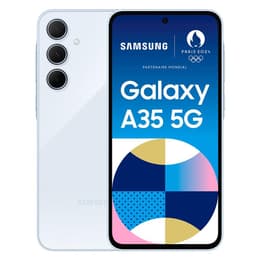
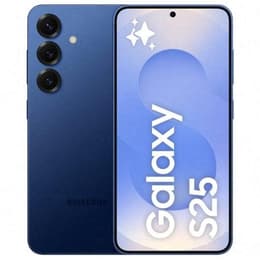
Galaxy A35 Vs Galaxy S25
- 1-year minimum warranty
- Free delivery on all items
- Free 30-day returns
Differences at a glance
The Samsung Galaxy A35, released in March 2024, and the Samsung Galaxy S25, launched in February 2025, represent distinct tiers within Samsung's smartphone lineup. Both devices operate on the Android platform, offering a familiar user experience. The primary distinctions lie in their performance capabilities, camera systems, and overall build quality, catering to different user priorities and expectations.
Available Models
Colour
Storage (GB)
Scores
Durability
When considering the long-term usability of these devices, their release timelines and software support policies are key factors.
- Software Longevity: The Galaxy A35 is designed to receive four generations of Android operating system upgrades and five years of security updates, extending its support until approximately 2029. In contrast, the Galaxy S25 benefits from Samsung's extended commitment, offering seven generations of OS upgrades and seven years of security updates, ensuring support well into 2032.
- Physical Durability: The Galaxy A35 features Gorilla Glass Victus+ on both its front and back, complemented by a plastic frame, and carries an IP67 rating for dust and water resistance, meaning it can withstand submersion in up to one meter of fresh water for 30 minutes. The Galaxy S25, as a flagship model, is expected to incorporate more advanced protective materials, likely an Armor Aluminum frame and a newer generation of Gorilla Glass, alongside a higher IP68 rating, offering enhanced resistance to dust and water.
- Repairability: While specific repairability scores can vary, the A-series typically offers a more straightforward repair process due to its construction, whereas the S-series, with its more complex internal design and premium materials, may present greater challenges for repairs.
Year of Release
2024
2025
Compatible with latest Update
Yes
Yes
OS
Android
Android
Foldable
No
No
Performance
The performance of the Galaxy A35 and Galaxy S25 reflects their respective positions in the market, with notable differences in processing power and multitasking efficiency.
- Processing Power: The Galaxy A35 is equipped with a processor that capably handles everyday tasks, including web browsing, social media, and moderate gaming, providing a smooth and responsive experience for general use. The Galaxy S25, featuring a next-generation flagship processor, delivers significantly higher performance, excelling in demanding applications, intensive gaming, and complex AI-driven tasks with seamless fluidity.
- Multitasking and Storage: The Galaxy A35 offers configurations with 6GB or 8GB of RAM and 128GB or 256GB of internal storage, with the added flexibility of expandable storage via a microSD card. The Galaxy S25 typically comes with 12GB of RAM across all models and offers larger internal storage options, ranging from 128GB to 512GB, without microSD expansion, facilitating more robust multitasking and storage for extensive media and applications.
- Battery Endurance: The Galaxy A35 houses a substantial 5000 mAh battery, often providing a full day of heavy use and potentially up to two days with lighter usage. The Galaxy S25, while optimized for efficiency, typically features a smaller battery capacity, which, combined with its more powerful components, generally translates to a full day of use for most users, but may require more frequent charging under heavy loads.
Screen quality
The visual experience on both devices is delivered through high-quality displays, though with distinct characteristics tailored to their design and intended use.
- Display Technology and Clarity: The Galaxy A35 features a 6.6-inch Super AMOLED display, offering vibrant colors and deep blacks with a Full HD+ resolution (1080 x 2340 pixels), providing a clear and engaging viewing experience for media consumption and daily interactions. The Galaxy S25 comes with a 6.2-inch Dynamic AMOLED 2X display, also with Full HD+ resolution, but typically offers enhanced color accuracy and contrast, characteristic of flagship panels.
- Brightness and Smoothness: Both phones feature a 120Hz refresh rate for smooth scrolling and responsive interactions. The Galaxy A35 achieves a peak brightness of 1000 nits in High Brightness Mode, ensuring good visibility outdoors. The Galaxy S25 elevates this with an adaptive 1-120Hz refresh rate and a significantly higher peak brightness of 2600 nits, providing superior outdoor visibility and a more dynamic visual experience.
- Screen Size and Form Factor: The Galaxy A35 offers a larger 6.6-inch screen, which is well-suited for users who prefer more expansive screen real estate for content viewing and productivity. The Galaxy S25, with its 6.2-inch display, provides a more compact and often more manageable form factor, appealing to users who prioritize single-handed use and portability.
Resolution
1080 x 2340
1080x2340
Audiovisual
The camera systems on the Galaxy A35 and Galaxy S25 are designed to capture different levels of detail and offer varying photographic capabilities.
- Rear Camera Versatility: The Galaxy A35 features a triple-camera setup with a 50-megapixel main sensor with optical image stabilization, an 8-megapixel ultrawide lens, and a 5-megapixel macro lens. It performs well in good lighting conditions, producing images with vibrant, slightly saturated colors. The Galaxy S25 offers a more advanced triple-camera system, typically including a 50-megapixel main sensor with enhanced optical image stabilization, a 12-megapixel ultrawide lens, and a 10-megapixel telephoto lens with 3x optical zoom, providing greater versatility and detail across various shooting scenarios.
- Low-Light and Video Performance: While the Galaxy A35's main camera performs adequately in low light, more expensive phones generally offer superior results. It supports 4K video recording at 30 frames per second. The Galaxy S25 excels in low-light photography due to larger sensors and advanced image processing, and it supports higher-resolution video recording, including 4K at 60 frames per second and 8K at 30 frames per second, along with more sophisticated video features.
- Front Camera and Audio: Both devices feature capable front-facing cameras, with the Galaxy A35 offering a 13-megapixel sensor and the Galaxy S25 a 12-megapixel sensor, both capable of 4K video recording. Both phones include stereo speakers, providing a good audio experience for media consumption, though the S25 typically offers a more refined sound profile.
Miscellaneous
Beyond core specifications, several practical elements differentiate the user experience between the Galaxy A35 and Galaxy S25.
- Connectivity and Ports: The Galaxy A35 supports 5G connectivity, Wi-Fi 6, and Bluetooth 5.3, and features a USB-C 2.0 port for charging and data transfer. The Galaxy S25 offers advanced connectivity with 5G, likely Wi-Fi 7, and Bluetooth 5.4, alongside a faster USB-C 3.2 (or newer) port, enabling quicker data transfers and more robust wireless connections.
- Biometric Security: The Galaxy A35 incorporates an optical under-display fingerprint sensor for secure unlocking, which is generally responsive. The Galaxy S25 typically features an ultrasonic under-display fingerprint sensor, which offers enhanced security and faster, more reliable recognition.
- Design and Handling: The Galaxy A35 has dimensions of 161.7 x 78.0 x 8.2 mm and weighs 209g, offering a solid in-hand feel. The Galaxy S25 is designed to be more compact and lighter, with dimensions around 146.9 x 70.4 x 7.2 mm and a weight of approximately 163g, making it easier to handle and carry.
Weight
209 g
162 g
Screen size (in)
6.6
6.2
Mobile network
5G
5G
SIM card
Dual Physical SIM
Physical SIM + eSIM
Carrier compatibility
Unlocked
Unlocked
Connector
USB-C
USB-C
What the community thinks
The Samsung Galaxy A35 and Galaxy S25 cater to different segments of the smartphone market, each offering a compelling set of features for their respective users. User feedback for the Galaxy A35 often highlights its impressive display, reliable camera performance in good lighting, and long-lasting battery as significant advantages. Some common observations include its capable performance for daily tasks, though it may not be ideal for intensive gaming, and the presence of noticeable bezels around the display.
For the Galaxy S25, user sentiment typically praises its top-tier performance, advanced camera system with enhanced low-light capabilities, and the extended software support policy, which ensures longevity. While specific criticisms are less established given its recent release, flagship devices often face scrutiny regarding battery life under extreme usage and the absence of expandable storage. Consensus opinions generally position the S25 as a device for users who demand the latest technology and premium features.
Users prioritizing a large, vibrant display, excellent battery life, and a capable camera for everyday photography will find the Galaxy A35 well-suited to their needs. It offers a balanced experience for general smartphone use. Conversely, users who require the highest levels of performance for demanding applications, advanced photography and videography features, and the longest possible software support will lean towards the Galaxy S25. It is designed for those who seek a premium, cutting-edge smartphone experience.
Both models, whether new or as quality-assured refurbished options, provide a pathway to owning a Samsung Galaxy device that aligns with individual preferences and usage patterns.