
Galaxy A14 Vs Galaxy A34

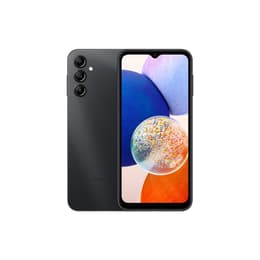
Galaxy A14
Galaxy A14
Starting at

Refurbished price:£82.00

Versus £269.00 new

See options
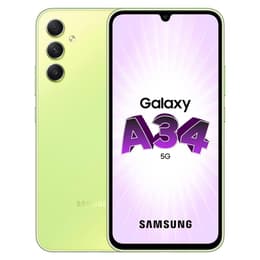
Galaxy A34
Galaxy A34
Starting at

Refurbished price:£105.00

Versus £399.00 new

See options

Ratings

The Samsung Galaxy A14 (released January 2023) and the Samsung Galaxy A34 (released March 2023) are both Android smartphones from Samsung's A series, offering different levels of features and performance. While they share the same operating system, the Galaxy A34 introduces a more advanced display and a more capable processor, setting it apart from its predecessor.

Scores

Durability

When considering the practical lifespan of these devices, several factors come into play, including their release timelines, software support, and physical durability.

  • Release Timeline: The Galaxy A14 was released in January 2023, while the Galaxy A34 followed shortly after in March 2023. This means the A34 will likely receive software updates for a slightly longer period.
  • OS Support: The Galaxy A34 is expected to receive four major OS upgrades and five years of security updates, extending its software longevity until approximately 2027. Both devices initially launched with Android 13 and One UI 5.0/5.1. The Galaxy A14 is also expected to receive similar levels of software support, though its update cycle will conclude a few months earlier due to its earlier release.
  • Repairability: Both the Galaxy A14 and Galaxy A34 have received a repairability score of 8 out of 10, indicating a relatively straightforward repair process. The Galaxy A14 is particularly noted for its battery, which uses an adhesive pull tab, simplifying battery replacements.

Year of Release

2023

2023

Compatible with latest Update

No

Yes

OS

Android

Android

Foldable

No

No

Performance

The performance of a smartphone significantly impacts daily usage, from app responsiveness to handling demanding tasks. Both devices offer varying levels of capability in this regard.

  • Processor Capabilities: The Galaxy A34 features a current-generation processor that delivers noticeably smoother performance for everyday tasks and handles more demanding applications with greater ease. Users report that the A34 exhibits significantly better performance, feeling more responsive when loading tasks compared to the A14. The Galaxy A14, while capable for basic functions, may feel somewhat slower or sluggish with heavier use.
  • Storage and RAM: The Galaxy A14 is available with 4GB, 6GB, or 8GB of RAM and 64GB or 128GB of internal storage. The Galaxy A34 offers configurations with 6GB or 8GB of RAM and 128GB or 256GB of internal storage. Both models support expandable storage via a microSD card.
  • Battery Behavior: Both smartphones are equipped with a 5000mAh battery, designed to provide power for a full day of moderate use. The Galaxy A34 supports faster charging at 25W, while the Galaxy A14 supports 15W charging. This means the A34 can recharge more quickly.

Memory (GB)

4 GB

6 GB

Screen quality

The display is a primary interface for any smartphone, and the quality of the screen can greatly influence the user experience.

  • Display Technology and Clarity: The Galaxy A34 features a 6.6-inch Super AMOLED display, which provides deep blacks, vibrant colors, and wider viewing angles. The Galaxy A14, on the other hand, uses a 6.6-inch PLS LCD display. While the A14's display offers clear visuals with its Full HD+ resolution, the A34's Super AMOLED technology generally provides a more visually engaging experience.
  • Refresh Rate and Brightness: The Galaxy A34 boasts a 120Hz refresh rate, contributing to smoother scrolling and more fluid animations. The Galaxy A14 5G model offers a 90Hz refresh rate, while the 4G variant has a 60Hz refresh rate. The A34's display also achieves higher brightness levels, which can improve visibility in bright outdoor conditions.
  • Screen Size and Viewing: Both devices feature a 6.6-inch screen, offering ample space for media consumption and general use. The A34 has slightly slimmer bezels and a smaller notch compared to the A14, contributing to a more expansive viewing area.

Resolution

1080 x 2408

1080 x 2340

Screen type

PLS LCD

Super AMOLED

Audiovisual

For many users, the camera system is a crucial component of a smartphone, influencing how they capture and share moments.

  • Rear Camera System: The Galaxy A34 is equipped with a triple camera setup, including a 48-megapixel main sensor with optical image stabilization (OIS), an 8-megapixel ultrawide lens, and a 5-megapixel macro lens. The Galaxy A14 also features a triple camera system, with a 50-megapixel main sensor, a 2-megapixel macro lens, and a 2-megapixel depth sensor. The A34's inclusion of an ultrawide camera and OIS on its main sensor provides more versatility and stability in photography.
  • Photography Performance: The Galaxy A34 generally captures better photos, especially benefiting from OIS for clearer images in various conditions. It also offers more advanced camera features, including the ability to record video in 4K resolution at 30 frames per second. The Galaxy A14's camera performs well in good lighting but lacks OIS and is limited to 1080p video recording.
  • Front Camera and Audio: Both devices feature a 13-megapixel front-facing camera for selfies and video calls. The Galaxy A34 includes stereo speakers, providing a more immersive audio experience for media consumption, while the Galaxy A14 has a single speaker.

Main camera

50 megapixels

48 megapixels

Front camera

13 megapixels

13 megapixels

Miscellaneous

Beyond the core specifications, several practical elements contribute to the overall user experience and device suitability.

  • Connectivity and Ports: Both the 5G variants of the Galaxy A14 and A34 support 5G connectivity, along with standard Wi-Fi and Bluetooth. A notable difference is the inclusion of a 3.5mm headphone jack on the Galaxy A14, which is absent on the Galaxy A34. Both use a USB-C port for charging and data transfer.
  • Durability Features: The Galaxy A34 offers IP67 water and dust resistance, meaning it can withstand immersion in up to one meter of fresh water for 30 minutes. The Galaxy A14 does not carry an official IP rating for water and dust resistance.
  • Design and Biometrics: The Galaxy A34 features a more refined design with a glass-like finish on its back and slimmer bezels, contributing to a more premium feel. It also incorporates an in-display fingerprint sensor. The Galaxy A14 has an all-plastic body and a fingerprint sensor integrated into the power button. Both offer face unlock as an additional security option.

Weight

201 g

199 g

Screen size (in)

6.6

6.6

Mobile network

4G

5G

SIM card

Dual Physical SIM

Dual Physical SIM

Carrier compatibility

Unlocked

Unlocked

User feedback for the Galaxy A14 often highlights its solid battery life and affordability as positive aspects for basic usage. However, common criticisms include occasional sluggishness, particularly with heavier apps, and some users have expressed concerns about microphone quality and camera performance in challenging conditions. Restart times have also been noted as lengthy by some users.

The Galaxy A34 generally receives praise for its vibrant display, smoother performance, and more capable camera system, with users often considering it a significant upgrade for a more fluid experience. Its IP67 rating and stereo speakers are also frequently appreciated. Some users consider the A34 the minimum for a good smartphone experience.

Users prioritizing a more responsive experience, a superior display for media consumption, and enhanced camera capabilities, including ultrawide shots and 4K video recording, may find the Galaxy A34 better suited to their needs. Its water and dust resistance also adds a layer of durability for those who need it. Conversely, users who primarily engage in basic tasks like browsing, messaging, and casual photography, and who value the presence of a headphone jack, might find the Galaxy A14 to be a practical choice. Both devices are available as quality-assured refurbished options, providing an eco-friendly alternative for consumers.


See all articles

Our recent comparisons