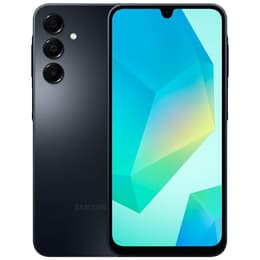

Galaxy A16 Vs Google Pixel 8a

Galaxy A16
Galaxy A16
Starting at

Refurbished price:£100.62

Versus £206.96 new

See options
Google Pixel 8a
Google Pixel 8a
Starting at

Refurbished price:£214.00

Versus £467.97 new

See options

Ratings

The Samsung Galaxy A16 and the Google Pixel 8A are both Android smartphones released to cater to users seeking capable devices for everyday use. The Galaxy A16, launched in late 2024 and early 2025, focuses on a large display and extended software support, while the Google Pixel 8A, released in May 2024, emphasizes advanced camera capabilities and a streamlined software experience. Both devices run on the Android operating system, offering distinct approaches to user interaction and feature sets.

Scores

Durability

When considering the long-term usability of these devices, their release timelines and software support policies are key factors.

  • Software Support: The Google Pixel 8A offers an extensive seven years of operating system and security updates from its May 2024 release, providing a longer period of software longevity. The Samsung Galaxy A16, released in late 2024 and early 2025, comes with a commitment of six years of software updates, extending its support until October 2030.
  • Physical Durability: The Pixel 8A features an IP67 rating for water and dust resistance, indicating it can withstand submersion in up to one meter of water for 30 minutes, and uses Gorilla Glass 3 for screen protection. The Galaxy A16 has an IP54 rating, offering protection against dust and moderate splashing. Its construction includes a plastic frame and a material Samsung calls 'Glastic' on the front and back, designed to mimic glass.
  • Expected Lifespan: Both phones are designed for a practical lifespan that aligns with their respective software support windows. The Pixel 8A's longer update commitment suggests a slightly extended period of optimal software functionality. User reports for the Galaxy A16 indicate that while the build feels sturdy, some users have raised concerns about potential long-term durability of the plastic frame.

Year of Release

2024

2024

Compatible with latest Update

Yes

Yes

OS

Android

Android

Foldable

No

No

Performance

The performance of the Galaxy A16 and Pixel 8A varies significantly, impacting how smoothly they handle daily tasks and more demanding applications.

  • Processing Power: The Google Pixel 8A is equipped with a current-generation processor, which allows it to handle demanding applications, multitasking, and graphic-intensive games with notable smoothness. The Samsung Galaxy A16 utilizes a mid-range processor, which is suitable for everyday tasks like browsing and social media, but some users have reported occasional stutters and slowdowns, particularly with heavier use or multitasking.
  • Multitasking and Storage: The Pixel 8A typically comes with 8GB of RAM, contributing to a responsive experience when switching between multiple applications. It offers storage options of 128GB or 256GB, though it does not support expandable storage. The Galaxy A16 is available with 4GB, 6GB, or 8GB of RAM, and 128GB or 256GB of internal storage, with the added flexibility of microSD card support for storage expansion up to 1.5TB.
  • Real-World Responsiveness: Users generally find the Pixel 8A to be consistently fast and responsive, with apps opening quickly and games running without significant issues. The Galaxy A16 provides a capable experience for basic usage, but its performance may feel less fluid when navigating the interface or running several applications simultaneously, especially on models with less RAM.

Memory (GB)

4 GB

8 GB

Screen quality

Both devices offer vibrant displays, but there are distinctions in their technology, brightness, and overall viewing experience.

  • Display Technology and Clarity: The Samsung Galaxy A16 features a 6.7-inch Super AMOLED display with a Full HD+ resolution, providing deep blacks and vibrant colors. The Google Pixel 8A has a slightly smaller 6.1-inch OLED display, also with a Full HD+ resolution, known for its sharp images and rich color reproduction.
  • Brightness and Refresh Rate: The Pixel 8A's screen can reach a peak brightness of up to 2,000 nits, making it highly visible even in bright outdoor conditions, and supports an adaptive refresh rate of 60-120Hz for smooth scrolling and animations. The Galaxy A16 offers a peak brightness of 800 nits and a fixed 90Hz refresh rate, which provides a smoother experience than standard 60Hz displays but is less fluid than the Pixel 8A's adaptive 120Hz. The Galaxy A16 also lacks HDR support.
  • Viewing Experience: The larger screen of the Galaxy A16 may appeal to users who prioritize screen real estate for media consumption or productivity. However, the Pixel 8A's higher peak brightness and adaptive refresh rate contribute to a more premium and versatile viewing experience, particularly outdoors. The Pixel 8A does have noticeably thicker bezels compared to some other devices in its class.

Resolution

1080 x 2340

1080 x 2400

Screen type

Super AMOLED

OLED

Audiovisual

The camera systems on the Galaxy A16 and Pixel 8A offer different strengths, particularly in image processing and feature sets.

  • Rear Camera System: The Google Pixel 8A features a 64-megapixel main camera with optical image stabilization (OIS) and a 13-megapixel ultrawide lens. It is highly regarded for its computational photography, producing consistently good images with accurate colors and strong low-light performance. The Samsung Galaxy A16 includes a 50-megapixel main sensor, a 5-megapixel ultrawide camera, and a 2-megapixel macro lens. Its main camera performs well in good lighting conditions, but the ultrawide and macro lenses are considered more basic.
  • Video Recording and Features: The Pixel 8A offers advanced AI-powered photo and video editing features, enhancing the overall creative possibilities. It delivers good video quality, including in low-light scenarios. The Galaxy A16 supports video recording up to 1080p at 30 frames per second, with some reports of 4K capability but often with jittery results due to the lack of OIS.
  • Front Camera: Both devices feature a 13-megapixel front-facing camera, capable of capturing clear selfies. The Pixel 8A's front camera benefits from Google's image processing, contributing to detailed and well-exposed self-portraits.

Main camera

50 megapixels

64 megapixels

Front camera

13 megapixels

13 megapixels

Miscellaneous

Beyond the core specifications, several practical elements differentiate the user experience of these two smartphones.

  • Connectivity and Ports: Both the Galaxy A16 and Pixel 8A support 5G connectivity, ensuring access to faster mobile networks. The Pixel 8A includes Wi-Fi 6E for enhanced wireless speeds, while the Galaxy A16 supports Wi-Fi 5. Both devices utilize a USB-C port for charging and data transfer, but neither includes a 3.5mm headphone jack.
  • Biometrics and Sensors: The Pixel 8A features an under-display fingerprint sensor and supports face unlock for secure authentication. The Galaxy A16 incorporates a side-mounted fingerprint sensor, which some users find reliable but slightly slower in response.
  • Design and Handling: The Pixel 8A has a compact design with a matte finish on its plastic back and rounded edges, contributing to a comfortable in-hand feel. The Galaxy A16 is a larger device with a 6.7-inch screen, featuring a plastic frame and a 'Glastic' back. Its larger size and thicker bezels contribute to a more substantial feel.

Weight

200 g

188 g

Screen size (in)

6.7

6.1

Mobile network

4G

5G

SIM card

Dual Physical SIM

Physical SIM + eSIM

Carrier compatibility

Unlocked

Unlocked

User feedback on the Google Pixel 8A frequently praises its exceptional camera performance, often noting its ability to capture high-quality images in various conditions, including low light. Its long software support commitment and smooth performance, attributed to its powerful processor, are also commonly highlighted as significant advantages. Some users, however, have noted the presence of noticeable bezels around the display.

For the Samsung Galaxy A16, common praise points include its large, vibrant Super AMOLED display and its extended software update policy, which is a notable improvement for its series. Criticisms often revolve around its performance, with some users experiencing stutters and slowdowns during everyday use, particularly with the base RAM configurations. The camera system, while capable for basic shots, is sometimes described as less impressive, especially the ultrawide and macro lenses.

Users prioritizing a consistently smooth software experience, advanced computational photography, and the longest possible software support will find the Google Pixel 8A well-suited to their needs. Its robust performance makes it a strong contender for those who engage in demanding applications or mobile gaming. Conversely, users who value a larger display for media consumption, expandable storage, and a solid battery life may lean toward the Samsung Galaxy A16. It offers a capable experience for general use, especially for those who do not require top-tier processing power or advanced camera features.

Both devices, whether new or as quality-assured refurbished options, provide a pathway to making informed and sustainable choices in the electronics market.


See all articles

Our recent comparisons