
Galaxy A14 5G Vs iPhone 16 Plus

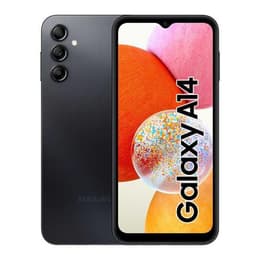
Galaxy A14 5G
Galaxy A14 5G
Starting at

Refurbished price:£80.00

Versus £289.00 new

See options
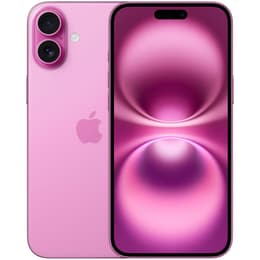
iPhone 16 Plus
iPhone 16 Plus
Starting at

Refurbished price:£503.46

Versus £799.00 new

See options

Ratings

The Samsung Galaxy A14 5G, released in January 2023, and the Apple iPhone 16 Plus, launched in September 2024, represent distinct approaches to smartphone design and functionality. While both devices offer large displays and robust battery capacities, they cater to different user ecosystems with the Galaxy A14 5G running on Android and the iPhone 16 Plus operating on iOS. Key differentiators lie in their display technology, processing power, and advanced camera capabilities.

Scores

Durability

When considering the long-term usability of a smartphone, factors like software support and physical resilience are important.

  • Release Timeline and Software Support: The Galaxy A14 5G, released in early 2023, typically receives major Android OS updates for approximately two to three years and security updates for four years from its launch. In contrast, the iPhone 16 Plus, launched in late 2024, benefits from Apple's extended software support, with major iOS updates expected for five to seven years and security patches often extending beyond that, potentially up to a decade. This difference means the iPhone 16 Plus will likely receive new features and security enhancements for a significantly longer period.
  • Physical Durability: The iPhone 16 Plus features a Ceramic Shield front cover and an aluminum design with a color-infused glass back, contributing to its overall resilience. It also boasts an IP68 rating for water and dust resistance, offering protection against immersion. The Galaxy A14 5G, constructed with a plastic back and frame, provides a solid in-hand feel but does not carry an official IP rating for water or dust resistance.
  • Repairability: While specific repairability scores can vary, Apple generally designs its devices with a focus on integrated components, which can sometimes make repairs more complex. Samsung's A-series devices often offer a more straightforward internal layout, though official repairability scores for both models would provide a more precise comparison.

Year of Release

2023

2024

Compatible with latest Update

Yes

Yes

Foldable

No

No

Performance

The performance of a smartphone impacts daily tasks, from app usage to multitasking and gaming.

  • Processing Power: The iPhone 16 Plus is equipped with Apple's A18 chip, which delivers substantial processing power, enabling smooth operation for demanding applications, complex multitasking, and graphics-intensive gaming. Users report that the device handles tasks quickly and without noticeable lag. The Galaxy A14 5G utilizes either a MediaTek Dimensity 700 or Exynos 1330 processor, providing efficient performance for everyday use and light to medium gaming.
  • System Responsiveness and Multitasking: The iPhone 16 Plus, with its advanced processor and optimized iOS, offers a highly responsive user experience, ensuring apps open quickly and transitions are fluid. Its ample RAM (typically 8GB) supports seamless multitasking. The Galaxy A14 5G, available with 4GB, 6GB, or 8GB of RAM, provides solid performance for typical smartphone activities, though heavy multitasking or very demanding applications might show a difference compared to the iPhone.
  • Storage Options: The iPhone 16 Plus comes with internal storage options of 128GB, 256GB, and 512GB, without the possibility of expansion. The Galaxy A14 5G offers 64GB or 128GB of internal storage, with the added flexibility of expandable storage via a microSD card, supporting up to 1TB.

Memory (GB)

4 GB

8 GB

Screen quality

The display is a primary interface for smartphone interaction, influencing viewing pleasure and usability.

  • Display Technology and Clarity: The iPhone 16 Plus features a 6.7-inch Super Retina XDR OLED display, offering deep blacks, vibrant colors, and high contrast. Its resolution of 2796x1290 pixels at 460 pixels per inch (ppi) ensures sharp and detailed visuals. The Galaxy A14 5G has a 6.6-inch PLS LCD display with a 1080 x 2408 pixel (FHD+) resolution, resulting in approximately 400 ppi. This display provides clear visuals, though it may not match the contrast and color depth of an OLED panel.
  • Brightness and Refresh Rate: The iPhone 16 Plus achieves a typical brightness of 1000 nits and a peak outdoor brightness of 2000 nits, making it highly visible even in bright sunlight. It maintains a standard 60Hz refresh rate. The Galaxy A14 5G offers a 90Hz refresh rate, which provides a smoother scrolling experience compared to a 60Hz display, and its brightness is suitable for general use.
  • Screen Features: The iPhone 16 Plus includes features like Dynamic Island, HDR support, True Tone for adaptive white balance, and Wide Color (P3) for accurate color reproduction. Both devices offer large screen sizes that are well-suited for media consumption and general browsing.

Resolution

1080 x 2408

1290 x 2796

Screen type

PLS LCD

Super Retina XDR OLED

Audiovisual

Camera capabilities are a significant consideration for many users, impacting the quality of photos and videos captured.

  • Rear Camera System: The iPhone 16 Plus is equipped with an advanced dual-camera system, featuring a 48MP Fusion Main camera with a wide aperture and sensor-shift optical image stabilization (OIS), capable of 2x optical quality telephoto zoom. It also includes a 12MP Ultra Wide camera. The Galaxy A14 5G features a triple rear camera setup with a 50MP main sensor, a 2MP macro lens, and a 2MP depth sensor.
  • Photography Performance: The iPhone 16 Plus benefits from computational photography features like Photonic Engine, Deep Fusion, and Smart HDR 5, enhancing image quality across various conditions, including improved low-light performance for its ultrawide camera. The Galaxy A14 5G performs well in good lighting conditions, capturing sharp and crisp photos, but its performance in low-light environments is less robust.
  • Video Recording and Additional Features: The iPhone 16 Plus supports 4K Dolby Vision video recording at up to 60 frames per second (fps), Cinematic mode, Action mode, and spatial video recording for immersive viewing. Its front camera is a 12MP sensor with autofocus. The Galaxy A14 5G records video at up to 1080p at 30fps and has a 13MP front camera. The iPhone 16 Plus also introduces a Camera Control button for quick access to camera settings.

Main camera

50 megapixels

48 megapixels

Front camera

13 megapixels

12 megapixels

Miscellaneous

Beyond core features, several practical elements contribute to the overall user experience of a smartphone.

  • Connectivity and Ports: Both devices support 5G connectivity. The iPhone 16 Plus features Wi-Fi 7 and Bluetooth 5.3, along with a USB-C port and satellite connectivity for emergency services. The Galaxy A14 5G supports Wi-Fi 802.11 a/b/g/n/ac (dual-band) and Bluetooth 5.2, also featuring a USB-C port. Notably, the Galaxy A14 5G retains a 3.5mm headphone jack, which is absent on the iPhone 16 Plus.
  • Biometric Security and User Interface: The iPhone 16 Plus relies on Face ID for secure facial recognition. It also incorporates an Action Button, customizable for various functions, and the Dynamic Island for interactive alerts and activities. The Galaxy A14 5G features a side-mounted fingerprint sensor for biometric authentication.
  • Physical Characteristics: The iPhone 16 Plus measures 160.9mm in height, 77.8mm in width, and 7.80mm in depth, weighing 199 grams. The Galaxy A14 5G is slightly larger and heavier at 167.7mm x 78mm x 9.1mm and 204 grams. Both are large devices that often require two-handed use.

Weight

201 g

199 g

Screen size (in)

6.6

6.7

Mobile network

5G

5G

SIM card

Dual Physical SIM

Physical SIM + eSIM

Carrier compatibility

Unlocked

Unlocked

Connector

USB-C + Jack 3.5mm

USB-C (USB 2)

User feedback for the iPhone 16 Plus often highlights its exceptional battery life, with many reporting it can last well into a second day of use, and its powerful processor that ensures smooth performance across all applications. Some users note that while the display is vibrant, the 60Hz refresh rate is a noticeable difference compared to higher refresh rate screens found on some other devices. The camera system is generally praised for its quality, especially the improved low-light performance and new features like spatial video. For the Galaxy A14 5G, users appreciate its large display, reliable everyday performance, and the inclusion of a headphone jack and expandable storage. Common criticisms sometimes point to its less impressive low-light camera performance and the absence of an official water resistance rating.

Users prioritizing a long-lasting device with extensive software support, a highly capable camera system, and top-tier processing power for demanding tasks will find the iPhone 16 Plus well-suited to their needs. Its robust build and advanced features cater to those seeking a premium smartphone experience. Conversely, users who value expandable storage, a 3.5mm headphone jack, and a smoother scrolling experience from a 90Hz display, while still getting reliable performance for daily tasks, may lean toward the Galaxy A14 5G. It offers a practical and functional experience within the Android ecosystem.

For those considering either device, exploring quality-assured refurbished options can be an eco-friendly alternative to purchasing new, providing access to these technologies in a sustainable way.

See all articles

Our recent comparisons