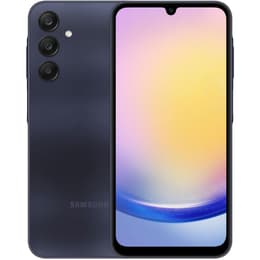
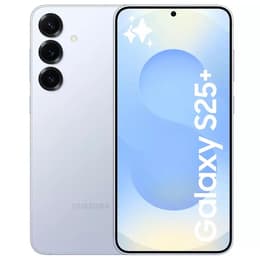

Galaxy A25 Vs Galaxy S25+

Galaxy A25
Galaxy A25
Starting at

Refurbished price:£121.00

Versus £272.58 new

See options
Galaxy S25+
Galaxy S25+
Starting at

Refurbished price:£550.00

Versus £958.39 new

See options

Ratings

The Samsung Galaxy A25 (released in late 2023) and the Samsung Galaxy S25 Plus (released in early 2025) are both Android smartphones from Samsung, yet they cater to different user expectations. The Galaxy A25 is designed for everyday functionality, while the Galaxy S25 Plus offers a more advanced experience with enhanced performance, camera capabilities, and a premium build. Both devices run on the Android operating system, providing a familiar user interface.

Scores

Durability

When considering the long-term usability of these devices, their release timelines and software support policies are key factors.

  • Software Longevity: The Galaxy A25, released in December 2023, is expected to receive four years of operating system updates and five years of security updates. In contrast, the Galaxy S25 Plus, launched in February 2025, benefits from Samsung's commitment to seven years of both OS and security updates, offering a significantly longer period of official software support. [3, 4, 11, 18]
  • Physical Durability: The Galaxy A25 features a plastic back and frame with Gorilla Glass 5 protecting its display, along with an IP67 rating for dust and water resistance. [2, 10, 21, 22] The Galaxy S25 Plus presents a more robust construction, utilizing an aluminum frame and Gorilla Glass Victus 2 on both the front and back, coupled with a higher IP68 rating for enhanced protection against dust and water immersion. [3, 8, 15, 23]
  • Expected Lifespan: Users prioritizing the longest possible software support and a more resilient physical build will find the Galaxy S25 Plus better suited for extended use. The Galaxy A25 still offers a respectable support period, making it a viable option for those who typically upgrade their devices within a few years.

Year of Release

2023

2025

OS

Android

Android

Foldable

No

No

Performance

The performance capabilities of the Galaxy A25 and Galaxy S25 Plus differ significantly, impacting how smoothly they handle various tasks.

  • Processing Power: The Galaxy A25 is equipped with an Exynos 1280 processor, which capably manages daily applications and general multitasking. Users will experience smooth navigation and app launches for common activities. [1, 10] The Galaxy S25 Plus, powered by the Snapdragon 8 Elite processor, delivers a substantial leap in performance, ensuring demanding applications, intensive gaming, and complex multitasking run with exceptional fluidity and responsiveness. [7, 16, 18]
  • Multitasking and Storage: The Galaxy A25 typically comes with 6GB or 8GB of RAM and offers expandable storage via a microSD card, which is beneficial for users who need to store a large volume of photos or videos. [9, 10] The Galaxy S25 Plus features 12GB of RAM as standard, providing ample capacity for seamless app switching and background processes, though it does not support expandable storage. [3, 8]
  • Battery Behavior: Both devices feature large battery capacities. The Galaxy A25's 5000 mAh battery generally provides a full day of use for most users, with some reports indicating it can last longer with moderate usage. [1, 4, 21] The Galaxy S25 Plus, with its 4900 mAh battery, is noted for its excellent endurance, often lasting a day and a half on a single charge, even with its more powerful components. [18, 19, 25]

Memory (GB)

6 GB

12 GB

Screen quality

The visual experience on both smartphones is shaped by their display technologies and specifications.

  • Display Technology and Clarity: The Galaxy A25 features a 6.5-inch Super AMOLED display with a Full HD+ resolution (1080 x 2340 pixels), offering vibrant colors and deep blacks suitable for everyday viewing. [2, 4, 6] The Galaxy S25 Plus steps up with a 6.7-inch Dynamic AMOLED 2X display, providing a sharper Quad HD+ resolution (1440 x 3120 pixels) for finer detail and a more immersive visual experience. [3, 8, 23]
  • Brightness and Smoothness: The A25's screen can reach up to 1000 nits in high brightness mode, ensuring good visibility indoors and outdoors. It also boasts a 120Hz refresh rate for smooth scrolling and animations. [4, 6, 9] The S25 Plus offers significantly higher peak brightness, reaching up to 2600 nits, which greatly enhances outdoor readability and HDR content viewing. Its adaptive 1-120Hz refresh rate dynamically adjusts to content, optimizing both smoothness and power efficiency. [3, 8, 15]
  • Viewing Experience: Users who prioritize a larger, more detailed, and brighter display for media consumption, gaming, or working in varied lighting conditions will find the Galaxy S25 Plus's screen superior. The Galaxy A25 still delivers a quality AMOLED experience for its segment.

Resolution

1080 x 2340

1440x3120

Audiovisual

The camera systems on the Galaxy A25 and Galaxy S25 Plus offer different capabilities for capturing photos and videos.

  • Rear Camera Systems: The Galaxy A25 features a triple rear camera setup with a 50MP main sensor with optical image stabilization (OIS), an 8MP ultrawide lens, and a 2MP macro lens. [4, 6, 9] The Galaxy S25 Plus also has a triple rear camera system, but it includes a 50MP main sensor with OIS, a 12MP ultrawide lens, and a 10MP telephoto lens with 3x optical zoom, providing greater versatility for different shooting scenarios. [7, 18, 23]
  • Photography Performance: The A25's main camera performs well in good lighting conditions, capturing clear and detailed images, though its performance in low light and with its secondary lenses is more modest. [1, 22, 24] The S25 Plus delivers consistently strong image quality across its lenses, with punchy colors and good detail in various lighting, including improved low-light performance. The dedicated telephoto lens allows for quality zoomed-in shots. [18, 26, 30]
  • Video and Front Camera: The Galaxy A25 can record video at 4K resolution at 30 frames per second and has a 13MP front-facing camera. [6, 9, 24] The Galaxy S25 Plus offers more advanced video capabilities, including 8K recording at 30fps with its main camera, 4K at 60fps with other cameras, and features like 10-bit HDR and Log video capture. Its 12MP front camera includes autofocus, contributing to sharper selfies and video calls. [19, 31]

Miscellaneous

Beyond core specifications, several practical elements differentiate these two Samsung smartphones.

  • Connectivity and Ports: Both devices support 5G connectivity. The Galaxy A25 includes Wi-Fi 5 (802.11ac) and Bluetooth 5.3, along with a traditional 3.5mm headphone jack and a USB Type-C 2.0 port. [2, 6, 10] The Galaxy S25 Plus features more advanced connectivity with Wi-Fi 7 and Bluetooth 5.4, and a faster USB Type-C 3.1 Gen 1 port, but it omits the headphone jack. [8]
  • Biometrics and Handling: The Galaxy A25 uses a side-mounted fingerprint sensor for secure unlocking. Its dimensions are 161.0 x 76.5 x 8.3 mm and it weighs 197g. [6, 10] The Galaxy S25 Plus incorporates an in-screen ultrasonic fingerprint sensor and also supports face recognition. It has slightly more compact dimensions at 158.4 x 75.8 x 7.3 mm and weighs 190g, offering a sleeker feel. [8, 16]
  • Build Materials: The Galaxy A25 features a plastic construction for its back and frame, while the Galaxy S25 Plus utilizes an aluminum frame and glass back, contributing to a more premium in-hand feel. [2, 3, 16]

Weight

197 g

190 g

Screen size (in)

6.5

6.7

Mobile network

5G

5G

SIM card

Dual Physical SIM

Dual Physical SIM

Carrier compatibility

Unlocked

Unlocked

The Samsung Galaxy A25 and Galaxy S25 Plus serve distinct user needs, reflecting their different positions in Samsung's smartphone lineup. The Galaxy A25 is often praised by users for its bright AMOLED display, reliable battery life, and Samsung's commitment to software updates for its price point. [4, 21, 22] Some users, however, have noted that its performance can be modest for intensive tasks and that its camera system, while capable in good light, shows limitations in more challenging conditions. [1, 24]

Conversely, the Galaxy S25 Plus receives high marks for its powerful performance, exceptional display quality, and significantly longer software support. [18, 19, 23] Its advanced camera system, including a telephoto lens and enhanced video features, is a frequent highlight, though some user reviews suggest the camera hardware has seen incremental rather than revolutionary changes from previous generations. [19, 31] Battery life is consistently reported as excellent, often lasting well over a day. [25, 33]

Users prioritizing a device for everyday communication, media consumption, and light gaming, who also value a headphone jack and expandable storage, may find the Galaxy A25 a practical choice. For those who require top-tier performance for demanding applications, superior photography and videography capabilities, a more vibrant and detailed display, and a longer commitment to software updates, the Galaxy S25 Plus aligns better with those priorities. Both models, especially when considering quality-assured refurbished options, represent an eco-friendly alternative for consumers seeking reliable technology.


See all articles

Our recent comparisons