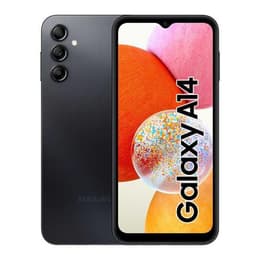


Galaxy A14 5G Vs Google Pixel 9a

Galaxy A14 5G
Galaxy A14 5G
Starting at

Refurbished price:£82.00

Versus £289.00 new

See options
Google Pixel 9a
Google Pixel 9a
Starting at

Refurbished price:£319.00

Versus £499.00 new

See options

Ratings

The Samsung Galaxy A14 5G, released in January 2023, and the Google Pixel 9A, launched in April 2025, represent distinct approaches to the smartphone experience. While both devices offer 5G connectivity and run on the Android operating system, they differ significantly in their core hardware, software philosophies, and target user experiences. The Galaxy A14 5G focuses on essential features with a large display and robust battery, whereas the Pixel 9A emphasizes advanced computational photography, a streamlined software experience, and extended software support.

Scores

Durability

The longevity of a smartphone is influenced by its release timeline, software support, and physical durability. These two devices offer different propositions in terms of their expected practical lifespan.

  • Release Timeline and Software Support: The Galaxy A14 5G, released in January 2023, typically receives two major Android OS updates and four years of security updates, meaning its software support is expected to conclude around early 2027. In contrast, the Pixel 9A, launched in April 2025, benefits from Google's commitment to seven years of both OS and security updates, extending its software relevance significantly further into the future.
  • Physical Durability: The Galaxy A14 5G features a plastic back and frame with a glass front, offering a solid build for its category, though it lacks an official IP rating for water and dust resistance. The Pixel 9A, on the other hand, incorporates a matte glass back and a brushed metal frame, and is the first A-series Pixel phone to feature an IP68 dust and water resistance rating, suggesting a higher level of protection against environmental elements.
  • Repairability and Practical Lifespan: While specific repairability scores vary, the Pixel 9A's extended software support inherently contributes to a longer practical lifespan for users who prioritize up-to-date features and security. The Galaxy A14 5G, while durable, will reach its end-of-software-support sooner, which might influence its usability for some users over time.

Year of Release

2023

2025

Compatible with latest Update

Yes

Yes

OS

Android

Android

Foldable

No

No

Performance

Performance in smartphones is about how smoothly the device handles daily tasks, from browsing and app usage to more demanding activities like gaming and multitasking. Both devices offer capable performance for their respective segments.

  • Processor Capabilities: The Galaxy A14 5G is powered by a processor designed for efficient everyday use, handling common applications and web browsing without significant delays. Users generally report it performs well for basic tasks, though some note occasional stutters with app animations. The Pixel 9A features Google's Tensor G4 chip, which is engineered to provide a responsive experience across a wider range of tasks, including more intensive applications and advanced AI features.
  • Multitasking and Storage: The Galaxy A14 5G comes with various RAM configurations and offers expandable storage via a microSD card, which can be beneficial for users with extensive media libraries. The Pixel 9A typically offers 8GB of RAM and 128GB or 256GB of internal storage, providing ample space and smooth multitasking for most users, though it lacks expandable storage.
  • Overall System Responsiveness: The Pixel 9A is designed for a fluid user experience, with its processor optimized for quick app launches and seamless transitions, especially when leveraging its integrated AI capabilities. The Galaxy A14 5G delivers a satisfactory experience for general use, but users who frequently switch between many applications or engage in graphically demanding games might notice differences in responsiveness.

Memory (GB)

4 GB

8 GB

Screen quality

The display is a primary interface for any smartphone, influencing everything from media consumption to daily interactions. The Galaxy A14 5G and Pixel 9A offer different display technologies and characteristics.

  • Display Technology and Resolution: The Galaxy A14 5G features a 6.6-inch PLS LCD display with a Full HD+ resolution (1080 x 2408 pixels), providing clear visuals for general use. The Pixel 9A comes with a 6.3-inch pOLED/OLED display, also with a Full HD+ resolution (1080 x 2424 pixels), which typically offers deeper blacks and more vibrant colors compared to LCD panels.
  • Refresh Rate and Brightness: Both devices feature a 90Hz refresh rate, contributing to smoother scrolling and a more fluid visual experience than standard 60Hz displays. The Pixel 9A's OLED panel generally achieves higher peak brightness levels, which can improve visibility in bright outdoor conditions.
  • Viewing Experience: The larger screen of the Galaxy A14 5G might appeal to users who prefer more screen real estate for media consumption or productivity. The Pixel 9A's OLED display, despite being slightly smaller, offers a more immersive viewing experience due to its superior contrast and color reproduction, and its reduced bezels contribute to a more modern aesthetic.

Resolution

1080 x 2408

2424 x 1080

Audiovisual

Camera capabilities are a key differentiator for many smartphone users, with both hardware and software playing significant roles in image quality. The Galaxy A14 5G and Pixel 9A approach photography with different strengths.

  • Rear Camera Systems: The Galaxy A14 5G is equipped with a triple-camera setup, including a 50-megapixel main sensor, a 2-megapixel macro lens, and a 2-megapixel depth sensor. It performs well in good lighting conditions, capturing decent detail and vibrant colors, though its secondary lenses offer limited utility. The Pixel 9A features a dual-camera system, typically with a 48-megapixel main sensor with optical image stabilization (OIS) and a 13-megapixel ultrawide lens. Google's computational photography is a significant aspect, enhancing image quality across various lighting conditions.
  • Low-Light and Video Performance: The Galaxy A14 5G's camera can struggle in low-light environments, and its video recording is limited to 1080p at 30 frames per second. The Pixel 9A, leveraging its advanced processing, generally excels in low-light photography and offers more versatile video recording options, including 4K at 30/60 frames per second.
  • Front Camera and Features: Both devices feature a 13-megapixel front-facing camera, suitable for selfies and video calls. The Pixel 9A integrates AI-powered photo editing tools, such as Magic Editor, which can enhance images beyond standard adjustments.

Front camera

13 megapixels

13 megapixels

Miscellaneous

Beyond the core specifications, several practical elements contribute to the overall user experience and daily convenience of a smartphone. These include connectivity, physical design, and additional features.

  • Connectivity and Ports: Both the Galaxy A14 5G and Pixel 9A support 5G networks. The Galaxy A14 5G includes a 3.5mm headphone jack and supports Wi-Fi 5 and Bluetooth 5.2. The Pixel 9A typically offers more advanced connectivity with Wi-Fi 6E and Bluetooth 5.3, but it omits the traditional headphone jack. Both utilize a USB-C port for charging and data transfer.
  • Design and Handling: The Galaxy A14 5G has a larger form factor and a textured plastic back, providing a secure grip. The Pixel 9A is designed to be more compact and lighter, with a matte glass back and a brushed metal frame that offers a comfortable in-hand feel. A notable design change for the Pixel 9A is the absence of a prominent camera bar, with its lenses sitting flush with the back.
  • Security and Additional Features: The Galaxy A14 5G features a side-mounted fingerprint sensor for biometric authentication. The Pixel 9A incorporates an in-display fingerprint sensor and integrates Google's Gemini AI assistant, offering enhanced smart features and a more intuitive user experience.

Weight

201 g

186 g

Screen size (in)

6.6

6.3

Mobile network

5G

5G

SIM card

Dual Physical SIM

Physical SIM + eSIM

Carrier compatibility

Unlocked

Unlocked

Connector

USB-C + Jack 3.5mm

USB-C

Choosing between the Samsung Galaxy A14 5G and the Google Pixel 9A involves weighing different priorities. User feedback for the Galaxy A14 5G often praises its long battery life and large display, making it a practical choice for those who prioritize screen size and endurance. However, some users note that its performance can be modest for demanding tasks and its camera system, while capable in good light, may not consistently impress in varied conditions.

The Pixel 9A, on the other hand, is frequently lauded for its exceptional camera performance, driven by Google's advanced computational photography, and its commitment to extended software updates. Users appreciate its smooth software experience and the integration of AI features. Common observations include its compact size and premium build quality.

Users prioritizing a device with a large display and a focus on fundamental smartphone functions, coupled with a long-lasting battery, may find the Galaxy A14 5G well-suited to their needs. It offers a straightforward experience for communication, browsing, and media consumption. Conversely, users who value cutting-edge camera capabilities, a streamlined and intelligent software experience, and a device with a significantly longer software support lifespan will likely lean towards the Pixel 9A. Its advanced processor and AI features cater to those seeking a more sophisticated and future-proof smartphone. Both devices, whether new or as quality-assured refurbished options, provide pathways to informed and sustainable choices in mobile technology.


See all articles

Our recent comparisons