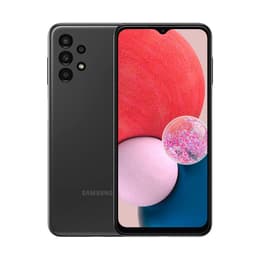
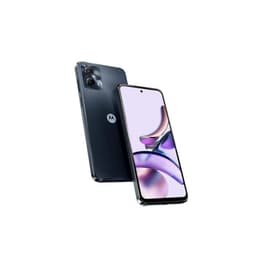

Galaxy A13 Vs Motorola Moto G13

Galaxy A13
Galaxy A13
Starting at

Refurbished price:£73.00

Versus £249.00 new

See options
Motorola Moto G13
Motorola Moto G13
Starting at

Refurbished price:£99.00

Versus £166.76 new

See options

Ratings

The Samsung Galaxy A13, released in March 2022, and the Motorola Moto G13, launched in January 2023, are both Android smartphones designed for everyday use. While sharing a similar focus on essential features, the Galaxy A13 offers a higher-resolution display, whereas the Moto G13 provides a smoother screen refresh rate and stereo audio. Both devices operate on the Android platform, offering a familiar user experience.

Scores

Durability

When considering the long-term usability of these devices, their release timelines and software support are key factors.

  • Release and Software Support: The Samsung Galaxy A13 was released in March 2022, while the Motorola Moto G13 followed in January 2023. The Galaxy A13 launched with Android 12 and is slated to receive two major OS upgrades and four years of security updates, with Android 14 already available for the 4G model. The Moto G13 launched with Android 13 and typically receives one major OS update, with Android 14 noted as available on some sources, alongside security updates.
  • Physical Durability: The Galaxy A13 features Corning Gorilla Glass 5 for screen protection, offering a degree of resistance against scratches and drops. The Moto G13 uses Panda Glass for its display and boasts a water-repellent design, providing some protection against splashes. Both devices are constructed with plastic frames and backs.
  • Expected Lifespan: Given their respective update policies and build materials, both phones are designed for a practical lifespan suitable for general daily tasks. The Galaxy A13 may offer slightly longer software support due to Samsung's update policy.

Year of Release

2022

2023

Compatible with latest Update

No

No

OS

Android

Android

Foldable

No

No

Performance

The performance of these smartphones is suitable for daily tasks, with differences emerging in more demanding scenarios.

  • Processing Power and Responsiveness: The Galaxy A13 is equipped with an octa-core processor, providing sufficient power for common applications, web browsing, and light multitasking. The Moto G13 also features an octa-core processor, which handles everyday apps and general usage smoothly. User reviews for the Moto G13 suggest decent performance for its category, even allowing for less demanding games at lower settings.
  • Memory and Storage: The Galaxy A13 is available with 3GB, 4GB, or 6GB of RAM and storage options from 32GB to 128GB. The Moto G13 typically comes with 4GB of RAM and 64GB or 128GB of internal storage. Both devices support expandable storage via a microSD card, with the Galaxy A13 supporting up to 1TB and the Moto G13 up to 512GB.
  • Battery Life: Both smartphones are powered by a 5000 mAh battery, designed to provide extended usage. The Galaxy A13 supports 15W fast charging, while the Moto G13 supports 10W or 20W wired charging, with 10W TurboPower being common. Users often report that the Moto G13's battery can last up to a day and a half or even two days for lighter use.

Memory (GB)

4 GB

4 GB

Screen quality

The visual experience on these devices is shaped by their display technology and specifications.

  • Display Technology and Resolution: The Samsung Galaxy A13 features a 6.6-inch PLS TFT LCD with a Full HD+ resolution (2408 x 1080 pixels), resulting in a pixel density of approximately 400 ppi. This provides clear and sharp visuals for text and images. The Motorola Moto G13 has a 6.5-inch IPS LCD with an HD+ resolution (1600 x 720 pixels) and a pixel density of around 270 ppi.
  • Refresh Rate and Brightness: The Galaxy A13 has a standard 60Hz refresh rate, suitable for typical content consumption. The Moto G13 offers a smoother visual experience with a 90Hz refresh rate, which can make scrolling and animations appear more fluid. Both displays offer a peak brightness of around 400 nits, providing adequate visibility in most indoor and outdoor conditions.
  • Viewing Experience: The Galaxy A13's higher resolution means content appears sharper, which can be beneficial for reading and detailed viewing. The Moto G13's 90Hz refresh rate enhances the feeling of responsiveness, particularly during navigation and casual gaming.

Resolution

1080 x 2408

720 x 1600

Screen type

PLS LCD

IPS LCD

Audiovisual

Both smartphones offer multi-camera setups, catering to various photography needs.

  • Rear Camera Systems: The Samsung Galaxy A13 features a quad-camera setup, including a 50 MP main sensor, a 5 MP ultrawide lens, a 2 MP macro lens, and a 2 MP depth sensor. This provides versatility for different types of shots. The Motorola Moto G13 comes with a triple-camera system, comprising a 50 MP main sensor, a 2 MP macro lens, and a 2 MP depth sensor.
  • Photography Performance: Both devices' 50 MP main cameras are capable of capturing detailed images in good lighting conditions. The Galaxy A13's ultrawide lens offers a broader perspective for landscapes or group photos. User reviews for the Moto G13 indicate that while the main camera is good in favorable light, macro shots from the 2 MP sensor may lack detail.
  • Video and Audio Recording: Both the Galaxy A13 and Moto G13 can record video at 1080p resolution at 30 frames per second with both their main and front cameras. For audio, the Galaxy A13 has a single loudspeaker, while the Moto G13 offers stereo speakers with Dolby Atmos support, providing a more immersive audio experience for media consumption.

Main camera

50 megapixels

50 megapixels

Front camera

8 megapixels

8 megapixels

Miscellaneous

Beyond core features, several practical elements differentiate these two devices in daily use.

  • Connectivity and Ports: Both the Galaxy A13 and Moto G13 support 4G LTE connectivity, dual-band Wi-Fi (802.11 a/b/g/n/ac), Bluetooth (5.0 for A13, 5.1 for G13), and feature a USB Type-C 2.0 port for charging and data transfer. Both also retain a 3.5mm headphone jack. NFC availability on the Galaxy A13 can vary by region, while the Moto G13 generally includes NFC, which is useful for contactless payments.
  • Sensors and Security: Both phones include a side-mounted fingerprint sensor for secure unlocking, along with common sensors like an accelerometer, gyroscope, proximity sensor, and ambient light sensor. The Moto G13 also supports face unlock.
  • Design and Handling: The Galaxy A13 measures 165.1 x 76.4 x 8.8 mm and weighs 195g. The Moto G13 is slightly more compact and lighter at 162.7 x 74.66 x 8.19 mm and 183.45g. Both have plastic builds, with the Galaxy A13 featuring a glossy finish and the Moto G13 often having a matte, water-repellent finish.

Weight

195 g

183 g

Screen size (in)

6.6

6.5

Mobile network

4G

4G

SIM card

Dual Physical SIM

Dual Physical SIM

Carrier compatibility

Unlocked

Unlocked

The Samsung Galaxy A13 and Motorola Moto G13 both present compelling options for users seeking a functional smartphone without advanced features. User feedback for the Galaxy A13 often praises its vibrant Full HD+ display and reliable battery life. Some common criticisms include its 60Hz refresh rate and the potential for slower performance with demanding applications. The Moto G13 is frequently lauded for its smooth 90Hz display, clean Android software experience, and impressive battery longevity. However, its HD+ screen resolution and camera performance in less-than-ideal lighting conditions are sometimes noted as areas for improvement.

Users prioritizing a sharper display for media consumption and reading may find the Samsung Galaxy A13 well-suited to their needs. Those who value a smoother scrolling experience and a slightly more compact, water-repellent design might lean towards the Motorola Moto G13. The Moto G13's stereo speakers also offer a more engaging audio experience. Both devices provide solid battery life for extended use. For individuals considering these models, exploring quality-assured refurbished options can be an eco-friendly alternative to purchasing new, offering a sustainable choice without compromising on functionality.


See all articles

Our recent comparisons