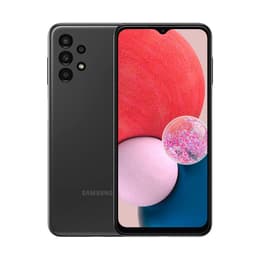
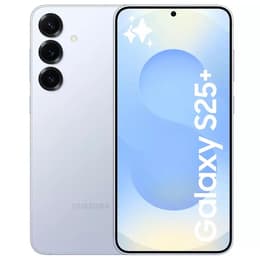

Galaxy A13 Vs Galaxy S25+

Galaxy A13
Galaxy A13
Starting at

Refurbished price:£73.00

Versus £249.00 new

See options
Galaxy S25+
Galaxy S25+
Starting at

Refurbished price:£550.00

Versus £958.39 new

See options

Ratings

The Samsung Galaxy A13, released in March 2022, and the Samsung Galaxy S25 Plus, launched in February 2025, represent distinct tiers within Samsung's smartphone lineup. While both operate on the Android platform, the A13 is positioned as an entry-level device, focusing on core smartphone functionalities, whereas the S25 Plus is a recent flagship, offering advanced features and high-end performance. This comparison will highlight the practical differences between these two devices, helping users understand which model best suits their needs, whether considering a new purchase or an eco-friendly, quality-assured refurbished option.

Scores

Durability

The expected lifespan and software support differ significantly between these two models, reflecting their respective release timelines and product categories.

  • Release Timeline: The Galaxy A13 was released in March 2022, making it a device from a previous generation. The Galaxy S25 Plus, on the other hand, is a much newer device, having been launched in February 2025.
  • Software Longevity: The Galaxy A13 launched with Android 12 and is expected to receive major OS updates up to Android 14, with security updates likely extending until 2026. The Galaxy S25 Plus, launching with Android 15, benefits from Samsung's extended support policy, promising 7 years of OS and security updates, ensuring software longevity until approximately 2032.
  • Practical Lifespan: Users prioritising the latest software features and security patches for an extended period will find the S25 Plus offers a considerably longer practical lifespan. The A13, while still functional, will see its software support conclude much sooner.

Year of Release

2022

2025

OS

Android

Android

Foldable

No

No

Performance

Performance capabilities vary widely, impacting how smoothly each device handles daily tasks and demanding applications.

  • Everyday Responsiveness: The Galaxy A13, equipped with an octa-core processor, handles basic tasks like browsing and social media. However, users may experience noticeable lag and occasional stutters, with apps taking longer to load and transitions feeling less fluid. The Galaxy S25 Plus, featuring a current-generation flagship processor, delivers significantly faster performance, ensuring demanding applications and multitasking run smoothly without hesitation.
  • Multitasking and Storage: The A13 offers RAM configurations up to 6GB and internal storage up to 128GB, with the option to expand storage via a microSD card. The S25 Plus comes with 12GB of RAM and starts with 256GB of internal storage, providing ample capacity for numerous applications and files, supporting more intensive multitasking without slowdowns.
  • Battery Behavior: Both devices feature large battery capacities. The Galaxy A13's 5000 mAh battery typically provides more than a full day of use with moderate activity. The Galaxy S25 Plus, with its 4900 mAh battery and efficient processor, is also designed to last a full day under mixed usage, often achieving 6-8 hours of screen-on time.

Memory (GB)

4 GB

12 GB

Screen quality

The visual experience on each device is shaped by different display technologies and specifications.

  • Display Technology and Clarity: The Galaxy A13 features a 6.6-inch PLS LCD screen with a resolution of 1080 x 2408 pixels. It offers decent sharpness and brightness for everyday viewing, though it lacks the deep blacks and vibrant colours of OLED panels. The Galaxy S25 Plus boasts a 6.7-inch Dynamic AMOLED 2X display with a QHD+ resolution (1440 x 3120 pixels), providing superior clarity, contrast, and colour vibrancy.
  • Brightness and Smoothness: The A13's display has a standard 60Hz refresh rate, which is suitable for general use but may show less fluidity during scrolling or gaming. The S25 Plus features an adaptive refresh rate that can scale from 1Hz to 120Hz, resulting in exceptionally smooth visuals and improved power efficiency. Its display also achieves significantly higher peak brightness, enhancing outdoor visibility.
  • Durability: The screen of the Galaxy A13 is protected by Corning Gorilla Glass 5. The Galaxy S25 Plus features more advanced protection, typically Corning Gorilla Glass Victus 2 or newer, offering enhanced resistance against drops and scratches.

Resolution

1080 x 2408

1440x3120

Audiovisual

The camera systems on these smartphones cater to different photography expectations, from casual snapshots to advanced imaging.

  • Rear Camera Capabilities: The Galaxy A13 includes a quad-camera setup with a 50MP main sensor, a 5MP ultrawide, and two 2MP auxiliary lenses for macro and depth. The 50MP main camera can capture good images in well-lit conditions, but the ultrawide camera's quality is less refined. The Galaxy S25 Plus features a versatile triple-camera system, including a 50MP main sensor with optical image stabilisation (OIS), a 12MP ultrawide, and a 10MP telephoto lens with 3x optical zoom and OIS.
  • Low-Light and Video Performance: The A13 lacks dedicated night mode features and its video recording is limited to 1080p at 30 frames per second, with limited stabilisation. The S25 Plus excels in low-light conditions with advanced Nightography features and offers high-resolution video recording, including 8K at 30fps and 4K at 60fps, alongside enhanced stabilisation and AI-driven video tools like Audio Eraser and log video format for professional editing.
  • Front Camera and Audio: The A13 has an 8MP front camera suitable for basic selfies and video calls. The S25 Plus features a 12MP front camera with improved autofocus and image processing, delivering clearer and more detailed self-portraits and video calls. For audio, the A13 has a single downward-firing speaker, while the S25 Plus offers a more immersive stereo speaker setup.

Miscellaneous

Beyond core features, several practical elements differentiate the user experience of these two devices.

  • Connectivity and Ports: The Galaxy A13 supports 4G LTE networks, Wi-Fi 5, Bluetooth 5.0, and includes a USB-C 2.0 port along with a 3.5mm headphone jack. The Galaxy S25 Plus is equipped with 5G connectivity, the latest Wi-Fi 7 standard, Bluetooth 5.4, and a faster USB-C 3.2 port, but it omits the traditional headphone jack.
  • Biometric Security and Build: For security, the A13 features a side-mounted fingerprint sensor. The S25 Plus incorporates an under-display ultrasonic fingerprint sensor for seamless unlocking. The A13 has a plastic build with Gorilla Glass 5 on the front and no official IP rating. The S25 Plus features a more robust construction with an Armor Aluminum frame, Gorilla Glass Victus 2 (or newer) on both front and back, and an IP68 rating for water and dust resistance.
  • Dimensions and Handling: The Galaxy A13 measures 165.1 x 76.4 x 8.8 mm and weighs 195g. The Galaxy S25 Plus is slightly more compact and lighter at 158.4 x 75.8 x 7.3 mm and 190g, offering a more refined in-hand feel despite its large screen size.

Weight

195 g

190 g

Screen size (in)

6.6

6.7

Mobile network

4G

5G

SIM card

Dual Physical SIM

Dual Physical SIM

Carrier compatibility

Unlocked

Unlocked

User feedback for the Galaxy A13 often praises its long battery life and the inclusion of a headphone jack and expandable storage, which are increasingly rare features. Criticisms frequently point to its sluggish performance, particularly with demanding applications, and the limitations of its display and secondary cameras. Users generally consider it a functional device for basic communication and media consumption.

For the Galaxy S25 Plus, common praise highlights its exceptional performance, vibrant display, and advanced camera capabilities, especially with the integration of AI features for photography and video. Its extended software support and robust build quality are also significant advantages. Some users note that while battery life is strong, charging speeds are not the fastest compared to some competitors.

Users prioritizing a device for essential communication, web browsing, and casual media consumption, who also value a headphone jack and expandable storage, may find the Galaxy A13 suitable. Its straightforward functionality aligns with those who do not require high-end performance or advanced camera features. Conversely, users who demand cutting-edge performance for gaming, intensive multitasking, professional-grade photography and videography, and a premium viewing experience will find the Galaxy S25 Plus better suited to their needs. Its longer software support also appeals to those seeking a device with extended relevance.

Both models are available, and considering a quality-assured refurbished option can be a sustainable choice for either device, offering a way to access these technologies responsibly.

See all articles

Our recent comparisons