
Galaxy S8 Vs Galaxy S8+

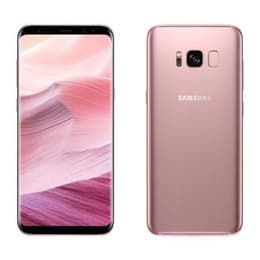
Galaxy S8
Galaxy S8
Starting at

Refurbished price:£79.00

Versus £340.00 new

See options
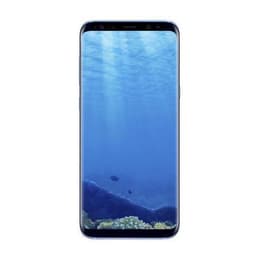
Galaxy S8+
Galaxy S8+
Starting at

Refurbished price:£100.00

Versus £550.40 new

See options

Ratings

The Samsung Galaxy S8 and Galaxy S8 Plus, both released in April 2017, represent a significant design evolution for Samsung's flagship smartphone line. These devices introduced the 'Infinity Display' concept, characterized by minimal bezels and curved screens. While sharing a common design language and core features, their primary distinctions lie in physical size and battery capacity. Both models launched with Android 7.0 Nougat and were subsequently updated to Android 9.0 Pie, offering a consistent software experience during their supported lifespan.

Scores

Durability

When considering the practical lifespan of these devices, several factors come into play, including their release timeline, software support, and repairability.

  • Release and Software Support: Both the Galaxy S8 and S8 Plus were unveiled in March 2017, with a North American release in April 2017 and an international rollout shortly thereafter. They originally ran on Android 7.0 Nougat and received two major Android operating system updates, concluding with Android 9.0 Pie. Samsung officially ended software support for both models in May 2021, meaning they no longer receive security updates. This four-year support cycle is typical for Android devices of that era, but it means users should be aware of potential security vulnerabilities if using these devices for sensitive tasks today.
  • Repairability: Both the Galaxy S8 and S8 Plus received a repairability score of 4 out of 10 from iFixit, indicating they are challenging to repair. The construction, featuring glass on both the front and back held by strong adhesive, makes opening the devices difficult without risk of damage. While some internal components are modular, the battery is not easily accessible, and replacing the curved front glass without damaging the display is particularly challenging.
  • Expected Practical Lifespan: Given the cessation of official software updates, the practical lifespan for daily, secure use has largely passed. However, for users who prioritize hardware functionality over the latest software features and security patches, or those who opt for custom ROMs, the devices can still function. The all-glass design, protected by Gorilla Glass 5, offers some durability against scratches and minor impacts, but also makes them prone to cracking if dropped.

Year of Release

2017

2017

Compatible with latest Update

No

No

OS

Android

Android

Foldable

No

No

Performance

The performance of the Galaxy S8 and S8 Plus was considered high-end at their release, offering a smooth user experience for typical smartphone tasks.

  • Processor and Responsiveness: Both devices are powered by either a Qualcomm Snapdragon 835 processor (in the US and China) or a Samsung Exynos 8895 processor (international markets). These are octa-core processors built on a 10nm manufacturing process, which contributed to efficient performance for their time. In real-world use, this hardware allows for smooth multitasking, quick app loading, and capable handling of graphically intensive games. Users generally reported a responsive experience across the system.
  • Storage and RAM: Both models typically came with 4GB of RAM, which was sufficient for managing multiple applications simultaneously without significant slowdowns. They offered 64GB of internal storage, with the option to expand storage further using a microSD card, supporting up to 256GB. This provided ample space for apps, photos, and media for most users.
  • Battery Behavior: The Galaxy S8 features a 3000 mAh battery, while the larger S8 Plus includes a 3500 mAh battery. In typical usage scenarios, the S8 Plus generally offered longer battery life, with some reports indicating it could last over 30 hours with moderate use, compared to just over 24 hours for the standard S8. Both devices support fast wired charging (Adaptive Fast Charging) and fast wireless charging, allowing for relatively quick power replenishment.

Memory

4 GB

4 GB

Screen quality

The display was a highlight for both the Galaxy S8 and S8 Plus, introducing a new visual standard for smartphones at the time.

  • Display Technology and Resolution: Both phones feature a Super AMOLED 'Infinity Display' with a dual-edge design, meaning the screen curves around the sides of the device. This technology delivers deep blacks, high contrast, and vibrant colors. The resolution on both models is Quad HD+ (2960x1440 pixels), providing a sharp and detailed viewing experience. While capable of this high resolution, the devices often defaulted to Full HD+ (2220x1080 pixels) to conserve battery life, a setting users could adjust.
  • Screen Size and Viewing Experience: The Galaxy S8 has a 5.8-inch display, offering a compact yet expansive viewing area due to its minimal bezels. The Galaxy S8 Plus, with its 6.2-inch display, provides an even larger canvas, enhancing the experience for media consumption and productivity. Both displays have an 18.5:9 aspect ratio, making them taller and narrower than previous generations, which is well-suited for cinematic content and scrolling.
  • Brightness and Protection: The screens are capable of high brightness levels, reaching over 1000 nits in peak conditions, which ensures good visibility even in bright outdoor environments. They are protected by Corning Gorilla Glass 5, offering resistance against scratches and minor drops.

Resolution

1440 x 2960

1440 x 2960

Screen type

Super AMOLED

Super AMOLED

Audiovisual

The camera systems on the Galaxy S8 and S8 Plus were highly regarded at their launch, offering reliable performance for everyday photography and video recording.

  • Rear Camera Capabilities: Both devices feature a 12-megapixel 'Dual Pixel' rear camera with an f/1.7 aperture and optical image stabilization (OIS). This setup was praised for its ability to capture sharp images with good detail and dynamic range. A key feature was its multi-frame image processing, which captures three photos and combines them to enhance detail and clarity, particularly beneficial for HDR photos.
  • Front Camera and Video Quality: The front-facing camera is an 8-megapixel sensor with an f/1.7 aperture and autofocus, capable of producing clear selfies. For video recording, both phones can capture UHD 4K resolution at 30 frames per second, 1080p HD at 60 frames per second, and 720p HD at 240 frames per second for slow-motion effects. The microphone quality is suitable for calls and general recording.
  • Low-Light Performance and User Experience: The large f/1.7 aperture on both front and rear cameras, combined with advanced image processing, allowed for strong low-light performance, often capturing images that appeared brighter than the actual scene. The camera interface was designed to be user-friendly, with swipe gestures for modes and filters, and quick access via a double-tap of the power button.

Main camera

12 megapixels

12 megapixels

Front camera

8 megapixels

8 megapixels

Miscellaneous

Beyond the core specifications, the Galaxy S8 and S8 Plus included a range of features that contributed to their overall user experience.

  • Connectivity and Ports: Both models support 4G LTE for mobile data, Wi-Fi 802.11 a/b/g/n/ac for wireless internet, and Bluetooth 5.0 for connecting accessories. They feature a USB-C 3.1 port for charging and data transfer, and notably, retain a 3.5mm headphone jack. NFC is also included for contactless payments and pairing.
  • Sensors and Biometrics: For security and convenience, both phones include a rear-mounted fingerprint scanner, an iris scanner for biometric authentication, and face recognition. Other sensors such as an accelerometer, barometer, gyroscope, and heart rate monitor are also present.
  • Build and Handling: The Galaxy S8 measures 148.9 x 68.1 x 8.0 mm and weighs 155g, offering a relatively compact and lightweight feel. The Galaxy S8 Plus is larger at 159.5 x 73.4 x 8.1 mm and weighs 173g. Both devices feature a premium build with Gorilla Glass 5 on the front and back, framed by metal. They also carry an IP68 rating for water and dust resistance, providing protection against immersion in water up to 1.5 meters for 30 minutes.

Weight

155 g

173 g

Screen size (in)

5.8

6.2

Network

4G

4G

SIM card

Physical SIM

Physical SIM

Carrier compatibility

Unlocked

Unlocked

The Samsung Galaxy S8 and S8 Plus were groundbreaking devices at their release, largely praised for their innovative 'Infinity Display' design and strong overall performance. Users frequently lauded the vibrant Super AMOLED screens, capable cameras that performed well in various lighting conditions, and the inclusion of features like the headphone jack and expandable storage. Common criticisms often revolved around the fragility of the all-glass design and the somewhat awkward placement of the rear-mounted fingerprint sensor. The repairability of these devices was also noted as challenging due to their construction.

For users prioritizing a more compact device that is still comfortable for one-handed use while offering a premium visual experience, the standard Galaxy S8 may be a suitable choice. Its 5.8-inch display provides an immersive viewing area without making the phone overly large. Conversely, users who prioritize a larger screen for media consumption, gaming, or productivity, and who benefit from extended battery life, will find the 6.2-inch Galaxy S8 Plus better suited to their needs. The larger battery in the Plus model generally translates to more usage time between charges. Both devices, while no longer receiving software updates, can still serve as functional smartphones for those who do not require the latest security patches or operating system features. Opting for a quality-assured refurbished option for either model can be an eco-friendly alternative for those seeking a capable device with a proven track record.
See all articles

Our recent comparisons