
Motorola Moto E13 Vs Motorola Moto G13

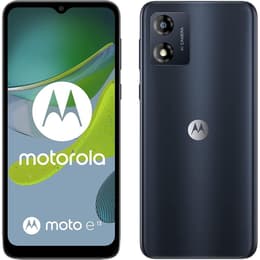
Motorola Moto E13
Motorola Moto E13
Starting at

Refurbished price:£74.00

Versus £83.99 new

See options
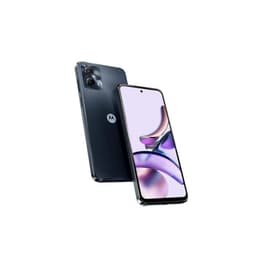
Motorola Moto G13
Motorola Moto G13
Starting at

Refurbished price:£99.00

Versus £166.76 new

See options

Ratings

The Motorola Moto E13 and Motorola Moto G13 are smartphones released in early 2023, targeting users seeking essential mobile functionality. While both devices share a similar design philosophy and a focus on battery longevity, the Moto G13 offers enhanced performance, a more capable camera system, and a smoother display experience compared to the Moto E13. Both run on the Android 13 operating system, though the Moto E13 utilizes the lighter Go Edition.

Scores

Durability

When considering the practical lifespan of these devices, several factors come into play, including their release timeline, software support, and physical durability. Both phones were launched in January 2023, meaning they started their software support cycle at roughly the same time. Motorola typically provides one major Android OS upgrade and two years of security patches for its budget-friendly smartphones. [27]

  • Software Longevity: The Moto G13, running the full version of Android 13, is more likely to receive a single major OS update to Android 14, extending its feature set and security updates further into the future. The Moto E13, with Android 13 Go Edition, may see fewer significant feature updates, though security patches are still expected. [3, 12, 27, 30]
  • Durability Features: Both models feature an IP52 rating, indicating resistance to dust and splashing water, offering a degree of protection against everyday elements. [8, 9, 16, 17] The Moto G13 also benefits from Panda Glass protection on its display, which can offer additional resistance against scratches. [1, 10, 15]
  • Repairability Aspects: The Moto E13 has a reported repairability score of 6.5 out of 10, with accessible battery components but a more complex screen replacement process. [6] While specific scores for the Moto G13 are less readily available, Motorola generally designs its devices with a reasonable degree of repairability in mind. [41]

Year of Release

2023

2023

Compatible with latest Update

No

No

OS

Android

Android

Foldable

No

No

Performance

The performance capabilities of the Moto E13 and Moto G13 present a notable difference, primarily due to their internal processing units and RAM configurations. These distinctions impact how smoothly applications run and how effectively the devices handle multitasking.

  • Processing Power: The Moto G13 is equipped with a processor that delivers more robust performance, allowing for smoother navigation through the operating system and more responsive handling of demanding applications and casual gaming. [1, 4, 14] The Moto E13, while capable of handling everyday tasks, may exhibit more noticeable delays when launching apps or switching between multiple open applications. [18, 21, 23, 26]
  • Multitasking and Storage: The Moto G13 typically comes with 4GB of RAM, providing a more comfortable experience for users who frequently switch between apps. [1, 2] The Moto E13 offers various RAM configurations, including 2GB, 4GB, and 8GB options, with the 2GB variant potentially limiting the number of applications that can run simultaneously without performance degradation. [3, 8, 11, 24] Both devices offer 64GB or 128GB of internal storage, expandable via a microSD card, which is beneficial for users with large media libraries. [3, 8, 10]
  • Battery Behavior: Both smartphones feature a substantial 5000 mAh battery, contributing to extended usage times. [3, 8, 10] Users of both models generally report excellent battery life, often lasting through a full day of heavy use or up to two days with moderate usage. [14, 18, 21, 25] Charging speeds are similar, with both supporting 10W wired charging. [8, 10, 11]

Memory (GB)

2 GB

4 GB

Screen quality

The visual experience on the Moto E13 and Moto G13 is largely similar in terms of size and resolution, but a key difference lies in the display's refresh rate, impacting overall smoothness.

  • Display Technology and Resolution: Both devices feature a 6.5-inch IPS LCD display with an HD+ resolution (720x1600 pixels), resulting in comparable clarity for general viewing. [1, 3, 8, 10] While not as vibrant as OLED panels, these IPS screens offer decent color reproduction and viewing angles for media consumption and browsing. [16, 24]
  • Refresh Rate: A significant differentiator is the refresh rate; the Moto G13 boasts a 90Hz refresh rate, providing a noticeably smoother scrolling experience and more fluid animations compared to the Moto E13's standard 60Hz display. [2, 4, 10, 15] This can make interactions feel more responsive on the Moto G13.
  • Brightness and Protection: Both displays offer adequate brightness for indoor use, though outdoor visibility in direct sunlight may require maximum brightness settings. [16, 24] The Moto G13 includes Panda Glass for added screen protection, a feature not explicitly mentioned for the Moto E13. [1, 10, 15]

Resolution

720 x 1600

720 x 1600

Screen type

IPS LCD

IPS LCD

Audiovisual

The camera systems on the Moto E13 and Moto G13 represent one of the more significant areas of distinction, with the Moto G13 offering a more versatile and higher-resolution setup.

  • Rear Camera Capabilities: The Moto G13 features a triple-camera array, headlined by a 50-megapixel main sensor, complemented by 2-megapixel macro and depth sensors. [1, 2, 10] This allows for more detailed photos in good lighting conditions and offers options for close-up shots and portrait effects. The Moto E13 has a single 13-megapixel main camera. [3, 8]
  • Photography Performance: In well-lit environments, the Moto G13's 50-megapixel sensor can capture more detail and produce generally better images than the Moto E13's 13-megapixel sensor. [4, 14, 25] User reviews indicate that the Moto E13's camera can be slow to launch and process images, and its low-light performance is limited. [18, 21, 26] The Moto G13 also performs best in good lighting, with some users noting that colors can appear somewhat muted. [16, 22]
  • Front Camera and Video: For selfies and video calls, the Moto G13 is equipped with an 8-megapixel front camera, while the Moto E13 has a 5-megapixel front camera. [1, 3, 8, 10] Both devices are capable of recording video at 1080p resolution at 30 frames per second. [8, 10]

Main camera

13 megapixels

50 megapixels

Front camera

5 megapixels

8 megapixels

Miscellaneous

Beyond the core specifications, several practical features and design elements differentiate the Moto E13 and Moto G13, influencing their overall user experience and convenience.

  • Connectivity and Ports: Both smartphones support 4G LTE networks, dual-band Wi-Fi (802.11 a/b/g/n/ac), Bluetooth, and include a USB-C 2.0 port for charging and data transfer, along with a 3.5mm headphone jack. [8, 9, 10] A notable advantage for the Moto G13 is the inclusion of NFC (Near Field Communication), enabling contactless payments and quick pairing with compatible accessories, a feature absent on the Moto E13. [2, 10, 16]
  • Sensors and Security: The Moto G13 incorporates a side-mounted fingerprint sensor for secure and convenient unlocking, alongside face unlock functionality. [1, 2, 10] The Moto E13 relies solely on face unlock for biometric security, as it lacks a fingerprint sensor. [11] Both devices include standard sensors like accelerometers and proximity sensors. [1, 2, 8]
  • Design and Handling: Both phones feature a plastic build and similar dimensions, contributing to a comfortable in-hand feel. The Moto E13 weighs approximately 179.5 grams, while the Moto G13 is slightly heavier at around 183 grams. [3, 8, 10, 19] Both offer a water-repellent design with an IP52 rating for dust and splash resistance. [8, 16]

Weight

181 g

183 g

Screen size (in)

6.5

6.5

Mobile network

4G

4G

SIM card

Dual Physical SIM

Dual Physical SIM

Carrier compatibility

Unlocked

Unlocked

The Motorola Moto E13 and Moto G13 cater to users with varying priorities, offering distinct advantages in different areas. User feedback often highlights the Moto E13's strong battery life and its suitability for basic communication and media consumption. [21, 23] However, common criticisms point to its slower performance and limited camera capabilities, particularly in challenging lighting conditions. [18, 26]

The Moto G13, on the other hand, is frequently praised for its smoother 90Hz display, more capable main camera, and the inclusion of NFC, which enhances its utility for modern conveniences like contactless payments. [14, 16, 17, 22] While its performance is generally considered good for its segment, some users note that the speakers can distort at higher volumes and that camera performance, while better than the E13, is still best in optimal lighting. [16, 22]

Users prioritizing a highly responsive screen and a more versatile camera system for everyday photography, along with features like NFC, may find the Moto G13 to be a more suitable option. Its more powerful processor also provides a smoother overall user experience, especially for those who engage in light multitasking or casual gaming. Conversely, individuals seeking a device primarily for essential communication, web browsing, and extended battery life, where a lower refresh rate and less advanced camera are acceptable trade-offs, might find the Moto E13 aligns better with their needs. Both devices represent solid choices for those looking for a quality-assured refurbished option, offering an eco-friendly alternative to new purchases.

See all articles

Our recent comparisons