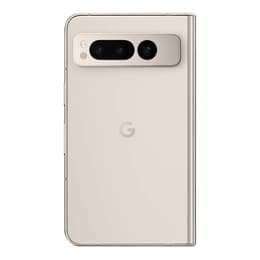
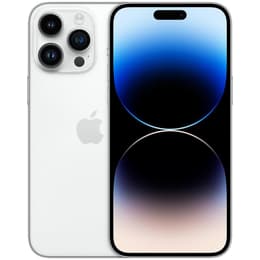

Google Pixel Fold Vs iPhone 14 Pro Max

Google Pixel Fold
Google Pixel Fold
Starting at

Refurbished price:£371.00

Versus £1,499.00 new

See options
iPhone 14 Pro Max
iPhone 14 Pro Max
Starting at

Refurbished price:£325.00

Versus £1,199.00 new

See options

Ratings

The Google Pixel Fold, released in June 2023, represents Google's entry into the foldable smartphone market, offering a unique form factor that transforms from a traditional smartphone into a larger tablet-like display. In contrast, the iPhone 14 Pro Max, launched in September 2022, is Apple's flagship bar-style smartphone, known for its expansive display and robust ecosystem. The primary differentiators between these two devices lie in their fundamental design – a folding screen versus a conventional slab – and their respective operating systems, Android and iOS.

Scores

Durability

When considering the practical lifespan of these devices, several factors come into play, including software support, physical durability, and repairability.

  • Software Longevity: The Google Pixel Fold launched with Android 13 and is expected to receive 5 to 7 years of OS, security, and Pixel Drop updates, offering a substantial period of software relevance. The iPhone 14 Pro Max, running iOS 16 at launch, typically receives 5 to 6 years of major iOS updates from Apple, ensuring continued access to new features and security patches.
  • Physical Durability: The iPhone 14 Pro Max features a Ceramic Shield front cover, a glass back, and a stainless steel frame, contributing to its overall resilience. It boasts an IP68 rating for dust and water resistance, allowing submersion up to 6 meters for 30 minutes. The Pixel Fold has an IPX8 water resistance rating, meaning it can withstand immersion in at least one meter of water for 30 minutes, but it lacks an official dust resistance rating, which is a consideration for its hinge mechanism. The Pixel Fold's inner display uses an ultra-thin glass with a plastic protective layer, while its cover screen is protected by Gorilla Glass Victus.
  • Repairability Aspects: The folding design of the Pixel Fold introduces more complex internal components and a hinge mechanism, which can present unique challenges for repair compared to the more traditional, rigid structure of the iPhone 14 Pro Max.

Year of Release

2023

2022

Compatible with latest Update

Yes

Yes

OS

Android

iOS

Foldable

Yes

No

Performance

The performance of a smartphone is crucial for daily operations, from launching applications to handling demanding tasks and multitasking.

  • Processing Power: The Google Pixel Fold is equipped with a processor designed to handle everyday tasks smoothly, with a particular focus on machine learning and artificial intelligence capabilities for features like voice commands and image processing. The iPhone 14 Pro Max features a powerful processor known for its strong performance in various benchmarks, providing a highly responsive experience for demanding applications, intensive gaming, and complex video editing.
  • Multitasking and Responsiveness: Both devices offer ample memory to support fluid multitasking. The Pixel Fold, with its larger internal display, is designed to facilitate split-screen usage and app continuity between its folded and unfolded states, enhancing productivity for users who frequently switch between applications. The iPhone 14 Pro Max delivers consistent responsiveness across the iOS ecosystem, ensuring applications launch quickly and transitions are smooth.
  • Storage Options: The Pixel Fold is available with 256 GB or 512 GB of internal storage. The iPhone 14 Pro Max offers a wider range of storage configurations, including 128 GB, 256 GB, 512 GB, and 1 TB, catering to users with varying storage needs.

Memory (GB)

12 GB

6 GB

Screen quality

The display is a primary interface for user interaction, and both devices offer distinct visual experiences.

  • Display Technology and Size: The Google Pixel Fold features two OLED displays: a 5.8-inch cover screen and a 7.6-inch foldable inner screen. This allows users to choose between a compact smartphone experience and an expansive tablet-like canvas. The iPhone 14 Pro Max has a single 6.7-inch Super Retina XDR OLED display, offering a large, uninterrupted viewing area.
  • Resolution and Clarity: The Pixel Fold's cover display has a resolution of 1080 x 2092 pixels (408 PPI), while its inner display offers 1840 x 2208 pixels (380 PPI). The iPhone 14 Pro Max features a resolution of 2796 x 1290 pixels (460 PPI), providing sharp and detailed visuals.
  • Brightness and Refresh Rate: Both devices feature adaptive refresh rates for smooth scrolling and animations. The Pixel Fold's displays support up to 120Hz refresh rates, with peak brightness levels of up to 1550 nits on the cover screen and 1450 nits on the inner screen. The iPhone 14 Pro Max also has an adaptive ProMotion display with refresh rates up to 120Hz, and it can reach up to 1000 nits typical brightness, 1600 nits for HDR content, and a peak of 2000 nits for outdoor visibility. The iPhone 14 Pro Max also includes an Always-On display feature and the Dynamic Island for notifications and activities.

Resolution

1840 x 2208

1290 x 2796

Screen type

Foldable OLED

LTPO Super Retina XDR OLED

Audiovisual

Photography and videography capabilities are key considerations for many smartphone users, and both devices offer advanced camera systems.

  • Rear Camera Systems: The Google Pixel Fold features a triple rear camera setup, including a 48MP main sensor with optical image stabilization (OIS), a 10.8MP ultrawide lens, and a 10.8MP telephoto lens capable of 5x optical zoom. This system leverages Google's computational photography for enhanced image processing. The iPhone 14 Pro Max boasts a Pro camera system with a 48MP main sensor (with second-generation sensor-shift OIS), a 12MP ultrawide lens with a 120-degree field of view, and a 12MP 3x telephoto lens with OIS.
  • Front-Facing Cameras: The Pixel Fold has two front cameras: a 9.5MP sensor on the cover display and an 8MP sensor on the inner folding display. Users can also utilize the main rear cameras for high-quality selfies by using the cover screen as a viewfinder. The iPhone 14 Pro Max features a 12MP TrueDepth front camera with autofocus.
  • Video Capabilities: Both devices are capable of recording 4K video at up to 60 frames per second. The iPhone 14 Pro Max further offers advanced video features like Cinematic mode for shallow depth-of-field effects, Action mode for enhanced stabilization, and ProRes video recording for professional-grade footage.
  • Audio Experience: Both smartphones provide stereo speakers for media consumption. The Pixel Fold's microphone quality is noted for clear calls.

Main camera

48 megapixels

48 megapixels

Front camera

8 megapixels

12 megapixels

Miscellaneous

Beyond core features, several practical elements contribute to the overall user experience and device utility.

  • Connectivity and Ports: Both devices support 5G cellular connectivity, ensuring fast mobile data speeds. The Pixel Fold includes Wi-Fi 6E and Bluetooth 5.2, along with a USB-C 3.2 Gen 2 port for charging and data transfer. The iPhone 14 Pro Max supports Wi-Fi 6 and Bluetooth 5.3, and uses Apple's proprietary Lightning port. Both also include Ultra-Wideband (UWB) technology for enhanced spatial awareness and NFC for contactless payments.
  • Biometric Security: The Pixel Fold incorporates a side-mounted fingerprint reader for secure unlocking and authentication. The iPhone 14 Pro Max relies on Face ID, Apple's facial recognition system.
  • Physical Design and Handling: The Pixel Fold, when folded, measures 139.7 x 79.5 x 12.1mm and weighs 283g, offering a compact yet thick profile. Unfolded, it expands to 139.7 x 158.7 x 5.8mm, providing a larger, thinner surface. The iPhone 14 Pro Max has dimensions of 160.7 x 77.6 x 7.85 mm and weighs 240g, presenting a more traditional, albeit large, smartphone form factor. The Pixel Fold's wider aspect ratio on its cover screen aims to provide a more usable external display compared to some other foldables.

Weight

283 g

120 g

Screen size (in)

7.6

6.7

Mobile network

5G

5G

SIM card

Physical SIM + eSIM

Physical SIM + eSIM

Carrier compatibility

Unlocked

Unlocked

Connector

USB-C

Lightning

User sentiment for the Google Pixel Fold often highlights its innovative folding design and the versatility it offers, allowing users to switch between a standard phone and a small tablet. Many appreciate Google's software integration and computational photography capabilities. However, some users have expressed concerns regarding its durability, particularly the hinge, and its overall thickness when folded. The battery life is generally considered good for a foldable, often lasting a full day for many users.

The iPhone 14 Pro Max is frequently praised for its robust performance, exceptional camera system, and long-lasting battery life, often cited as capable of extended use on a single charge. Users also value the consistent and polished iOS experience, along with the bright and vibrant display. Criticisms are less common but sometimes point to its substantial size and weight, making one-handed use challenging for some.

Users prioritizing a versatile device that can adapt from a compact smartphone to a larger screen for media consumption or multitasking may find the Google Pixel Fold well-suited to their needs. Its unique form factor and Android's flexibility for larger displays offer a distinct experience. Conversely, individuals who value a consistently powerful, highly refined, and durable traditional smartphone experience with a top-tier camera and extensive software support will likely lean towards the iPhone 14 Pro Max. Both devices represent excellent choices in their respective categories, and considering a quality-assured refurbished option can be a sustainable way to acquire either.

See all articles

Our recent comparisons