Galaxy A54 Vs iPhone 12

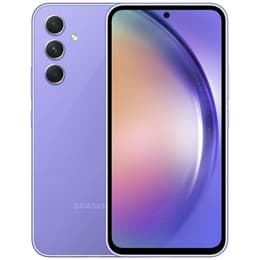
Galaxy A54
Galaxy A54
Starting at

Refurbished price:£119.00

Versus £499.00 new

See options
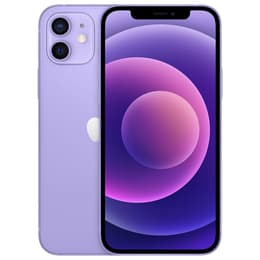
iPhone 12
iPhone 12
Starting at

Refurbished price:£141.00

Versus £649.00 new

See options

Ratings

The Samsung Galaxy A54 (released March 2023) and the Apple iPhone 12 (released October 2020) are two distinct smartphones offering different user experiences. While the Galaxy A54 operates on the Android platform, the iPhone 12 runs on Apple's iOS, influencing their respective ecosystems and software interactions. Key differentiators include their display technologies, camera systems, and overall design philosophies, catering to varied preferences in the smartphone market.

Scores

Durability

When considering the practical lifespan of these devices, both offer robust software support, though their timelines differ due to their respective release dates and manufacturer policies.

  • Software Updates: The Samsung Galaxy A54 launched with Android 13 and is guaranteed to receive four major OS upgrades and five years of security patches, extending its support until at least 2027. This commitment ensures the device remains current with new features and security enhancements for a considerable period. [1, 30, 31] In contrast, the iPhone 12, released in 2020 with iOS 14, is still receiving updates and is compatible with iOS 26 as of March 2026, demonstrating Apple's extended software longevity for its devices. [16]
  • Physical Durability: The Galaxy A54 features Corning Gorilla Glass 5 on both its front and back, along with an IP67 rating for dust and water resistance, offering protection against everyday elements. [1, 6, 32] The iPhone 12, on the other hand, introduced Ceramic Shield on its front, which Apple states provides improved drop performance, and has an IP68 rating for water resistance, allowing for submersion at greater depths. [13, 25]
  • Expected Practical Lifespan: Users can expect several years of reliable operation from both devices. The Galaxy A54's guaranteed updates provide a clear roadmap for its usable life, while the iPhone 12's history of long-term iOS support suggests it will continue to function effectively for many years, albeit with an older hardware generation.

Year of Release

2023

2020

Compatible with latest Update

Yes

Yes

OS

Android

iOS

Foldable

No

No

Performance

The performance of a smartphone is crucial for daily tasks, app responsiveness, and demanding applications like gaming. Both the Galaxy A54 and iPhone 12 offer capable performance, though they approach it from different architectural standpoints.

  • Everyday Responsiveness: The iPhone 12, powered by its A14 Bionic chip, delivers a consistently smooth and highly responsive user experience, handling app launches, multitasking, and general navigation with efficiency. [27, 37] The Galaxy A54, with its Exynos 1380 processor, generally provides a fluid experience for most users, though some reports indicate occasional stutters or lag, particularly with Samsung's One UI software. [24, 33]
  • Multitasking and App Handling: The iPhone 12's optimized iOS ecosystem allows for efficient multitasking, keeping applications readily available in memory. The Galaxy A54, typically offering more RAM in some configurations, manages multiple applications effectively, though the overall smoothness can vary based on software optimization.
  • Gaming and Demanding Applications: For graphically intensive games and demanding applications, the iPhone 12 generally offers a more consistent and higher-performing experience, often outperforming many Android devices of its era in benchmarks and real-world gaming tests. [27, 37] The Galaxy A54 can handle most popular games and applications, but users might need to adjust graphics settings for optimal performance in the most demanding titles, and some users have noted it's not designed for maximum settings gaming. [28, 42]

Memory (GB)

8 GB

4 GB

Screen quality

The display is a primary interface for smartphone interaction, and both devices offer vibrant viewing experiences with distinct characteristics.

  • Display Technology and Clarity: The iPhone 12 features a 6.1-inch Super Retina XDR OLED display, known for its deep blacks, excellent contrast, and vibrant colors, providing a sharp 2532 x 1170 pixel resolution at 460 pixels per inch. [2, 4, 13] The Galaxy A54 sports a larger 6.4-inch Super AMOLED display with a resolution of 1080 x 2340 pixels, resulting in approximately 403 pixels per inch. [1, 5, 21] Both technologies offer rich color reproduction and good clarity for media consumption and daily use.
  • Brightness and Outdoor Visibility: The Galaxy A54's display can reach up to 1000 nits of peak brightness in high brightness mode (HBM), contributing to good outdoor visibility. [1, 6, 21] The iPhone 12 offers a typical maximum brightness of 625 nits, with a peak of 1200 nits for HDR content, ensuring content remains visible even in bright conditions. [2, 4]
  • Refresh Rate and Smoothness: A notable difference is the refresh rate; the Galaxy A54 features a 120Hz refresh rate, which provides a smoother scrolling experience and more fluid animations compared to the iPhone 12's standard 60Hz refresh rate. [1, 5, 21] This higher refresh rate can make a noticeable difference in the perceived responsiveness of the interface.

Resolution

1080 x 2340

1170 x 2532

Screen type

Super AMOLED

Super Retina XDR OLED

Audiovisual

Both the Samsung Galaxy A54 and iPhone 12 are equipped with capable camera systems designed to capture moments, though they differ in their configurations and processing.

  • Rear Camera System: The Galaxy A54 features a versatile triple-camera setup on the rear, including a 50-megapixel main sensor with optical image stabilization (OIS), a 12-megapixel ultrawide lens, and a 5-megapixel macro lens. [1, 12, 15] The iPhone 12 has a dual 12-megapixel camera system, comprising a main wide lens with a larger f/1.6 aperture and OIS, and an ultrawide lens. [2, 4, 11] The iPhone 12's larger aperture on its main lens can be beneficial for low-light performance.
  • Photography Performance: For everyday photography, the Galaxy A54 delivers solid results, especially in good lighting conditions, with its 50MP main sensor capturing detailed images. [28, 32] The iPhone 12 is praised for its consistent image quality, natural color reproduction, and features like Night mode and Deep Fusion, which enhance photos in various lighting scenarios. [11, 13] User feedback suggests the A54's camera is good for casual use, while the iPhone 12's camera is still considered highly capable. [11, 28]
  • Video Recording and Front Camera: Both devices support 4K video recording, with the Galaxy A54 capable of 4K at 30 frames per second (fps) and the iPhone 12 offering 4K up to 60fps, along with HDR video recording with Dolby Vision. [1, 2, 4, 13] The Galaxy A54 has a 32-megapixel front camera, while the iPhone 12 features a 12-megapixel TrueDepth front camera, both capable of capturing detailed selfies and supporting advanced features like portrait mode. [1, 2, 15]

Main camera

50 megapixels

12 megapixels

Front camera

32 megapixels

12 megapixels

Miscellaneous

Beyond core features, several practical elements contribute to the overall user experience and daily convenience of these smartphones.

  • Connectivity and Ports: Both devices support 5G connectivity for faster mobile data speeds. [8, 13] The Galaxy A54 includes Bluetooth 5.3, while the iPhone 12 uses Bluetooth 5.0. [5, 13] For physical connections, the Galaxy A54 utilizes a USB-C port, a common standard across many modern devices. [5, 40] The iPhone 12 continues to use Apple's proprietary Lightning port. [17] Neither device includes a 3.5mm headphone jack. [5, 40]
  • Biometric Security and Build: The Galaxy A54 incorporates an in-display fingerprint sensor for secure unlocking. [5] The iPhone 12 relies on Face ID, Apple's facial recognition technology, for biometric security. [41] In terms of build, the Galaxy A54 has a glass front and back with a plastic frame, contributing to its 202-gram weight. [1, 6, 15] The iPhone 12 features a Ceramic Shield front, glass back, and an aerospace-grade aluminum frame, weighing 164 grams, making it noticeably lighter. [2, 4, 13, 25]
  • Additional Features: The iPhone 12 introduced MagSafe, a magnetic system on the back for attaching accessories and enabling magnetic wireless charging. [8, 13] The Galaxy A54 does not support wireless charging. [28, 29]

Weight

202 g

164 g

Screen size (in)

6.4

6.1

Mobile network

5G

5G

SIM card

Dual Physical SIM

Physical SIM + eSIM

Carrier compatibility

Unlocked

Unlocked

Connector

USB-C

Lightning

The Samsung Galaxy A54 and iPhone 12 cater to different user priorities, reflecting their respective ecosystems and design philosophies. Users often praise the Galaxy A54 for its vibrant 120Hz AMOLED display and Samsung's commitment to long-term software updates, providing a modern Android experience for an extended period. [1, 28, 30] Some users, however, have noted occasional performance stutters, particularly with demanding tasks, and mixed experiences with battery life, despite its large capacity. [24, 33, 43]

The iPhone 12 is frequently lauded for its powerful and efficient performance, delivering a consistently smooth user experience across applications and tasks. [27, 37] Its camera system is also highly regarded for its reliable image quality and advanced features like Night mode. [11, 13] Criticisms often revolve around its battery life, which some users find less enduring, especially with 5G usage, and its 60Hz display refresh rate, which feels less fluid compared to newer devices. [37]

Users prioritizing a larger, high-refresh-rate display and extensive software support within the Android ecosystem may find the Samsung Galaxy A54 well-suited to their needs. Its versatile camera system and robust build also appeal to those seeking a feature-rich device. Conversely, users who value consistent, high-end performance, a highly optimized software experience, and a compact, lighter design with strong camera capabilities will likely lean towards the iPhone 12. Both devices offer compelling features, and for those considering a more sustainable choice, quality-assured refurbished options are available for both models.
See all articles

Our recent comparisons