


Google Pixel 9a Vs iPhone 15 Plus

Google Pixel 9a
Google Pixel 9a
Starting at

Refurbished price:£319.00

Versus £499.00 new

See options
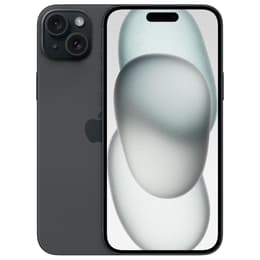
iPhone 15 Plus
iPhone 15 Plus
Starting at

Refurbished price:£344.00

Versus £799.00 new

See options

Ratings

The Google Pixel 9A (released April 2025) and the iPhone 15 Plus (released September 2023) represent distinct approaches to smartphone design and functionality. While the Pixel 9A operates on the Android platform, emphasizing Google's artificial intelligence capabilities, the iPhone 15 Plus runs on iOS, known for its integrated ecosystem and user experience. Key differentiators include their display technologies, camera philosophies, and software support timelines.

Scores

Durability

The longevity of a smartphone is influenced by its build quality, software support, and ease of repair. Both devices offer robust protection against environmental factors, but their long-term usability is shaped by their respective ecosystems and design choices.

  • Software Updates: The Google Pixel 9A is notable for its commitment to seven years of OS and security updates, providing an extended period of software relevance. The iPhone 15 Plus typically receives 5-6 years of major iOS updates, ensuring a substantial, though slightly shorter, support window. [1, 7, 11, 18, 34]
  • Physical Durability: Both the Pixel 9A and iPhone 15 Plus feature an IP68 rating for dust and water resistance, indicating protection against submersion. The iPhone 15 Plus incorporates Ceramic Shield on its front display for enhanced drop protection, while the Pixel 9A uses Corning Gorilla Glass 3. [8, 9, 10, 20, 29, 30, 33, 36, 37, 41, 42, 45, 46]
  • Repairability Considerations: While both devices are designed with modern construction, some reports indicate that the Pixel 9A's battery replacement process can be more challenging due to its adhesive method, contrasting with more repair-friendly designs seen in some other devices. [20, 42]

Year of Release

2025

2023

Compatible with latest Update

Yes

Yes

OS

Android

iOS

Foldable

No

No

Performance

Performance in daily use is a critical aspect for any smartphone, encompassing how smoothly applications run, how efficiently tasks are managed, and the device's overall responsiveness.

  • Everyday Responsiveness: The Google Pixel 9A, powered by its current-generation processor, handles demanding applications and multitasking smoothly, providing a fluid user experience. The iPhone 15 Plus, featuring its own advanced chip, also delivers brisk performance, ensuring applications load quickly and transitions are seamless. [2, 7, 12, 22, 28, 32]
  • Multitasking and Storage: The Pixel 9A comes with 8GB of RAM, supporting efficient multitasking across various applications. It offers storage options of 128GB and 256GB. The iPhone 15 Plus typically includes 6GB of RAM and is available with 128GB, 256GB, or 512GB of internal storage, providing ample space for media and applications. [5, 6, 9, 10, 11, 33, 34]
  • Battery Behavior: Both devices offer impressive battery longevity. The Pixel 9A, with its larger battery capacity, is frequently noted for lasting more than a full day even with heavy usage. The iPhone 15 Plus also provides excellent battery life, often extending beyond a single day, making it a strong performer for users who prioritize extended use between charges. [1, 2, 7, 12, 17, 18, 19, 22, 24, 25, 28, 32, 36, 38, 39, 43, 46]

Memory (GB)

8 GB

6 GB

Screen quality

The display is the primary interface for user interaction, and differences in technology, resolution, and brightness significantly impact the viewing experience.

  • Display Technology and Clarity: Both smartphones feature vibrant OLED displays, offering deep blacks and rich colors. The Pixel 9A has a 6.3-inch Actua OLED display with a resolution of 1080x2424 pixels. The iPhone 15 Plus sports a larger 6.7-inch Super Retina XDR OLED display with a resolution of 2796x1290 pixels, providing a slightly higher pixel density. [1, 5, 7, 9, 10, 11, 14, 21, 33, 34, 37, 40, 41, 43, 46]
  • Brightness and Smoothness: The Pixel 9A's display offers a 120Hz refresh rate, contributing to smoother scrolling and more fluid animations, and can reach a peak brightness of 2700 nits for excellent outdoor visibility. The iPhone 15 Plus features a 60Hz refresh rate, which provides a consistent experience, and achieves a peak brightness of 2000 nits outdoors. [1, 7, 10, 11, 14, 21, 33, 34, 37, 40, 41, 43, 46]
  • Screen Design: The Pixel 9A features uniform bezels around its display, while the iPhone 15 Plus incorporates the Dynamic Island, an interactive area that adapts to alerts and background activities. [1, 12, 21, 31, 37, 46]

Resolution

2424 x 1080

1290 x 2796

Audiovisual

Camera capabilities are a major consideration for many users, with both devices offering advanced systems for capturing photos and videos.

  • Rear Camera Systems: The Google Pixel 9A includes a dual-camera setup with a 48MP main sensor (f/1.7) and a 13MP ultrawide sensor (f/2.2). The iPhone 15 Plus also features a dual-camera system, comprising a 48MP main sensor (f/1.6) and a 12MP ultrawide sensor (f/2.4). Both main sensors are capable of capturing detailed images. [1, 9, 10, 11, 12, 15, 16, 17, 21, 23, 26, 31, 33, 43]
  • Photography Performance: The Pixel 9A excels in computational photography, producing images with vibrant colors and good detail, particularly in bright conditions and for low-light stills. It also offers macro focus capabilities. The iPhone 15 Plus is known for its consistent, natural color reproduction and accurate exposure, with improved low-light performance over previous models and a 2x optical quality zoom achieved through sensor cropping. [1, 4, 12, 14, 15, 16, 17, 23, 26, 31, 46]
  • Video and Front Camera: Both devices offer high-quality video recording with excellent stabilization. The Pixel 9A has a 13MP front camera, while the iPhone 15 Plus features a 12MP front camera, both capable of capturing clear selfies and supporting various portrait modes. [1, 9, 10, 11, 16, 17, 23, 33]

Front camera

13 megapixels

12 megapixels

Miscellaneous

Beyond the core features, several practical elements contribute to the overall user experience, from connectivity to physical design.

  • Connectivity and Ports: The Google Pixel 9A supports Wi-Fi 6E and Bluetooth v5.x, along with 5G connectivity, and features a USB-C port. The iPhone 15 Plus supports Wi-Fi 6 and Bluetooth 5.3, also includes 5G, and has a USB-C 2.0 port, which offers standard data transfer speeds. [9, 10, 21, 33, 34]
  • Biometrics and Design: The Pixel 9A incorporates an under-display optical fingerprint sensor for secure unlocking, alongside face unlock. The iPhone 15 Plus relies on Face ID for biometric authentication. The Pixel 9A has an aluminum frame and a more uniform thickness, while the iPhone 15 Plus also features an aluminum frame with a refined design. [8, 9, 18, 30, 34, 37, 40, 45, 46]
  • Weight and Dimensions: The Pixel 9A measures 154.7 x 73.3 x 8.9mm and weighs 185.9g, offering a relatively compact and manageable form factor. The iPhone 15 Plus is larger and slightly heavier at 160.9 x 77.8 x 7.8mm and 201g, providing a more expansive screen experience. [9, 10, 33, 37, 43]

Weight

186 g

201 g

Screen size (in)

6.3

6.7

Mobile network

5G

5G

SIM card

Physical SIM + eSIM

Physical SIM + eSIM

Carrier compatibility

Unlocked

Unlocked

Connector

USB-C

USB-C

User feedback for the Google Pixel 9A frequently praises its exceptional battery life, often exceeding a full day of use, and its strong camera performance, particularly for everyday photography and low-light stills. Many users appreciate the clean Android experience and the long-term software support commitment. Common criticisms sometimes point to the ultrawide camera's performance in low light and the charging speed. The iPhone 15 Plus is widely lauded for its outstanding battery life, often cited as one of the best in its category, and its consistently high-quality camera system, especially for video recording. Users also value the integrated iOS ecosystem and the large, vibrant display. Some common observations include the 60Hz refresh rate, which some users find less fluid compared to higher refresh rate displays on other devices.

Users prioritizing an extended software support timeline and a strong focus on computational photography and AI features may find the Google Pixel 9A well-suited to their needs. Its 120Hz display also offers a smoother visual experience. Conversely, individuals who value a larger display, a highly integrated ecosystem, and exceptional video capabilities might lean towards the iPhone 15 Plus. Both devices offer robust durability with IP68 ratings. For those seeking an eco-friendly and quality-assured refurbished option, both the Pixel 9A and iPhone 15 Plus are available, providing a sustainable choice for consumers.


See all articles

Our recent comparisons




