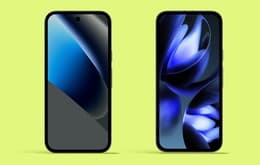
Compare models
Google Pixel 9 Pro Vs iPhone 17 Pro
- 1-year minimum warranty
- Free delivery on all items
- Free 30-day returns
Differences at a glance
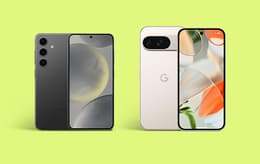
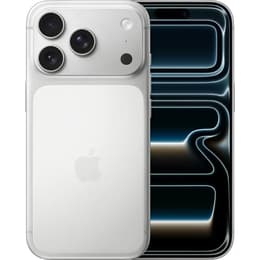
The Google Pixel 9 Pro (2024) and the iPhone 17 Pro (2025) represent advanced tiers of smartphone engineering from two major technology ecosystems. While the Pixel 9 Pro centers its experience around deep software intelligence and streamlined everyday interaction, the iPhone 17 Pro focuses on high-end hardware integration and extended processing capability. Operating on different software platforms—Android and iOS respectively—these devices cater to distinct user preferences regarding interface design and ecosystem connectivity. Understanding their practical differences helps users determine which model best aligns with their daily requirements.
Available Models
Colour
Storage (GB)
Scores
Durability
Both devices are built to withstand several years of regular usage, though their long-term software support frameworks and repair pathways differ slightly based on manufacturer guidelines.
- Software longevity: Both manufacturers provide multi-year operating system and security update commitments, ensuring each device remains functional and secure well into the future, with the Pixel model offering an extended multi-year support window matching industry standards.
- Repairability and build durability: Each phone incorporates robust frame materials and reinforced display glass to minimize everyday wear and tear, while authorized service networks ensure components can be replaced as parts age.
- Expected practical lifespan: Users can anticipate smooth daily performance and reliable battery endurance across a typical multi-year ownership cycle, making a quality-assured refurbished option a sustainable choice for environmentally conscious consumers.
Year of Release
2024
2025
Compatible with latest Update
Yes
Yes
OS
Android
iOS
Foldable
No
No
Performance
Handling daily tasks, resource-heavy applications, and multitasking efficiently, both smartphones deliver responsive user experiences tailored to different hardware architectures.
- Multitasking and app responsiveness: Each device switches between demanding applications smoothly, maintains fluid navigation, and loads large files without noticeable hesitation.
- Storage capacity and battery endurance: Multiple internal storage tiers accommodate large media libraries, while battery management systems support a full day of standard mixed usage before requiring a recharge.
- Gaming and heavy processing: Advanced thermal management allows both phones to handle graphically intensive games and high-load tasks without abrupt performance throttling during extended sessions.
Screen quality
Visual output across both displays prioritizes clarity, outdoor visibility, and smooth motion handling through modern panel technologies.
- Display technology and brightness: Both handsets feature advanced organic light-emitting diode panels that deliver deep contrast levels and sufficient peak brightness for clear outdoor viewing under direct sunlight.
- Refresh rate and smoothness: High refresh rate support ensures that scrolling through web pages, social media feeds, and system menus appears fluid and responsive.
- Size and viewing ergonomics: The physical display sizes offer comfortable viewing areas for media consumption and reading, balancing screen estate with manageable one-handed handling.
Resolution
1280 x 2856
2622x1206
Screen type
LTPO OLED
Super Retina XDR
Audiovisual
Capturing photos and recording video rely on sophisticated multi-lens setups supported by advanced computational processing to handle various lighting conditions.
- Photography performance: Both primary camera systems produce sharp images with balanced dynamic range across daylight and low-light environments, utilizing automated software optimization to reduce noise.
- Video recording quality: Video capture features high-resolution stabilization, smooth exposure transitions, and clear audio capture suited for recording everyday moments or professional content.
- Audio and media output: Stereo speaker configurations deliver balanced sound output for hands-free calling, video viewing, and casual music listening.
Main camera
50 megapixels
48 megapixels
Front camera
42 megapixels
18 megapixels
Miscellaneous
Physical design elements, connectivity standards, and daily handling characteristics shape the overall ergonomic experience of using each device.
- Connectivity and ports: Both models support current-generation 5G networks, fast Wi-Fi standards, and reliable Bluetooth pairing, utilizing modern universal port standards for charging and data transfer.
- Authentication sensors: Secure unlocking methods include responsive facial recognition systems and fingerprint sensors embedded directly within or around the hardware framework.
- Physical dimensions and handling: Weight distribution and ergonomic contours allow both phones to sit comfortably in the hand, though subtle differences in width and corner curvature influence pocketability and grip.
Weight
280 g
206 g
Screen size (in)
6.8
6.3
Mobile network
5G
5G
SIM card
Physical SIM + eSIM
Physical SIM + eSIM
Carrier compatibility
Unlocked
Unlocked
Connector
USB-C
USB-C
What the community thinks
Choosing between the Google Pixel 9 Pro and the iPhone 17 Pro ultimately depends on individual software preferences and daily workflow priorities. Users who prefer a customizable operating system integrated with advanced voice-assisted features often gravitate toward the Pixel ecosystem. Conversely, users invested in Apple's hardware-software integration tend to favor the streamlined continuity offered by the iPhone platform.
Reviewers and community members frequently praise the Pixel 9 Pro for its intuitive software features and reliable photo processing capabilities, while noting that its processing architecture prioritizes efficiency over raw benchmark maximums. On the other hand, the iPhone 17 Pro receives strong recognition for its sustained processing power and robust build quality, though some users point out the closed nature of its software environment as a limitation for deep customization. Selecting a quality-assured refurbished model from Back Market provides a sustainable, cost-effective pathway to acquiring either device while reducing electronic waste.