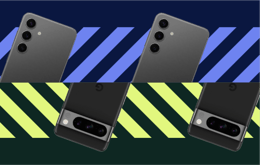
Compare models

Galaxy A56 Vs Google Pixel 10

  • 1-year minimum warranty
  • Free delivery on all items
  • Free 30-day returns
Galaxy A56
Starting at

Refurbished price:£248.00

Versus £407.05 new

See options
Google Pixel 10
Starting at

Refurbished price:£404.00

Versus £789.14 new

See options

Differences at a glance

The Samsung Galaxy A56 (2025) and Google Pixel 10 (2025) represent two distinct approaches to the modern mid-range smartphone market. While both devices deliver reliable everyday functionality and modern connectivity, they differ primarily in their software ecosystems, processing priorities, and overall design philosophy. The Galaxy A56 runs on Samsung's custom interface built over Android, offering extensive personalization features, whereas the Google Pixel 10 provides a clean, software-focused experience designed around advanced device intelligence and long-term Google support.

Available Models

Colour

Storage

Scores

Durability

When evaluating the longevity and software support of these two devices, both manufacturers provide robust update commitments that help ensure years of reliable daily usage.

  • Software updates: Both models provide extended operating system and security patch timelines, ensuring the software remains current and secure for several years following release.
  • Repairability and build durability: Each device features sealed glass and metal structures with high water and dust resistance ratings, designed to withstand everyday wear while requiring professional assistance for internal component repairs.
  • Expected practical lifespan: Routine software maintenance and solid build construction mean both handsets easily sustain typical multi-year usage cycles for standard communication, browsing, and media consumption.

Year of Release

2025

2025

Compatible with latest Update

Yes

Yes

OS

Android

Android

Foldable

No

No

Performance

Performance capabilities vary noticeably between the two models due to differing hardware configurations and internal software optimizations for daily tasks.

  • Multitasking and daily speed: Both handsets handle everyday applications, web browsing, and switching between multiple open programs smoothly without noticeable stutter or lag.
  • Storage configurations: Each device offers standard baseline storage capacities paired with sufficient memory to support efficient background app management and routine file storage.
  • Battery behavior: Typical battery capacities across both models comfortably support a full day of mixed usage, though heavy media consumption or extended navigation use will require an evening recharge.

Screen quality

Display technology on both smartphones emphasizes visual clarity, bright outdoor readability, and smooth refresh rates for enhanced media viewing.

  • Display panel type: Both models utilize vibrant OLED panels that produce deep blacks, high contrast ratios, and vivid colors for comfortable indoor and outdoor viewing.
  • Refresh rate and fluidity: High refresh rate support ensures that scrolling through web pages, reading documents, and navigating menus appears fluid and responsive.
  • Peak brightness: High maximum brightness levels allow text and images to remain easily legible even under direct sunlight or bright outdoor lighting conditions.

Resolution

1080x2340

1080x2424

Audiovisual

Camera hardware and imaging software on these devices cater to users who want dependable everyday snapshots as well as clear video recording capabilities.

  • Main and auxiliary sensors: Both phones incorporate multi-lens rear camera setups featuring primary wide lenses and secondary ultra-wide options for capturing expansive landscapes.
  • Low-light photography: Image processing software automatically brightens dim scenes, helping users capture clear details in low-light environments without heavy manual adjustments.
  • Video and audio recording: Integrated stabilization features ensure that handheld video recording remains steady, while internal microphone arrays capture clear voice audio during calls and video clips.

Front camera

13 megapixels

42 megapixels

Miscellaneous

Practical physical characteristics and connectivity options shape how each device fits into daily routines, travel, and accessories usage.

  • Connectivity standards: Both smartphones support modern fifth-generation mobile data networks, current Wi-Fi protocols, and Bluetooth standards for reliable peripheral pairing.
  • Physical dimensions and handling: Each model balances screen estate with ergonomic considerations, featuring slim profiles and comfortable weights that fit securely into pockets or small bags.
  • Biometric security: Secure authentication is handled via responsive in-display fingerprint sensors and facial recognition options designed for quick device unlocking.

Weight

198 g

204 g

Screen size (in)

6.7

6.3

Mobile network

5G

5G

SIM card

Dual Physical SIM + eSIM

Physical SIM + eSIM

Carrier compatibility

Unlocked

Unlocked

Connector

USB-C

USB-C

What the community thinks

User discussions and community feedback indicate that buyers appreciate the reliable battery life and customizable software experience found on the Samsung Galaxy A56, while Google Pixel 10 owners frequently praise the clean interface and reliable snapshot quality. Some users note that Samsung's software suite includes pre-installed duplicate applications, whereas Google's minimalist approach appeals to those seeking a streamlined interface free of extra software clutter.

Users who prioritize a highly customizable interface and flexible system settings may prefer the Galaxy A56, while users prioritizing a streamlined software experience and straightforward photography tools will lean toward the Google Pixel 10. For buyers seeking a sustainable choice, choosing a quality-assured refurbished option through Back Market offers an eco-friendly alternative that extends device life cycles without compromising on performance or reliability. Ultimately, both devices provide capable mid-range experiences tailored to different software preferences and daily usage habits.