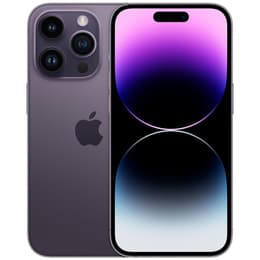

Google Pixel 9 Pro Fold Vs iPhone 14 Pro

Google Pixel 9 Pro Fold
Starting at

Refurbished price:£538.00

Versus £1,739.49 new

See options
iPhone 14 Pro
iPhone 14 Pro
Starting at

Refurbished price:£304.00

Versus £1,099.00 new

See options

Ratings

The Google Pixel 9 Pro Fold, released in 2024, and the Apple iPhone 14 Pro, launched in 2022, represent distinct approaches to high-end smartphone design. The Pixel 9 Pro Fold offers a unique foldable form factor, expanding from a compact device to a larger tablet-like screen, while the iPhone 14 Pro maintains a traditional, rigid smartphone design. These devices cater to different user preferences, primarily differing in their operating systems, display configurations, and release timelines.

Scores

Durability

When considering the long-term usability of these devices, their release timelines and software support policies are key factors.

  • Release and Software Support: The Google Pixel 9 Pro Fold, released in September 2024, benefits from Google's commitment to providing seven years of operating system and security updates, extending its support until 2031. In contrast, the iPhone 14 Pro, released in September 2022, typically receives iOS updates for approximately five to six years from its launch, meaning its software support will conclude sooner.
  • Physical Durability: The iPhone 14 Pro features a Ceramic Shield front cover and an IP68 rating for water and dust resistance. User experiences suggest that while the iPhone 14 Pro is generally robust, its glass back can be susceptible to damage from drops. The Pixel 9 Pro Fold, as a foldable device, incorporates Ultra Thin Glass for its inner display and Gorilla Glass Victus 2 for its cover screen, presenting a different set of durability considerations inherent to its folding mechanism.
  • Repairability: The iPhone 14 Pro's internal design, particularly for the Pro Max variant, has been noted to make back glass repairs challenging, though the standard iPhone 14 and 14 Plus models introduced a more repairable design. Information regarding the repairability of the Pixel 9 Pro Fold is less widely detailed, but foldable devices often present more complex repair scenarios due to their intricate hinge and display technologies.

Year of Release

2024

2022

Compatible with latest Update

Yes

Yes

OS

Android

iOS

Foldable

Yes

No

Performance

Both devices are equipped with powerful internal components designed for smooth operation, though their architectures differ.

  • Processing Power: The Google Pixel 9 Pro Fold is powered by Google's Tensor G4 processor, paired with a Titan M2 security coprocessor, and includes 16 GB of RAM. This configuration allows for efficient handling of demanding applications, extensive multitasking, and advanced on-device artificial intelligence features. The iPhone 14 Pro utilizes Apple's A16 Bionic chip and comes with 6 GB of RAM. This processor delivers strong performance for gaming, video editing, and general daily use, ensuring a responsive user experience.
  • Storage Options: The Pixel 9 Pro Fold offers storage capacities of 256 GB or 512 GB. The iPhone 14 Pro provides a wider range of storage options, including 128 GB, 256 GB, 512 GB, and 1 TB, catering to users with varying storage needs.
  • Real-world Responsiveness: Users of the iPhone 14 Pro generally report a fluid and lag-free experience across applications and system navigation, even after extended use. The Pixel 9 Pro Fold, with its higher RAM and dedicated Tensor processor, is designed to offer similar high levels of responsiveness, particularly excelling in tasks that leverage its AI capabilities.

Memory (GB)

16 GB

6 GB

Screen quality

The display experience is a primary differentiator, with the Pixel 9 Pro Fold offering a versatile folding screen and the iPhone 14 Pro providing a high-quality traditional panel.

  • Display Technology and Size: The Google Pixel 9 Pro Fold features two OLED displays: a 6.3-inch cover screen and an 8-inch internal folding screen. The internal display uses LTPO technology, allowing for adaptive refresh rates. The iPhone 14 Pro has a 6.1-inch Super Retina XDR OLED display. Both devices utilize OLED technology for deep blacks and vibrant colors.
  • Resolution and Brightness: The Pixel 9 Pro Fold's cover display has a resolution of 1080 x 2424 pixels, while its inner display is 2076 x 2152 pixels. Both screens can reach a peak brightness of up to 2700 nits, offering excellent visibility in bright outdoor conditions. The iPhone 14 Pro features a 2556 x 1179 pixel resolution at 460 pixels per inch and can achieve a peak outdoor brightness of 2000 nits.
  • Refresh Rate and Features: The Pixel 9 Pro Fold's cover display has a refresh rate of 60-120Hz, and its inner display offers an adaptive 1-120Hz refresh rate for smooth scrolling and animations. The iPhone 14 Pro also incorporates ProMotion technology with an adaptive refresh rate ranging from 1Hz to 120Hz, contributing to a fluid visual experience and efficient power consumption. The iPhone 14 Pro also introduced the Dynamic Island, a dynamic area around the front camera that displays alerts and background activities.

Resolution

2076 x 2152

1179 x 2556

Audiovisual

Both smartphones are equipped with advanced camera systems, each with its own strengths in photography and videography.

  • Rear Camera Systems: The Google Pixel 9 Pro Fold features a triple rear camera setup, including a 48 MP wide-angle lens, a 10.5 MP ultra-wide lens, and a 10.8 MP telephoto lens with 5x optical zoom and up to 20x Super Res Zoom. The iPhone 14 Pro also has a triple camera system, comprising a 48 MP main sensor that typically outputs 12 MP images through pixel binning, a 12 MP ultra-wide lens, and a 12 MP telephoto lens offering 3x optical zoom.
  • Photography Features: The Pixel 9 Pro Fold includes AI-enhanced features like Video Boost, 'Add Me,' and 'Made You Look,' which leverages the outer display to capture attention. The iPhone 14 Pro benefits from Apple's Photonic Engine for improved low-light performance and offers ProRAW for professional-grade image capture. Both devices provide strong low-light capabilities, though some iPhone 14 Pro users have noted that pushing the camera for rapid, professional-level shooting can lead to heating and processing issues.
  • Video Recording and Audio: Both phones support 4K video recording at various frame rates. The iPhone 14 Pro includes Cinematic mode for shallow depth-of-field video and Action mode for enhanced stabilization. The Pixel 9 Pro Fold also supports stereo audio and Spatial audio.

Front camera

10 megapixels

12 megapixels

Miscellaneous

Beyond core features, several practical elements distinguish these two devices in daily use.

  • Connectivity and Ports: The Google Pixel 9 Pro Fold supports Wi-Fi 7 and 5G connectivity, along with a dual SIM setup (nano SIM + eSIM). The iPhone 14 Pro supports Wi-Fi 6 and 5G, and in the US, it was the first iPhone to drop physical SIM card support, relying solely on eSIM. The iPhone 14 Pro uses a Lightning port for charging and data transfer.
  • Biometric Security and Sensors: The iPhone 14 Pro relies on Face ID for secure authentication. The Pixel 9 Pro Fold likely incorporates a fingerprint sensor, a common feature on Pixel devices, though specific details were not provided in the search results. Both devices include a range of sensors for navigation and functionality, such as accelerometers, gyroscopes, and ambient light sensors.
  • Weight and Dimensions: The Pixel 9 Pro Fold weighs 257 grams. When folded, it measures 155.2 x 77.1 x 10.5 mm, and when unfolded, it is 155.2 x 150.2 x 5.1 mm. The iPhone 14 Pro is lighter at 206 grams and has dimensions of 147.5 x 71.5 x 7.85 mm. The foldable nature of the Pixel 9 Pro Fold means it offers a larger screen in a more compact, albeit thicker, form factor when closed.

Weight

257 g

206 g

Screen size (in)

8.0

6.1

Mobile network

5G

5G

SIM card

Physical SIM + eSIM

Physical SIM + eSIM

Carrier compatibility

Unlocked

Unlocked

Connector

USB-C

Lightning

The Google Pixel 9 Pro Fold and the iPhone 14 Pro cater to different user priorities, primarily due to their fundamental design philosophies. The Pixel 9 Pro Fold, a 2024 release, is praised for its innovative foldable display, offering the versatility of a large screen in a portable format. Users appreciate its extended software support and the advanced AI capabilities powered by its Tensor G4 processor. Its camera system, with 5x optical zoom and unique AI features, is also a significant draw. Some users might find the thickness when folded a consideration, and the long-term durability of foldable screens is an ongoing discussion point.

The iPhone 14 Pro, released in 2022, is lauded for its consistent performance, high-quality traditional OLED display with the Dynamic Island, and a robust camera system that excels in everyday photography. Users frequently highlight its smooth iOS experience and the reliability of its ecosystem. However, some users have expressed concerns about its battery life compared to previous models and the durability of its glass back in drop tests. The iPhone 14 Pro's software support, while still substantial, will conclude earlier than that of the newer Pixel 9 Pro Fold.

Users prioritizing a large, adaptable screen for productivity and media consumption, coupled with long-term software support and advanced AI features, may find the Google Pixel 9 Pro Fold better suited to their needs. Conversely, individuals who prefer a traditional, compact smartphone form factor with a highly refined user experience, a strong camera for general use, and a well-established ecosystem might lean towards the iPhone 14 Pro. Both devices offer compelling features, and for those seeking an eco-friendly alternative, quality-assured refurbished options for either model can provide a sustainable choice.

See all articles

Our recent comparisons