
Google Pixel 7A Vs Motorola Moto E13

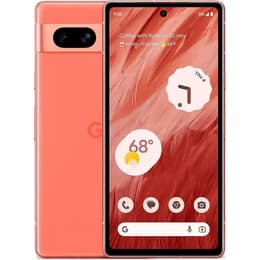
Google Pixel 7A
Google Pixel 7A
Starting at

Refurbished price:£142.24

Versus £649.99 new

See options
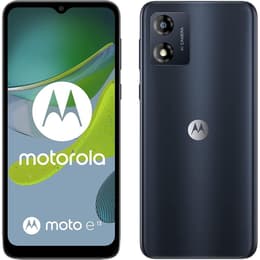
Motorola Moto E13
Motorola Moto E13
Starting at

Refurbished price:£74.00

Versus £83.99 new

See options

Ratings

The Google Pixel 7a and the Motorola Moto E13, both released in 2023, cater to different segments of the smartphone market. While the Pixel 7a offers a more advanced Android experience with a focus on camera capabilities and a powerful processor, the Moto E13 provides a streamlined Android Go edition experience with an emphasis on extended battery life and essential smartphone functions. These differences influence their overall performance, software longevity, and suitability for various user needs.

Scores

Durability

The expected lifespan of a smartphone is significantly influenced by its release timeline, software support, and physical durability features.

  • Software Longevity: The Google Pixel 7a, released in May 2023, is part of Google's commitment to providing five years of OS and security updates, extending its software support until at least May 2028. This ensures a longer period of access to the latest Android features and security patches. [11, 26, 27, 33, 35] In contrast, the Motorola Moto E13, released in February 2023, typically receives one major OS upgrade and approximately two years of security patches, which means a shorter official software support window. [38]
  • Physical Durability: The Pixel 7a features an IP67 rating for dust and water resistance, offering protection against immersion in up to 1 meter of water for 30 minutes, and its display is protected by Corning Gorilla Glass 3. [5, 7] The Moto E13 comes with an IP52 rating, indicating a water-repellent design that protects against splashes and light rain. [10, 15, 17, 32]
  • Repairability: The Pixel 7a has a repairability score of 5 out of 10 by iFixit, which improved after Google released a service manual, making some repairs more accessible for users. [1] The Moto E13 has a repairability score of 6.5 out of 10, noted for its easily accessible battery, though screen replacement requires more extensive disassembly due to adhesive use. [8]

Year of Release

2023

2023

Compatible with latest Update

Yes

No

OS

Android

Android

Foldable

No

No

Performance

The core processing power and memory configurations are key differentiators impacting daily usability and responsiveness between these two devices.

  • Processing Capabilities: The Google Pixel 7a is equipped with a processor designed for efficient handling of demanding applications, smooth multitasking, and responsive gaming experiences. Users generally report fluid performance across various tasks, though some note the device can generate warmth during intensive use. [23, 25] The Motorola Moto E13 features a processor that capably manages everyday tasks such as browsing, messaging, and light app usage. However, it may exhibit slower performance or lag when running multiple applications simultaneously or engaging in graphically intensive games. [13, 28, 29, 32]
  • Memory and Storage: The Pixel 7a comes with 8GB of RAM and 128GB of internal storage, which is not expandable. [2, 7] This ample RAM supports robust multitasking, allowing users to switch between apps without significant slowdowns. The Moto E13 offers various configurations, commonly found with 2GB or 4GB of RAM and 32GB, 64GB, or 128GB of internal storage, with the option to expand storage via a microSDXC card up to 256GB. [3, 6, 12, 40] The lower RAM options on the Moto E13 mean it is better suited for users with lighter multitasking needs.
  • System Responsiveness: The Pixel 7a provides a consistently responsive user experience, with quick app loading times and smooth navigation through the operating system. The Moto E13, running on Android 13 (Go edition), is optimized for devices with less powerful hardware, ensuring a functional experience for essential smartphone tasks, though with noticeable differences in speed compared to more powerful devices. [13, 28]

Memory (GB)

8 GB

2 GB

Screen quality

The visual experience on a smartphone is largely defined by its display technology, resolution, and refresh rate, which vary between these two models.

  • Display Technology and Clarity: The Google Pixel 7a features a 6.1-inch OLED display with a Full HD+ resolution of 1080 x 2400 pixels, resulting in sharp images and vibrant colors with deep blacks. It also supports HDR content, enhancing the viewing experience for compatible media. [2, 4, 5, 7] The Motorola Moto E13 sports a larger 6.5-inch IPS LCD display with an HD+ resolution of 720 x 1600 pixels. While it offers a spacious viewing area, the clarity and color reproduction are less refined compared to the Pixel 7a's OLED panel. [3, 6, 10, 29]
  • Refresh Rate and Brightness: The Pixel 7a offers a 90Hz refresh rate, providing a smoother scrolling experience and more fluid animations compared to standard 60Hz displays. [4, 7] Its display brightness is generally sufficient for various lighting conditions, though some users note it might need to be set higher in bright daylight. [14, 25] The Moto E13 has a standard 60Hz refresh rate, which is typical for its category. Its screen brightness is adequate for indoor use but may require maximum settings for comfortable viewing outdoors. [29]
  • Viewing Experience: Users prioritizing a crisp, colorful, and smooth visual experience for media consumption and general interaction will find the Pixel 7a's display more engaging. For those who value a larger screen size for basic browsing and video playback, and for whom display fidelity is not the top priority, the Moto E13 offers a functional viewing experience.

Resolution

1080 x 2400

720 x 1600

Screen type

OLED

IPS LCD

Audiovisual

Camera capabilities are a significant factor for many users, and these two devices offer distinct photographic experiences.

  • Rear Camera System: The Google Pixel 7a features a dual-camera setup on the rear, including a 64MP main sensor with optical image stabilization (OIS) and a 13MP ultrawide lens with a 120-degree field of view. [4, 7, 9] This configuration, combined with Google's computational photography, allows for detailed photos, strong low-light performance, and versatile shooting options. [14, 23, 25] The Motorola Moto E13 is equipped with a single 13MP main camera. [3, 6, 10] It performs adequately in well-lit conditions, capturing decent everyday photos, but its low-light performance is more limited, and images can appear less vibrant or detailed. [13, 21, 29]
  • Front Camera and Video Recording: For selfies and video calls, the Pixel 7a has a 13MP front camera. [4, 7] It supports 4K video recording at 30 or 60 frames per second, offering high-quality video capture. [7] The Moto E13 includes a 5MP front camera, suitable for basic selfies and video calls. [3, 6, 10] Video recording capabilities are more modest, typically at lower resolutions and frame rates.
  • Audio Quality: The Pixel 7a provides a generally good audio experience for calls and media. The Moto E13 features a single speaker with Dolby Atmos support, which enhances the audio experience for media consumption, and it also retains a 3.5mm headphone jack. [10, 28]

Main camera

64 megapixels

13 megapixels

Front camera

13 megapixels

5 megapixels

Miscellaneous

Beyond the core features, several practical elements contribute to the overall user experience and connectivity of these smartphones.

  • Connectivity Standards: The Google Pixel 7a supports 5G cellular networks, offering faster download and upload speeds where available, along with Wi-Fi 6E and Bluetooth 5.3 for advanced wireless connectivity. [5] The Motorola Moto E13 supports 4G LTE networks, Wi-Fi 5 (802.11 a/b/g/n/ac), and Bluetooth 5.0. [6, 10] This means the Pixel 7a offers more future-proof and faster wireless communication options.
  • Ports and Biometrics: Both devices feature a USB-C port for charging and data transfer. [15] The Moto E13 also includes a 3.5mm headphone jack, a feature absent on the Pixel 7a, which may be important for users who prefer wired audio accessories. [28] For security, the Pixel 7a offers an under-display fingerprint reader and face unlock. [24] The Moto E13 primarily relies on face unlock for biometric security. [15]
  • Design and Handling: The Pixel 7a weighs 193 grams and has dimensions of 72.9 x 152 x 9 mm, featuring a tactile alloy frame and a 3D thermoformed composite back. [2, 15] The Moto E13 is lighter at 179.5 grams and slightly larger with dimensions of 164.19 x 74.95 x 8.47 mm. [6, 10, 15] Its lighter weight and slightly thinner profile might appeal to users seeking a more lightweight device.

Weight

193 g

181 g

Screen size (in)

6.1

6.5

Mobile network

5G

4G

SIM card

Physical SIM + eSIM

Dual Physical SIM

Carrier compatibility

Unlocked

Unlocked

The Google Pixel 7a and Motorola Moto E13 cater to distinct user priorities, reflecting their different design philosophies and feature sets. User feedback for the Pixel 7a often praises its exceptional camera performance, which is frequently compared favorably to more expensive flagship phones, and its smooth, responsive software experience. [14, 23, 25] However, some users have noted that its battery life, while generally sufficient for a day, might not hold up under very heavy usage, and the device can sometimes run warm. [14, 23, 25] The Moto E13 is frequently lauded for its impressive battery longevity, often lasting up to two days on a single charge, and its clean Android Go software experience. [13, 28, 29] Criticisms often point to its more basic camera performance, particularly in challenging lighting, and its limited processing power for demanding applications. [13, 21, 29, 32]

Users prioritizing advanced camera capabilities, a vibrant OLED display, and a longer software support window for future-proofing will find the Google Pixel 7a well-suited to their needs. It offers a premium Android experience for those who value performance and photographic excellence. Conversely, users who prioritize extended battery life, a larger screen for casual use, and essential smartphone functions without needing high-end performance or advanced camera features may lean toward the Motorola Moto E13. It serves as a reliable device for communication, basic browsing, and media consumption. Both devices are available as quality-assured refurbished options, providing an eco-friendly alternative for consumers.


See all articles

Our recent comparisons