Google Pixel 6 Vs iPhone 16 Plus

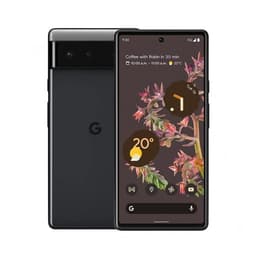
Google Pixel 6
Google Pixel 6
Starting at

Refurbished price:£101.00

Versus £649.99 new

See options
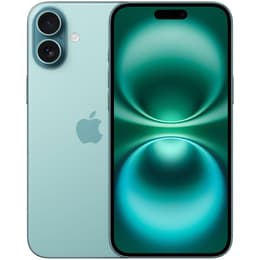
iPhone 16 Plus
iPhone 16 Plus
Starting at

Refurbished price:£503.46

Versus £799.00 new

See options

Ratings

The Google Pixel 6, released in October 2021, and the iPhone 16 Plus, launched in September 2024, represent distinct approaches to smartphone design and functionality from their respective manufacturers. While the Pixel 6 operates on the Android ecosystem, the iPhone 16 Plus runs on iOS, offering users different software experiences. A primary differentiator lies in their release timelines, with the iPhone 16 Plus benefiting from several years of technological advancements, particularly in processing power and camera capabilities, while the Pixel 6 offers a robust experience from its era.

Scores

Durability

When considering the long-term usability of these devices, their release timelines and software support play a significant role.

  • Release Timeline: The Google Pixel 6 was introduced in October 2021, making it an older device compared to the iPhone 16 Plus, which debuted in September 2024. This age difference inherently impacts the remaining period of official software support and the availability of the latest features.
  • OS Support Duration: The Pixel 6 series is guaranteed five years of OS and security updates from its release date, meaning its last major Android OS update is expected in 2026, with security updates continuing until October 2026. The iPhone 16 Plus, being a newer device, will likely receive software updates for a longer duration, typically extending for five to six years or more from its launch, aligning with Apple's historical support for its devices.
  • Practical Lifespan: Both devices are built with durable materials, featuring robust glass on their fronts and backs, and an IP68 rating for dust and water resistance. However, the newer components and extended software support of the iPhone 16 Plus suggest a longer practical lifespan for receiving new features and maintaining compatibility with future applications.

Year of Release

2021

2024

Compatible with latest Update

Yes

Yes

Foldable

No

No

Performance

The performance of a smartphone is crucial for daily tasks, from navigating applications to managing multiple activities simultaneously.

  • Storage Options: The Google Pixel 6 is available with 128GB or 256GB of internal storage, paired with 8GB of RAM. The iPhone 16 Plus offers more varied storage configurations, including 128GB, 256GB, and 512GB options, providing greater flexibility for users with extensive media or application libraries.
  • Battery Behavior: The Pixel 6, equipped with a 4614mAh battery, generally provides all-day power for moderate usage, though heavy camera use or specific network conditions can lead to faster depletion. The iPhone 16 Plus features a larger battery and is optimized with a more efficient processor and operating system, resulting in excellent all-day battery life, with some users reporting it can extend beyond a single day.
  • System Responsiveness: The Pixel 6 delivers a smooth user experience for everyday tasks and handles demanding applications effectively, thanks to its custom-designed processor. The iPhone 16 Plus, with its significantly newer and more advanced processing unit, offers enhanced speed and efficiency, leading to faster app loading, smoother multitasking, and improved graphics performance, which is particularly noticeable in demanding games or graphically intensive applications.

Memory (GB)

8 GB

8 GB

Screen quality

The display is a primary interface for smartphone interaction, and both devices offer distinct visual experiences.

  • Display Technology and Clarity: Both the Google Pixel 6 and the iPhone 16 Plus feature OLED display technology, known for producing deep blacks and vibrant colors. The Pixel 6 has a 6.4-inch FHD+ (1080x2400) display with a pixel density of 411 ppi. The iPhone 16 Plus boasts a larger 6.7-inch Super Retina XDR OLED display with a higher resolution of 2796x1290 pixels at 460 ppi, offering a slightly sharper image.
  • Brightness Levels: The Pixel 6 typically reaches 750-770 nits of brightness, with peak brightness up to 1000-1100 nits for specific content, making it suitable for outdoor use. The iPhone 16 Plus offers higher brightness levels, with a typical maximum of 1000 nits, peak HDR brightness of 1600 nits, and an impressive 2000 nits peak brightness for outdoor viewing, enhancing visibility in bright sunlight.
  • Refresh Rate and Smoothness: The Pixel 6 features a 90Hz refresh rate, providing a smoother scrolling experience and more fluid animations compared to a standard 60Hz display. In contrast, the iPhone 16 Plus maintains a standard 60Hz refresh rate, which, while responsive, does not offer the same level of visual fluidity as higher refresh rate displays.

Resolution

1080 x 2400

1290 x 2796

Screen type

AMOLED

Super Retina XDR OLED

Audiovisual

Both smartphones offer advanced camera systems, leveraging computational photography to deliver quality images and videos.

  • Camera System Capabilities: The Google Pixel 6 features a dual-camera setup on the rear, including a 50MP main sensor with optical image stabilization (OIS) and a 12MP ultrawide lens with a 114-degree field of view. The iPhone 16 Plus also comes with an advanced dual-camera system, featuring a 48MP Fusion Main camera with sensor-shift OIS and a 12MP Ultra Wide camera with a 120-degree field of view. The iPhone 16 Plus's main camera can also achieve a 2x telephoto effect by cropping into the central portion of its sensor.
  • Photography Performance: The Pixel 6 is renowned for its computational photography, offering features like Magic Eraser, Real Tone, Face Unblur, and an effective Night Sight mode for low-light conditions. It excels in capturing detail and nuanced colors. The iPhone 16 Plus benefits from newer imaging hardware and software, including Photonic Engine, Deep Fusion, and Smart HDR 5, which contribute to improved image quality across various lighting conditions. It also introduces macro photography for the first time in a non-Pro iPhone.
  • Video Recording and Audio: Both devices support 4K video recording at 60 frames per second. The iPhone 16 Plus introduces Spatial Video recording, allowing for 3D video capture viewable on compatible devices, and offers Cinematic mode and Action mode for enhanced video capabilities. Both phones provide good microphone quality for calls and recordings, and stereo speakers for media consumption.

Main camera

50 megapixels

48 megapixels

Front camera

8 megapixels

12 megapixels

Miscellaneous

Beyond core features, several practical elements contribute to the overall user experience of these smartphones.

  • Connectivity and Ports: Both the Google Pixel 6 and iPhone 16 Plus support 5G connectivity, ensuring access to faster mobile networks. The Pixel 6 includes Wi-Fi 6E and Bluetooth 5.2, along with a USB-C port for charging and data transfer. The iPhone 16 Plus also features a USB-C port, aligning with modern connectivity standards.
  • Sensors and Biometrics: The Pixel 6 incorporates an in-display optical fingerprint sensor for secure unlocking. The iPhone 16 Plus relies on Face ID for biometric authentication. Additionally, the iPhone 16 Plus introduces an Action button, customizable for various functions, and a dedicated Camera Control button for enhanced photography interaction.
  • Physical Design and Handling: The Pixel 6 measures 158.6 x 74.8 x 8.9 mm and weighs 207 grams, featuring a distinctive camera bar design. The iPhone 16 Plus is slightly larger and lighter at 160.9 x 77.8 x 7.8 mm and 199 grams. Both devices utilize premium materials, with the Pixel 6 featuring Gorilla Glass Victus on the front and Gorilla Glass 6 on the back, while the iPhone 16 Plus uses Ceramic Shield for its front display, known for its durability.

Weight

207 g

199 g

Screen size (in)

6.4

6.7

Mobile network

5G

5G

SIM card

Physical SIM + eSIM

Physical SIM + eSIM

Carrier compatibility

Unlocked

Unlocked

The Google Pixel 6 and iPhone 16 Plus cater to different user preferences and priorities, largely due to their respective operating systems and release timelines. Users often praise the Pixel 6 for its exceptional camera performance, particularly its computational photography features that deliver impressive results in various conditions, and its clean Android experience. Some criticisms have pointed to inconsistent battery performance under heavy use and the display's 90Hz refresh rate, while good, not matching the smoother 120Hz found on some contemporaries.

The iPhone 16 Plus, being a much newer device, is frequently lauded for its powerful and efficient performance, extended battery life, and the seamless integration within the Apple ecosystem. Its advanced camera system, including new features like Spatial Video and macro photography, also receives positive attention. A common point of discussion for the iPhone 16 Plus is its 60Hz display, which some users might find less fluid compared to devices with higher refresh rates, including the older Pixel 6.

Users prioritizing a highly capable camera with advanced computational features and a pure Android experience may find the Google Pixel 6 well-suited to their needs. Its software support, while nearing its end, still provides a few more years of updates. Conversely, users seeking the latest in mobile processing power, a larger and brighter display, longer software longevity, and the comprehensive iOS ecosystem, along with innovative camera features like Spatial Video, will likely lean towards the iPhone 16 Plus. Both devices offer robust performance and durability, and for those looking for a more sustainable choice, considering a quality-assured refurbished option for either model can be an eco-friendly alternative.
See all articles

Our recent comparisons