

Galaxy Z Fold7 Vs Google Pixel Fold

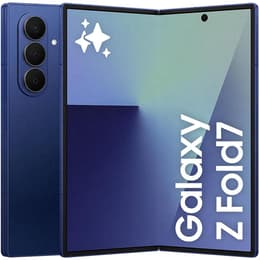
Galaxy Z Fold7
Galaxy Z Fold7
Starting at

Refurbished price:£916.00

Versus £1,799.00 new

See options
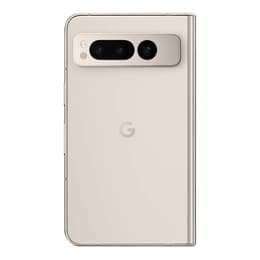
Google Pixel Fold
Google Pixel Fold
Starting at

Refurbished price:£373.00

Versus £1,499.00 new

See options

Ratings

The Samsung Galaxy Z Fold7 and the Google Pixel Fold represent distinct approaches to the foldable smartphone experience. The Pixel Fold, released in June 2023, was Google's inaugural entry into the foldable market, emphasizing a wider cover screen and a unique software experience. The Galaxy Z Fold7, launched in July 2025, is Samsung's latest iteration in its established foldable series, bringing generational advancements in hardware and an extended software support commitment. Both devices run on the Android operating system, offering a versatile platform for productivity and entertainment, but they differ in their core hardware and design philosophies.

Scores

Durability

The longevity of a foldable device is influenced by its release timeline, software support, and physical durability.

  • Release Timeline: The Google Pixel Fold was released in June 2023, making it an earlier generation device compared to the Samsung Galaxy Z Fold7, which launched in July 2025. This two-year difference impacts their respective positions in the product lifecycle.
  • Software Support: The Pixel Fold is guaranteed five years of OS and security updates from its release date, extending its support until at least June 2028. In contrast, the Galaxy Z Fold7 benefits from Samsung's commitment to seven years of major OS updates, potentially receiving updates until around 2031 or 2032. This extended support period for the Z Fold7 means a longer practical lifespan for users who prioritize the latest software features and security patches.
  • Durability Considerations: Both devices feature a foldable design, which introduces unique durability aspects. The Pixel Fold was noted for its durable hinge at launch and carries an IPX8 water resistance rating. The Galaxy Z Fold7 is also expected to maintain or improve upon the IPX8 water resistance of its predecessors and features a design that is thinner and lighter than the Z Fold6. While early Pixel Fold units saw some reports of screen issues, user experiences often highlight the importance of protective cases for foldable devices.

Year of Release

2025

2023

Compatible with latest Update

Yes

Yes

OS

Android

Android

Foldable

Yes

Yes

Performance

Performance in foldable smartphones is crucial for seamless multitasking and demanding applications, driven by the internal processing unit and memory configuration.

  • Processing Power: The Galaxy Z Fold7 is equipped with the Qualcomm Snapdragon 8 Elite chipset, manufactured using a 3 nm process. This newer generation processor offers enhanced speed and efficiency, particularly for intensive tasks and generative AI features. The Google Pixel Fold utilizes the Google Tensor G2 processor. While capable of handling everyday tasks smoothly, the Tensor G2 is an earlier generation chip compared to the Snapdragon 8 Elite.
  • Multitasking and Responsiveness: The Galaxy Z Fold7 comes with 12 GB of RAM on standard models, with a 16 GB option available for the 1 TB storage variant, facilitating robust multitasking and smooth transitions between applications. The Pixel Fold features 12 GB of RAM, which provides a responsive experience for most users. Users engaging in heavy multitasking or graphically demanding applications may notice the performance advantages of the Z Fold7's newer processor and potentially higher RAM configuration.
  • Storage Options: The Galaxy Z Fold7 offers a wider range of storage capacities, including 256 GB, 512 GB, and 1 TB. The Pixel Fold is available with 256 GB or 512 GB of internal storage.

Memory (GB)

12 GB

12 GB

Screen quality

The display is a central feature of any foldable phone, with both the cover and inner screens contributing to the overall user experience.

  • Display Technology and Clarity: Both devices feature OLED display technology, known for deep blacks and vibrant colors. The Galaxy Z Fold7 has two Dynamic AMOLED 2X displays. The cover display measures 6.5 inches with a 1080 x 2520 pixel resolution, and the main foldable display is 8.0 inches with a 2184 x 1968 pixel resolution. The Pixel Fold features a 5.8-inch FHD+ 1080p OLED cover display and a 7.6-inch FHD+ 1080p OLED inner display. The Z Fold7's larger cover screen and slightly larger inner screen offer more expansive viewing areas.
  • Brightness and Refresh Rate: Both the Z Fold7 and Pixel Fold offer a 120 Hz refresh rate on both their cover and inner displays, providing smooth scrolling and responsive interactions. The Galaxy Z Fold7's main display can reach up to 2,600 nits of peak brightness, which enhances visibility in bright outdoor conditions. The Pixel Fold's cover screen reaches up to 1,550 nits peak brightness, and its inner screen up to 1,450 nits.
  • Aspect Ratio and Viewing Experience: The Galaxy Z Fold7's cover display adopts a 21:9 aspect ratio, offering a wider viewing experience. The Pixel Fold's cover screen has a 17.4:9 aspect ratio, which is wider than some other foldables, making it comfortable for single-handed use. The inner display of the Pixel Fold has a 6:5 aspect ratio, providing a more squarish tablet-like experience.

Resolution

1968 x 2184

1840 x 2208

Audiovisual

The camera systems on foldable phones are designed to offer versatility, leveraging the unique form factor for creative photography and video recording.

  • Rear Camera System: The Galaxy Z Fold7 features a triple rear camera system, including a 200 MP wide-angle sensor, a 12 MP ultra-wide lens, and a 10 MP telephoto lens with 3x optical zoom. This main sensor represents a significant upgrade in resolution. The Google Pixel Fold also has a triple rear camera setup, consisting of a 48 MP wide lens, a 10.8 MP ultrawide lens, and a 10.8 MP telephoto lens with 5x optical zoom. The Pixel Fold's telephoto lens offers a greater optical zoom range.
  • Photography Performance: The Galaxy Z Fold7's overall photography is described as excellent, with the high-resolution main sensor contributing to sharper and brighter images, noticeably improved over its predecessor. The Pixel Fold is praised for its balanced camera system, producing natural colors and benefiting from Google's computational photography, including features like Magic Eraser. Users report that the Pixel Fold's cameras perform well in everyday scenarios, even with a slightly smaller main sensor compared to some non-foldable Pixel phones.
  • Front and Video Capabilities: For selfies and video calls, the Galaxy Z Fold7 includes a 10 MP cover camera and a 10 MP hole-punch camera on the main display. The Pixel Fold has a 9.5 MP front camera on the cover screen and an 8 MP camera on the inner display. Both devices are capable of recording video at up to 4K at 60 frames per second.

Miscellaneous

Beyond core performance and display, several practical elements contribute to the daily usability and overall experience of these foldable smartphones.

  • Connectivity and Ports: Both the Galaxy Z Fold7 and Google Pixel Fold support 5G connectivity, along with modern Wi-Fi standards and Bluetooth for wireless connections. The Pixel Fold features a USB-C 3.2 Gen 2 port. The Z Fold7 also utilizes a USB-C port for charging and data transfer.
  • Biometric Security: The Pixel Fold incorporates a fingerprint sensor for secure unlocking. The Galaxy Z Fold7 is also expected to feature advanced biometric security, likely a side-mounted fingerprint sensor or under-display fingerprint technology.
  • Physical Design and Handling: The Galaxy Z Fold7, when folded, measures 158.4 mm (H) x 72.8 mm (W) x 8.9 mm (D) and weighs 215 grams. Unfolded, it is 158.4 mm (H) x 143.2 mm (W) x 4.2 mm (D). It is designed to be thinner and lighter than its predecessor, the Z Fold6. The Pixel Fold, when folded, measures 139.7 mm (H) x 79.5 mm (W) x 12.1 mm (D) and weighs 283 grams. Unfolded, it is 139.7 mm (H) x 158.7 mm (W) x 5.8 mm (D). The Pixel Fold's wider and shorter folded form factor aims to provide a more traditional smartphone feel on its cover screen.

Weight

187 g

283 g

Screen size (in)

8

7.6

Mobile network

5G

5G

SIM card

Dual Physical SIM + eSIM

Physical SIM + eSIM

Carrier compatibility

Unlocked

Unlocked

Connector

USB-C

USB-C

The choice between the Samsung Galaxy Z Fold7 and the Google Pixel Fold depends largely on individual priorities regarding a foldable smartphone. The Pixel Fold, as Google's initial foray into the foldable market, offers a distinct design with a wider cover screen that many users find more comfortable for single-handed use, resembling a traditional smartphone. Its camera system, powered by Google's computational photography, receives consistent praise for natural colors and effective features like its 5x optical zoom. However, its software support timeline is shorter than the Z Fold7, and its processor is an older generation. Users on forums often commend the Pixel Fold's intuitive multitasking features and its robust hinge design.

The Galaxy Z Fold7, as a more recent release, brings significant hardware advancements. It features a newer, more powerful processor, a higher-resolution main camera, and a brighter main foldable display. Samsung's commitment to seven years of software updates provides a longer period of security and feature enhancements, which is a considerable advantage for long-term ownership. Its design is also notably thinner and lighter than previous Galaxy Fold models, enhancing portability. User feedback for the Z Fold series generally highlights its refined foldable experience and extensive ecosystem.

Users prioritizing cutting-edge performance, a high-resolution main camera, and the longest possible software support will find the Galaxy Z Fold7 well-suited to their needs. Those who value a wider, more traditional-feeling cover screen, Google's specific camera processing, and a slightly more compact folded form factor may lean toward the Pixel Fold. Both devices offer a premium foldable experience, and for those considering a sustainable choice, both models are available as quality-assured refurbished options, extending their lifecycle and reducing electronic waste.

See all articles

Our recent comparisons





