
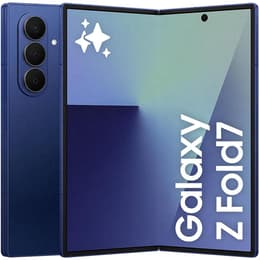

Galaxy Z Fold7 Vs Google Pixel 8a

Galaxy Z Fold7
Galaxy Z Fold7
Starting at

Refurbished price:£916.00

Versus £1,799.00 new

See options
Google Pixel 8a
Google Pixel 8a
Starting at

Refurbished price:£214.00

Versus £467.97 new

See options

Ratings

The Samsung Galaxy Z Fold7 (released July 2025) and the Google Pixel 8A (released May 2024) represent distinct approaches to modern smartphone design and functionality. While the Galaxy Z Fold7 offers a unique foldable form factor that transforms from a traditional smartphone into a tablet-like experience, the Google Pixel 8A provides a more conventional, compact design. Both devices operate on the Android platform, but cater to different user needs through their core hardware and software optimizations.

Scores

Durability

The expected practical lifespan of a smartphone is influenced by its physical resilience and the duration of software support it receives.

  • Release Timeline and Software Support: The Galaxy Z Fold7, launched in July 2025, and the Google Pixel 8A, released in May 2024, both benefit from extensive software support policies. Samsung promises seven years of Android OS upgrades and security patches for the Z Fold7, meaning it will receive updates up to Android 23. Similarly, the Pixel 8A also commits to an ambitious seven-year Android update cycle, ensuring long-term software relevance.
  • Physical Durability: The Galaxy Z Fold7 features an IP48 rating, indicating protection against dust ingress and water resistance. Its design incorporates advanced Corning Gorilla Glass Ceramic 2 on the cover display and Gorilla Glass Victus 2 on the back. However, foldable displays, by their nature, introduce unique durability considerations related to the hinge mechanism and the flexible inner screen, which can be more susceptible to damage from impacts or sharp objects compared to traditional glass displays. The Pixel 8A, with its traditional slab design, boasts an IP67 rating for dust and water resistance and features Gorilla Glass 3 protection for its display.
  • Repairability: While specific repairability scores can vary, the complex engineering of foldable devices like the Z Fold7 often means that repairs, particularly for the internal display or hinge, can be more intricate. Traditional smartphones like the Pixel 8A generally offer a more straightforward repair process due to their less complex internal structure.

Year of Release

2025

2024

Compatible with latest Update

Yes

Yes

OS

Android

Android

Foldable

Yes

No

Performance

Performance in smartphones is determined by the interplay of processing power, memory, and storage, impacting how smoothly applications run and how efficiently multitasking is handled.

  • Processing Capabilities: The Galaxy Z Fold7 is equipped with a current-generation, high-performance processor, designed to handle demanding applications and intensive multitasking with ease. This allows for smooth operation across its multiple screens and complex foldable interface. The Google Pixel 8A is powered by a processor that provides responsive performance for everyday tasks, web browsing, and most applications, including AI-driven features.
  • Multitasking and Responsiveness: The Z Fold7 typically comes with 12GB of RAM, with a 16GB option available for its highest storage configuration, facilitating seamless transitions between numerous open applications and efficient handling of productivity workflows across its large internal display. The Pixel 8A includes 8GB of RAM, which supports smooth multitasking for typical smartphone usage and ensures a fluid user experience.
  • Storage Options: The Galaxy Z Fold7 offers a range of internal storage options, including 256GB, 512GB, and 1TB, providing ample space for extensive media libraries and applications. The Pixel 8A is available with 128GB or 256GB of internal storage, which is suitable for most users' app and data needs. Neither device supports expandable storage via microSD cards.

Memory (GB)

12 GB

8 GB

Screen quality

The display is a primary interface for user interaction, and differences in technology, size, and refresh rate significantly impact the visual experience.

  • Display Technology and Size: The Galaxy Z Fold7 features two Dynamic AMOLED 2X displays: an 8.0-inch main foldable screen and a 6.5-inch cover screen. This foldable design allows for a versatile viewing experience, transitioning from a compact phone to a larger, tablet-like canvas. The Pixel 8A utilizes a single 6.1-inch OLED display, offering a vibrant and clear viewing area in a traditional smartphone form factor.
  • Resolution and Clarity: The Z Fold7's main display has a resolution of 2184 x 1968 pixels, while its cover screen offers 2520 x 1080 pixels, providing sharp visuals across both interfaces. The Pixel 8A's display features a Full HD+ resolution of 2400 x 1080 pixels, delivering crisp images and text for everyday use.
  • Brightness and Refresh Rate: Both devices offer high refresh rates for smoother scrolling and more fluid animations. The Z Fold7's displays support a 120Hz adaptive refresh rate and can reach a peak brightness of up to 2600 nits, ensuring excellent visibility even in bright outdoor conditions. The Pixel 8A also features a 120Hz refresh rate and its display can achieve a peak brightness of up to 2000 nits, enhancing outdoor readability.

Resolution

1968 x 2184

1080 x 2400

Audiovisual

Camera capabilities are a significant factor for many users, with both hardware and software playing crucial roles in image and video quality.

  • Rear Camera Systems: The Galaxy Z Fold7 features a triple rear camera setup, including a 200 MP wide-angle main sensor, a 12 MP ultra-wide lens, and a 10 MP telephoto lens with 3x optical zoom. This versatile array allows for detailed shots across various focal lengths. The Google Pixel 8A comes with a dual rear camera system, comprising a 64 MP wide-angle main sensor with optical image stabilization (OIS) and a 13 MP ultra-wide lens.
  • Photography Performance: The Z Fold7's high-resolution main sensor and telephoto lens contribute to detailed images, with improvements noted in overall photography, especially in well-lit conditions. The Pixel 8A leverages its computational photography strengths, offering consistent and high-quality images, particularly excelling in everyday and low-light scenarios through its advanced image processing.
  • Video and Audio: Both devices are capable of recording high-quality video. The Z Fold7's camera system supports advanced video features, while the Pixel 8A also offers robust video recording capabilities, often enhanced by Google's software optimizations. For audio, both phones include stereo speakers for an immersive media consumption experience and offer clear microphone quality for calls and recordings.

Miscellaneous

Beyond core specifications, several practical elements contribute to the overall user experience and device utility.

  • Connectivity and Ports: Both the Galaxy Z Fold7 and the Google Pixel 8A support modern connectivity standards, including 5G for fast mobile data, and advanced Wi-Fi standards for high-speed wireless internet. The Z Fold7 features a USB-C port for charging and data transfer, while the Pixel 8A also uses a USB Type-C port. Neither device includes a traditional headphone jack.
  • Biometrics and Sensors: The Galaxy Z Fold7 incorporates advanced biometric security, likely including a side-mounted fingerprint sensor and facial recognition. The Pixel 8A features an under-display fingerprint sensor for secure unlocking and authentication. Both devices include a standard suite of sensors for navigation and user interaction.
  • Design and Handling: The Galaxy Z Fold7, when folded, measures approximately 158.4 x 72.6 x 8.9 mm and weighs around 215 grams, making it a relatively compact and lighter foldable. When unfolded, it provides a large, expansive screen for productivity and media. The Google Pixel 8A, with its traditional design, measures around 152.1 x 72.6 x 8.9 mm, offering a more compact and pocketable form factor. The Z Fold7's wider cover screen compared to previous generations enhances its usability when closed.

Weight

187 g

188 g

Screen size (in)

8

6.1

Mobile network

5G

5G

SIM card

Dual Physical SIM + eSIM

Physical SIM + eSIM

Carrier compatibility

Unlocked

Unlocked

The Samsung Galaxy Z Fold7 and the Google Pixel 8A cater to distinct user preferences, each excelling in different areas based on their fundamental design philosophies. User sentiment for the Z Fold series often highlights the appeal of its innovative foldable display for multitasking and immersive media consumption, effectively offering a phone and a tablet in one device. Common praise points include the large internal screen's utility for productivity and entertainment, and the continuous refinement of the hinge and overall design. Criticisms sometimes revolve around the inherent durability concerns of a flexible display and the device's overall thickness and weight compared to traditional smartphones, though the Z Fold7 has made strides in reducing these.

Conversely, the Google Pixel A-series, including the Pixel 8A, is frequently lauded for its consistent camera performance, often attributed to Google's advanced computational photography. Users appreciate its balanced performance for everyday tasks and its commitment to long-term software support. Common feedback for the Pixel A-series points to its reliable user experience and the integration of helpful AI features. Some users might desire a larger display or more premium build materials, but the Pixel 8A aims for a strong balance of features in a more conventional package.

Users prioritizing a versatile device that can transform from a standard smartphone into a large-screen tablet for enhanced productivity, immersive media, and advanced multitasking will find the Galaxy Z Fold7 well-suited to their needs. Its powerful processor and expansive display ecosystem are ideal for those who push their device's capabilities. On the other hand, users who value a compact, reliable smartphone with an exceptional camera, consistent software experience, and robust long-term support for everyday use will likely lean toward the Google Pixel 8A. Both devices offer compelling options, and considering a quality-assured refurbished option for either model can be an eco-friendly alternative to making an informed choice.

See all articles

Our recent comparisons




