Compare models

Galaxy Z Flip7 Vs iPhone 14 Pro

  • 1-year minimum warranty
  • Free delivery on all items
  • Free 30-day returns
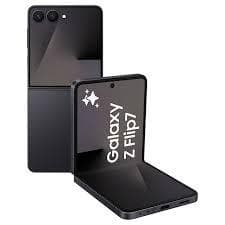
Galaxy Z Flip7
Starting at

Refurbished price:£494.00

Versus £1,156.31 new

See options
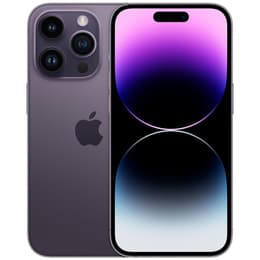
iPhone 14 Pro
Starting at

Refurbished price:£311.00

Versus £1,099.00 new

See options

Differences at a glance

The Samsung Galaxy Z Flip7 (2025) and the Apple iPhone 14 Pro (2022) represent two distinct approaches to high-end mobile engineering, contrasting a modern folding clamshell design with a traditional flagship smartphone structure.

While they differ fundamentally in form factor and operating systems, both devices deliver powerful everyday capabilities targeted at users seeking premium performance, advanced photography, and polished software experiences.

Available Models

Colour

Storage (GB)

Scores

Durability

When evaluating structural longevity and software support, both devices offer robust build quality paired with distinct maintenance timelines.

  • Software Support Duration: The iPhone 14 Pro benefits from Apple's long-established update lifecycle, whereas the Galaxy Z Flip7 features a contemporary multi-year Android update schedule that ensures modern feature access.
  • Repairability and Physical Maintenance: Traditional candy bar structures like the iPhone 14 Pro typically present straightforward repair pathways, while folding displays on the Galaxy Z Flip7 require specialized care due to the flexible screen mechanics.
  • Expected Practical Lifespan: Both models maintain high physical durability standards, though users handling folding glass must exercise standard precautions over years of daily folding actions.

Year of Release

2025

2022

Performance

System responsiveness and everyday multitasking differ due to varying internal hardware configurations and software optimization approaches.

  • Multitasking and App Loading: Both devices handle demanding applications, intensive gaming, and rapid background app switching smoothly without noticeable stutter during normal workflows.
  • Battery Behavior: The Galaxy Z Flip7 incorporates a larger cell designed to sustain extended folding screen use, while the iPhone 14 Pro relies on optimized software efficiency to maintain power through a full day of typical tasks.
  • Storage Capacity: The Galaxy Z Flip7 focuses on higher baseline storage tiers, whereas the iPhone 14 Pro offers a wider spectrum ranging from standard capacities up to extensive storage options.

Screen quality

Visual output relies on advanced display technologies that provide distinct advantages depending on viewing preferences and physical design choices.

  • Display Technology: The Galaxy Z Flip7 utilizes an expansive folding OLED panel that opens into a continuous large viewing area, alongside a functional outer cover screen for quick glances.
  • Clarity and Brightness: The iPhone 14 Pro employs a rigid Super Retina XDR OLED display featuring high outdoor peak brightness and sharp pixel density for crisp text rendition.
  • Refresh Rate and Fluidity: Both models support smooth high refresh rate technology, ensuring fluid scrolling animations and responsive touch feedback across all interface elements.

Audiovisual

Imaging hardware and media recording tools cater to everyday creators through versatile multi-lens configurations and advanced processing software.

  • Main and Secondary Lenses: The iPhone 14 Pro features a high-resolution main sensor paired with a dedicated optical zoom lens, while the Galaxy Z Flip7 balances a primary wide camera with an ultra-wide sensor optimized for flexible standalone angles.
  • Low-Light and Video Recording: Both devices deliver detailed low-light captures and stable video output with high dynamic range, making them well-suited for capturing memories in challenging lighting conditions.
  • Media and Audio Output: Stereo speaker setups on both smartphones provide clear audio clarity for hands-free calls, video playback, and casual music listening.

Miscellaneous

Practical daily usability elements encompass physical dimensions, connectivity standards, and biometric authentication systems.

  • Dimensions and Portability: The Galaxy Z Flip7 folds into a compact square that slips easily into small pockets, whereas the iPhone 14 Pro offers a solid, traditional candy bar footprint with balanced weight distribution.
  • Connectivity and Ports: Both models support rapid 5G cellular networks, modern Wi-Fi standards, and Bluetooth pairing, utilizing proprietary or universal port connections for charging and data transfer.
  • Biometric Security: The iPhone 14 Pro relies on facial recognition technology, while the Galaxy Z Flip7 integrates a side-mounted fingerprint sensor alongside facial unlocking options.

Screen size (in)

6.9

6.1

Mobile network

5G

5G

SIM card

Physical SIM + eSIM

Physical SIM + eSIM

Carrier compatibility

Unlocked

Unlocked

Connector

USB-C

Lightning

What the community thinks

User feedback highlights distinct preferences for each device across online communities. Owners of the iPhone 14 Pro frequently praise its reliable battery efficiency, robust build materials, and seamless integration within the iOS ecosystem, though some note that the traditional form factor lacks modern physical innovation. Conversely, Galaxy Z Flip7 users appreciate the compact pocketability, versatile folding angles for hands-free photography, and expansive main screen, while noting that the crease remains visible under certain lighting conditions.

Users prioritizing a compact, pocket-friendly footprint and innovative folding display mechanics may prefer the Galaxy Z Flip7, while users seeking a traditional flagship structure with established software ecosystems often lean toward the iPhone 14 Pro. For those considering an eco-friendly alternative, choosing a quality-assured refurbished option provides a sustainable way to access these high-end capabilities.