

Compare models

Galaxy Z Flip7 Vs Google Pixel 9

  • 1-year minimum warranty
  • Free delivery on all items
  • Free 30-day returns
Galaxy Z Flip7
Starting at

Refurbished price:£470.00

Versus £1,156.31 new

See options
Google Pixel 9
Starting at

Refurbished price:£316.00

Versus £892.46 new

See options

Differences at a glance

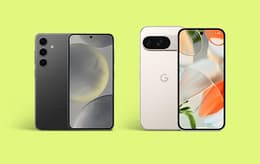
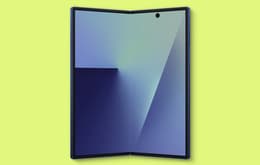
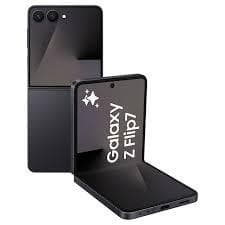
The Samsung Galaxy Z Flip7 (2025) and the Google Pixel 9 (2024) represent two distinct approaches to modern smartphone design, contrasting a foldable flip form factor with a traditional candy bar style. While both devices occupy the flagship space, they cater to very different preferences regarding portability and handling. The Galaxy Z Flip7 operates on Android with Samsung's custom interface, whereas the Google Pixel 9 runs on clean, stock Android provided directly by Google.

Available Models

Colour

Storage

Scores

Durability

When evaluating the lifespan and software support of these two devices, both manufacturers provide long-term software commitments that extend usability across several years.

  • Software Support Duration: Both models receive extended multi-year operating system updates and security patches, helping maintain software relevance over time.
  • Repairability and Build Structure: The foldable hinge mechanism on the Galaxy Z Flip7 requires careful handling compared to the solid, unibody construction of the Google Pixel 9, which influences long-term physical resilience under heavy daily use.
  • Expected Practical Lifespan: Users can expect both devices to perform reliably for years, though traditional smartphone designs generally experience fewer mechanical wear points than foldable alternatives.

Year of Release

2025

2024

Compatible with latest Update

Yes

Yes

OS

Android

Android

Foldable

Yes

No

Performance

Both smartphones handle daily computational tasks, app switching, and demanding software smoothly, though they utilize different internal hardware architectures to achieve their performance profiles.

  • Multitasking and App Responsiveness: Both devices manage heavy applications and split-screen workflows efficiently, allowing users to switch between intensive apps without noticeable stutter.
  • Battery Behavior: The Google Pixel 9 features a larger physical battery capacity that typically sustains a full day of mixed use easily, while the Galaxy Z Flip7 manages power efficiency differently to accommodate its compact, foldable housing.
  • Storage Configurations: Both models offer multiple tier options for internal storage, accommodating large media libraries and application data without requiring external expansion.

Screen quality

Display technology is a primary differentiator, as the Galaxy Z Flip7 offers a flexible inner screen accompanied by an outer cover display, whereas the Google Pixel 9 utilizes a fixed, flat panel.

  • Display Technology: Both devices employ vibrant OLED panels that deliver deep contrast levels, sharp details, and rich color reproduction for media consumption and reading.
  • Brightness and Outdoor Legibility: Peak brightness levels on both screens ensure that content remains legible under direct sunlight or bright outdoor environments.
  • Refresh Rate and Fluidity: High refresh rate support on both models ensures smooth scrolling through web pages, user interfaces, and supported gaming applications.

Resolution

1080x2520

1080 x 2424

Audiovisual

Imaging capabilities on these devices cater to everyday photography and video recording, utilizing different hardware layouts and image processing philosophies.

  • Camera System Setup: The Google Pixel 9 relies on a dual-rear camera configuration paired with computational photography software, while the Galaxy Z Flip7 offers versatile shooting angles enabled by its folding design.
  • Low-Light and Video Performance: Both smartphones capture detailed low-light photographs and record stable video with clear audio capture from built-in microphones.
  • Media Consumption Speakers: Stereo speaker setups on both devices deliver balanced audio output suitable for hands-free calls, podcasts, and casual video viewing.

Main camera

50 megapixels

50 megapixels

Front camera

10 megapixels

10.5 megapixels

Miscellaneous

Physical dimensions, connectivity standards, and daily handling characteristics vary significantly between these two distinct form factors.

  • Dimensions and Handling: The Galaxy Z Flip7 folds in half to fit easily into smaller pockets, whereas the Google Pixel 9 maintains a standard rigid footprint that requires standard pocket space.
  • Biometrics and Authentication: Both devices support secure biometric unlocking through facial recognition and fingerprint sensors integrated into their respective hardware designs.
  • Connectivity Options: Comprehensive modern connectivity features, including 5G network compatibility and updated Wi-Fi standards, are standard across both models.

Weight

188 g

198 g

Screen size (in)

6.9

6.3

Mobile network

5G

5G

SIM card

Physical SIM + eSIM

Physical SIM + eSIM

Carrier compatibility

Unlocked

Unlocked

Connector

USB-C

USB-C

What the community thinks

Users across online communities frequently praise the Google Pixel 9 for its reliable battery longevity, clean software interface, and consistent photographic output, while noting that its rigid form factor is standard. Conversely, owners of the Galaxy Z Flip7 highlight its compact portability when folded and the convenience of flexible viewing angles, though some note that foldable screens demand mindful handling over extended periods.

Users prioritizing pocket-friendly portability and versatile angles may prefer the Galaxy Z Flip7, while users prioritizing straightforward ergonomics and robust everyday battery endurance will lean toward the Google Pixel 9. Choosing a quality-assured refurbished option through Back Market provides a sustainable path to acquiring either device while reducing electronic waste. Ultimately, the decision rests on whether a flexible foldable design or a conventional smartphone build better aligns with daily routines.