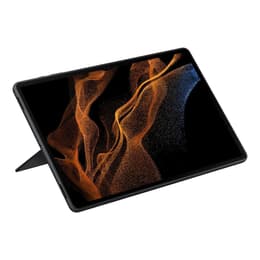
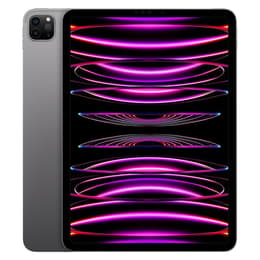

Galaxy Tab S8 Ultra (14.6", 2022) Vs iPad Pro (2022, M2 series)

Galaxy Tab S8 Ultra (14.6", 2022)
Starting at

Refurbished price:£423.00

Versus £1,249.00 new

See options
iPad Pro (2022, M2 series)
Starting at

Refurbished price:£441.00

Versus £899.00 new

See options

Ratings

The Samsung Galaxy Tab S8 Ultra and the Apple iPad Pro M2 Series, both released in 2022, represent high-end tablet offerings from their respective manufacturers. While both devices aim to provide powerful and versatile computing experiences, they differ significantly in their operating systems, display technologies, and overall ecosystem integration. The Galaxy Tab S8 Ultra runs on Android, offering a large Super AMOLED display, while the iPad Pro M2 Series operates on iPadOS, featuring Apple's M2 chip and Liquid Retina or Liquid Retina XDR displays.

Scores

Durability

When considering the long-term usability of these tablets, several factors contribute to their expected practical lifespan, including software support and physical durability.

  • Software Longevity: Apple generally provides extensive software support for its devices, with iPads often receiving security updates for seven to ten years. For instance, iPads from 2015 were still receiving security updates in 2025. Samsung has committed to providing four years of Android OS updates and seven years of security updates for its flagship tablets, including the Galaxy Tab S8 series. This means the iPad Pro M2 Series is likely to receive major operating system updates for a longer duration than the Galaxy Tab S8 Ultra.
  • Repairability: The Galaxy Tab S8 Ultra has demonstrated surprising durability in bend tests, despite its large size and thin profile. However, some teardowns suggest that while components like cameras are easily replaceable, the battery can be tricky to deal with, and the display can be challenging to detach and replace. Information regarding the specific repairability score for the iPad Pro M2 is less detailed, but previous iPad Pro models have shown varying results in bend tests, with some exhibiting permanent bends.
  • Practical Lifespan: Both tablets are built with premium materials, featuring aluminum frames. The Galaxy Tab S8 Ultra uses an Armor Aluminum frame, which is noted for being more scratch-resistant and less prone to bending than its predecessors. Users can expect both devices to remain functional for several years, with software support being a primary determinant of their secure and feature-rich operational life.

Year of Release

2022

2022

Compatible with latest Update

Yes

Yes

OS

Android

iPadOS

Performance

Both the Galaxy Tab S8 Ultra and the iPad Pro M2 Series offer robust performance suitable for demanding tasks, though their underlying architectures differ.

  • Processing Capabilities: The iPad Pro M2 Series is equipped with a current-generation processor that delivers significant performance gains over previous models, making it capable of handling intensive applications like 3D design, complex AR models, and console-quality gaming. This processor also accelerates machine learning tasks and offers increased memory bandwidth. The Galaxy Tab S8 Ultra features a powerful octa-core processor that ensures smooth operation for multitasking, gaming, and video editing.
  • Multitasking and Responsiveness: The iPad Pro M2's processing power allows for seamless multitasking, with users reporting that creative apps and everyday productivity tools run swiftly. The Galaxy Tab S8 Ultra also handles multitasking effectively, with its large display facilitating split-screen use and Samsung DeX mode providing a desktop-like experience. App launches are quick, and animations are fluid on the Tab S8 Ultra.
  • Battery Behavior: The Galaxy Tab S8 Ultra houses a large 11,200 mAh battery. Despite this, some users report around 6-7 hours of screen-on time with mixed usage, noting that the large, high-resolution, high-refresh-rate display consumes power quickly, especially during gaming or streaming. The iPad Pro M2 Series, with its 10,758 mAh battery in the 12.9-inch model, generally offers around 10 hours of battery life for light use, about nine hours for work, and approximately seven hours for streaming HDR video at maximum brightness.

Memory (GB)

8 GB

8 GB

Screen quality

The visual experience on both tablets is a key differentiator, with each employing distinct display technologies and sizes.

  • Display Technology and Clarity: The Galaxy Tab S8 Ultra features a 14.6-inch Super AMOLED display with a resolution of 2960 x 1848 pixels, resulting in deep blacks, rich colors, and superior contrast levels. The iPad Pro M2 Series comes in two sizes: an 11-inch model with a Liquid Retina LCD display and a 12.9-inch model with a Liquid Retina XDR mini-LED display. The 12.9-inch XDR display offers a 2732 x 2048 pixel resolution, providing excellent detail and a high contrast ratio.
  • Brightness and Refresh Rate: Both tablets offer a 120Hz refresh rate, contributing to smooth scrolling and responsive interactions. The Galaxy Tab S8 Ultra's Super AMOLED panel can reach a peak brightness of around 795 nits for HDR content, with typical brightness around 359 nits. The 12.9-inch iPad Pro M2's Liquid Retina XDR display can achieve up to 1000 nits of full-screen brightness and a peak of 1600 nits for HDR content, while the 11-inch model and SDR content on the 12.9-inch model reach 600 nits.
  • Size and Viewing Experience: The Galaxy Tab S8 Ultra's expansive 14.6-inch screen is notably larger than both iPad Pro M2 models, offering a more immersive viewing experience, particularly for media consumption due to its 16:10 aspect ratio. The iPad Pro's 4:3 aspect ratio is often preferred for productivity tasks and reading. The Tab S8 Ultra also boasts very thin bezels, maximizing its screen-to-body ratio.

Resolution

1848 x 2960

2388 x 1668

Screen type

Super AMOLED

Liquid Retina XDR

Pixel density

240ppp

264ppp

Audiovisual

While tablets are not typically primary photography devices, both the Galaxy Tab S8 Ultra and the iPad Pro M2 Series offer capable camera systems for video calls, document scanning, and casual photography.

  • Rear Camera Systems: The Galaxy Tab S8 Ultra features a dual rear camera setup with a 13MP main sensor and a 6MP ultra-wide lens. The iPad Pro M2 Series also has a dual rear camera system, consisting of a 12MP wide camera and a 10MP ultra-wide camera. Both can record 4K video.
  • Front Camera Performance: The Galaxy Tab S8 Ultra stands out with its dual 12MP front cameras (wide and ultra-wide), which are well-suited for high-quality video calls and selfies, especially in landscape orientation. The iPad Pro M2 features a 12MP TrueDepth front camera with Center Stage, which keeps the user in frame during video calls.
  • Audio Quality: Both tablets are equipped with quad stereo speakers. The Galaxy Tab S8 Ultra's speakers are tuned by AKG and support Dolby Atmos, providing loud and clear audio with rich bass. The iPad Pro M2 also offers excellent speaker output, contributing to a strong media consumption experience. Both devices include multiple microphones for clear audio recording during calls and video capture.

Miscellaneous

Beyond core performance and display, several practical features differentiate these two high-end tablets.

  • Connectivity and Ports: Both devices support modern connectivity standards, including 5G (optional), Wi-Fi 6E, and Bluetooth 5.2 or 5.3. The iPad Pro M2 features a Thunderbolt/USB-4 port, which offers faster data transfer speeds and broader accessory compatibility compared to the Galaxy Tab S8 Ultra's USB-C 3.2 port. However, the Galaxy Tab S8 Ultra includes a microSD card slot, allowing for expandable storage up to 1TB, a feature not present on the iPad Pro.
  • Biometric Security: The Galaxy Tab S8 Ultra incorporates an optical in-display fingerprint sensor for secure unlocking. The iPad Pro M2 utilizes Face ID for facial recognition authentication.
  • Design and Handling: The Galaxy Tab S8 Ultra is a larger and slightly heavier device, measuring 326.4 x 208.6 x 5.5 mm and weighing 726g. The 12.9-inch iPad Pro M2 is smaller and lighter at 280.6 x 214.9 x 6.4 mm and 682g, while the 11-inch model is even more compact. The Tab S8 Ultra's thinness is notable given its large display. Both feature aluminum backs and frames.

Weight

726 g

466 g

Screen size (in)

14.6

11

Network

Wi-Fi + 5G

Wi-Fi

Carrier compatibility

Unlocked

Without SIM Port

User sentiment for the Samsung Galaxy Tab S8 Ultra often praises its expansive Super AMOLED display, which is frequently described as stunning for media consumption and multitasking due to its size and vibrant colors. The inclusion of the S Pen in the box is also a commonly appreciated feature, particularly for creative tasks and note-taking. Criticisms sometimes point to its sheer size making it less portable for some users and its battery life, while substantial, not always matching expectations given the large display.

The iPad Pro M2 Series receives consistent acclaim for its exceptional performance, with users highlighting its ability to handle demanding professional applications and its overall speed. The Liquid Retina XDR display on the 12.9-inch model is also highly regarded for its brightness and color accuracy. However, some users express that the full potential of the powerful hardware is not always realized due to software limitations in iPadOS, particularly concerning advanced multitasking features, though improvements are continually being made.

Users prioritizing a large, vibrant display for entertainment and an integrated stylus experience for productivity may find the Galaxy Tab S8 Ultra well-suited to their needs. Its Android ecosystem offers flexibility and expandable storage. Conversely, users who require top-tier processing power for professional creative workflows, appreciate a highly optimized software ecosystem, and prefer the robust app support available on iPadOS, might lean toward the iPad Pro M2 Series. Both devices offer a premium tablet experience, and choosing a quality-assured refurbished option can be a sustainable choice for either model.

See all articles

Our recent comparisons