

Compare models
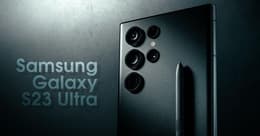
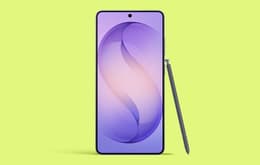
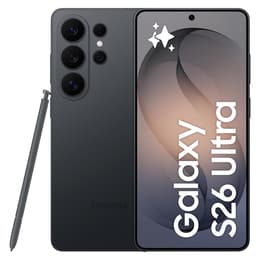
Galaxy S26 Ultra Vs Google Pixel 7A
- 1-year minimum warranty
- Free delivery on all items
- Free 30-day returns
Differences at a glance
The Samsung Galaxy S26 Ultra (2026) and the Google Pixel 7a (2023) represent different tiers and release eras within the modern smartphone landscape. While the Galaxy S26 Ultra functions as a large-format flagship device packed with advanced hardware, the Google Pixel 7a serves as a compact mid-range alternative designed for everyday accessibility. The primary differentiators span across physical sizing, camera versatility, and processing capability, accompanied by distinct software lifecycles tied to their respective launch years.
Available Models
Colour
Storage (GB)
Scores
Durability
When examining hardware longevity and software support, both devices approach timelines differently due to their generational gap and market positioning.
- Release Timeline and Software Support: The Galaxy S26 Ultra benefits from extended multi-year software backing reaching into the next decade, whereas the Google Pixel 7a operates on an older release timeline with a more finite remaining update window.
- Build Integrity and Materials: The Galaxy S26 Ultra utilizes high-grade armor aluminum and specialized scratch-resistant glass framing, while the Pixel 7a relies on a composite back and standard protective glass plating.
- Repairability and Maintenance: Both models feature sealed internal layouts that require professional servicing for component replacements, though widespread availability of parts supports long-term upkeep.
Year of Release
2026
2023
Compatible with latest Update
Yes
Yes
OS
Android
Android
Foldable
No
No
Performance
System performance and resource handling reveal significant variance in speed, multitasking capacity, and daily energy efficiency between the two smartphones.
- Processing Power and Responsiveness: The Galaxy S26 Ultra handles intense multitasking, high-frame-rate gaming, and demanding applications effortlessly, whereas the Pixel 7a manages everyday browsing, messaging, and moderate apps smoothly without heavy strain.
- Memory and Storage Configurations: The Galaxy S26 Ultra provides substantial base storage tiers paired with high RAM capacity, while the Pixel 7a offers standard mid-range storage configurations suitable for casual document and photo management.
- Battery Behavior: The Galaxy S26 Ultra features a high-capacity cell paired with efficient power management for extended heavy usage, while the Pixel 7a's smaller battery capacity requires more frequent recharging during intensive tasks.
Screen quality
Display characteristics differ markedly in physical scale, maximum brightness output, and motion fluidity during visual media consumption.
- Display Technology: Both devices employ vibrant OLED panels with deep contrast levels, though the Galaxy S26 Ultra incorporates advanced anti-reflective glass coatings and a much wider viewing canvas.
- Refresh Rate and Motion: The Galaxy S26 Ultra features a high-frequency dynamic refresh rate reaching up to 120Hz, while the Pixel 7a supports a smooth 90Hz refresh rate for fluid scrolling.
- Outdoor Legibility: Peak luminance output on the Galaxy S26 Ultra ensures clear visibility under direct sunlight, whereas the Pixel 7a remains adequately legible under standard daylight conditions.
Resolution
1440 x 3120
1080 x 2400
Audiovisual
Media capture hardware and acoustic output cater to distinct multimedia preferences, ranging from multi-lens versatility to streamlined point-and-shoot simplicity.
- Camera Array Versatility: The Galaxy S26 Ultra offers a comprehensive multi-lens system including high-resolution telephoto capabilities for distant subjects, while the Pixel 7a provides a reliable dual-lens setup focused on natural color processing.
- Low-Light and Video Performance: Advanced sensor stabilization on the Galaxy S26 Ultra delivers steady high-resolution video recording, whereas the Pixel 7a relies on computational photography to balance challenging lighting conditions.
- Acoustic Experience: Both models feature stereo speaker configurations that provide clear audio output for casual media playback and hands-free calling.
Front camera
12.0
13 megapixels
Miscellaneous
Practical daily usability elements such as physical dimensions, biometric security, and connectivity standards dictate how each device integrates into daily routines.
- Physical Handling: The Galaxy S26 Ultra is a large, heavier device equipped with a dedicated stylus slot, while the Pixel 7a features a compact, lighter form factor that sits comfortably in smaller hands.
- Biometric Authentication: Both smartphones offer responsive under-display fingerprint sensors alongside secure facial recognition options.
- Connectivity Standards: The Galaxy S26 Ultra supports modern wireless communication standards and rapid wired charging speeds, whereas the Pixel 7a covers standard 5G networks and conventional charging protocols.
Weight
214 g
193 g
Screen size (in)
6.9
6.1
Mobile network
5G
5G
SIM card
Physical SIM + eSIM
Physical SIM + eSIM
Carrier compatibility
Unlocked
Unlocked
What the community thinks
Community discussions indicate that users appreciate the Galaxy S26 Ultra for its expansive screen real estate, versatile zoom photography, and robust processing headroom. Common considerations regarding that model involve its large physical footprint and weight. Conversely, users frequently praise the Google Pixel 7a for its comfortable handling size and reliable everyday camera output, while noting that its battery life and charging speeds are more modest. Choosing between these options depends heavily on personal workflow priorities.
Users prioritizing maximum productivity, extensive workspace, and high-end multimedia tools will find the Galaxy S26 Ultra well-suited to their needs, while users valuing a compact design and straightforward daily functionality may prefer the Google Pixel 7a. For those seeking a sustainable choice, a quality-assured refurbished option provides a practical way to acquire either device with reduced environmental impact.