
Compare models

Galaxy S26 Ultra Vs Galaxy Z Fold7

  • 1-year minimum warranty
  • Free delivery on all items
  • Free 30-day returns
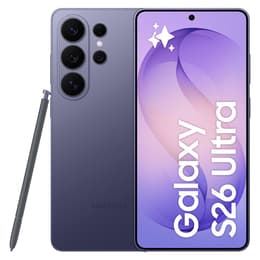
Galaxy S26 Ultra
Starting at

Refurbished price:£887.00

Versus £1,449.00 new

See options
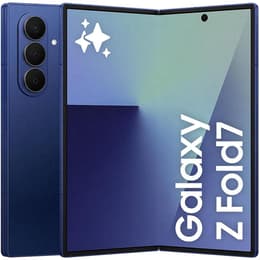
Galaxy Z Fold7
Starting at

Refurbished price:£751.00

Versus £1,799.00 new

See options

Differences at a glance

The Samsung Galaxy S26 Ultra (2026) and the Samsung Galaxy Z Fold7 (2025) represent two distinct approaches to flagship mobile technology, contrasting a traditional slate design with a book-style foldable format. While both devices run on Android with Samsung's interface, they serve entirely different user habits.

The Galaxy S26 Ultra focuses on integrated stylus productivity and robust camera versatility in a standard form factor, whereas the Galaxy Z Fold7 prioritizes a transformable dual-screen experience that expands workspace on demand.

Available Models

Colour

Storage (GB)

Scores

Durability

Both devices are built for long-term ownership, though their distinct hardware designs influence how they handle daily wear over several years of use.

  • Software Longevity: Both models receive extended multi-year operating system upgrades, ensuring prolonged access to the latest security protocols and interface features.
  • Hardware Resilience: The Galaxy S26 Ultra uses a solid unibody construction with reinforced glass, while the Galaxy Z Fold7 requires a complex hinge mechanism and a flexible inner display that demands careful handling over time.
  • Repairability: Traditional slate form factors like the Galaxy S26 Ultra generally present simpler maintenance procedures compared to multi-screen foldable configurations.

Year of Release

2026

2025

Performance

Equipped with high-end processing hardware and generous memory configurations, both smartphones handle intensive workloads, demanding mobile games, and heavy background multitasking without noticeable slowdowns.

  • Storage Options: Both devices offer ample internal capacity tiers starting at 256 gigabytes, accommodating large media libraries and heavy application data without expandable storage slots.
  • Battery Behavior: The Galaxy S26 Ultra incorporates a slightly larger physical battery capacity to sustain its continuous single-screen operation, whereas the Galaxy Z Fold7 manages energy across two separate displays, resulting in varied consumption patterns during tablet-mode usage.
  • System Responsiveness: Advanced thermal management in both models ensures sustained processing speeds during extended gaming sessions or video editing tasks.

Screen quality

Display technology is a primary differentiator, as each device is engineered around a completely different visual philosophy tailored to specific media and productivity habits.

  • Display Technology: The Galaxy S26 Ultra features a single expansive glass screen with high peak brightness levels for outdoor visibility, while the Galaxy Z Fold7 utilizes a foldable inner screen paired with a standard outer cover display.
  • Clarity and Resolution: Both devices deliver sharp pixel densities and vibrant color reproduction, making text crisp and media immersive whether viewed on a slate or unfolded panel.
  • Refresh Rate: Smooth scrolling and fluid animations are maintained across all screens via adaptive refresh rate technology that scales down during static viewing to conserve battery power.

Audiovisual

Photography and media recording capabilities vary significantly based on physical space constraints and lens array configurations embedded within each chassis.

  • Camera System: The Galaxy S26 Ultra houses a versatile quad-lens array featuring advanced telephoto zoom capabilities, whereas the Galaxy Z Fold7 employs a streamlined triple-lens setup adapted for its thinner folding chassis.
  • Low-Light Photography: Large image sensors on both models capture clear details in dim environments, utilizing image processing to reduce noise and balance exposure.
  • Media Consumption: The Galaxy Z Fold7 provides an expansive canvas for reviewing photos and watching videos, while the Galaxy S26 Ultra offers a more traditional single-hand media viewing experience with robust stereo speaker output.

Miscellaneous

Practical daily usability is shaped by physical dimensions, biometric security sensors, and modern connectivity standards built into each chassis.

  • Handling and Portability: The Galaxy S26 Ultra feels heavier and broader in the hand due to its integrated stylus silo, whereas the Galaxy Z Fold7 features a remarkably thin profile when closed that stows easily in pockets despite its dual-screen footprint.
  • Biometric Security: Both models offer rapid facial recognition alongside secure fingerprint sensors, with the foldable opting for a side-mounted scanner and the slate utilizing an in-display reader.
  • Connectivity: Comprehensive 5G network compatibility, modern Wi-Fi standards, and Bluetooth support come standard on both devices for fast data transfer and accessory pairing.

Screen size (in)

6.9

8

Mobile network

5G

5G

SIM card

Dual Physical SIM + eSIM

Dual Physical SIM + eSIM

Carrier compatibility

Unlocked

Unlocked

Connector

USB-C

USB-C

What the community thinks

User feedback for the Galaxy S26 Ultra frequently highlights its reliable battery endurance, dependable zoom photography, and the practical convenience of the built-in stylus for note-taking. Conversely, owners of the Galaxy Z Fold7 often praise the productivity benefits of the large inner workspace and the refined, thinner chassis design compared to older generations. However, some users note that foldable devices require extra care regarding screen protection, while traditional slate users occasionally point to the substantial weight of the Ultra model.

Users prioritizing maximum single-screen durability, advanced telephoto reach, and integrated stylus functionality may prefer the Galaxy S26 Ultra. Meanwhile, users prioritizing expanded multitasking space, split-screen app workflows, and a pocketable tablet experience will lean toward the Galaxy Z Fold7. For those considering an eco-friendly alternative, quality-assured refurbished options for both models provide a sustainable choice that reduces electronic waste without compromising performance standards.