
Galaxy S25+ Vs Galaxy Z Flip5

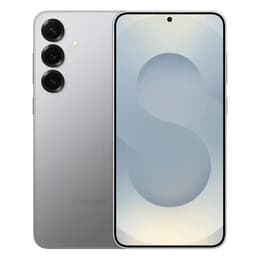
Galaxy S25+
Galaxy S25+
Starting at

Refurbished price:£575.00

Versus £958.39 new

See options
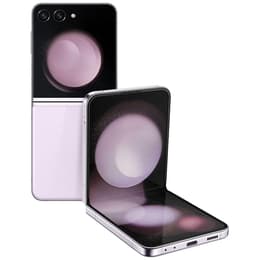
Galaxy Z Flip5
Galaxy Z Flip5
Starting at

Refurbished price:£266.76

Versus £1,145.61 new

See options

Ratings

The Samsung Galaxy S25 Plus, released in February 2025, and the Samsung Galaxy Z Flip5, launched in July 2023, represent distinct approaches to smartphone design and functionality within the Android ecosystem. While the S25 Plus offers a traditional, high-performance slab experience, the Z Flip5 distinguishes itself with a unique foldable clamshell design. These differences extend to their core specifications, with the S25 Plus featuring a newer processor and a more advanced camera system, while the Z Flip5 prioritizes portability and a versatile folding form factor.

Scores

Durability

The expected practical lifespan of a smartphone is significantly influenced by its release timeline, software support, and physical durability.

  • Release Timeline: The Galaxy S25 Plus, released in February 2025, benefits from being a newer device compared to the Galaxy Z Flip5, which launched in July 2023. This nearly two-year difference in release dates directly impacts their respective software support cycles.
  • OS Support Duration: The Galaxy S25 Plus is projected to receive seven years of Android OS upgrades and seven years of security updates, extending its software longevity significantly, potentially up to Android 22. In contrast, the Galaxy Z Flip5 is guaranteed four years of OS updates and five years of security updates, meaning its software support will conclude earlier, around Android 17.
  • Physical Durability: The S25 Plus features a robust design with Gorilla Glass Victus 2 on both the front and back, along with an IP68 rating for dust and water resistance, suggesting a high level of protection against everyday elements. The Z Flip5, while featuring an Armor Aluminum frame and Gorilla Glass Victus 2 on its cover screen, has an IPX8 water resistance rating but lacks official dust resistance due to its folding mechanism. User feedback for the Z Flip5 has occasionally highlighted concerns regarding the durability of the inner folding screen and hinge over extended use, with some reports of screen protector peeling or crease issues.

Year of Release

2025

2023

OS

Android

Android

Foldable

No

Yes

Performance

Performance capabilities are a key differentiator, largely driven by the internal processing hardware and memory configurations of each device.

  • Processor Capabilities: The Galaxy S25 Plus is equipped with a newer generation processor, the Qualcomm Snapdragon 8 Elite, fabricated on a 3nm process. This advanced chipset provides a substantial leap in processing power and efficiency compared to the Galaxy Z Flip5's Qualcomm Snapdragon 8 Gen 2 for Galaxy, which was a flagship processor at its 2023 release but is an older generation. This translates to faster app loading, smoother multitasking, and more capable handling of demanding applications and graphics-intensive games on the S25 Plus.
  • Memory and Storage: The S25 Plus typically comes with 12 GB of RAM, offering more headroom for running numerous applications simultaneously without slowdowns. The Z Flip5 features 8 GB of RAM. Both devices offer storage options of 256 GB and 512 GB, utilizing UFS 4.0 for fast data access.
  • Battery Behavior: The Galaxy S25 Plus houses a larger 4900 mAh battery, which generally translates to extended usage times for most users. The Z Flip5, due to its compact foldable design, has a smaller 3700 mAh battery. User feedback for the Z Flip5 frequently mentions that its battery life can be a limiting factor for heavy users, often requiring more frequent charging throughout the day.

Memory (GB)

12 GB

8 GB

Screen quality

The display experience varies significantly between these two devices, primarily due to their form factors and display technologies.

  • Main Display Technology and Clarity: Both phones feature Dynamic AMOLED 2X main displays with a 120 Hz refresh rate for smooth visuals. However, the Galaxy S25 Plus offers a sharper QHD+ resolution (1440 x 3120 pixels) on its 6.7-inch screen, resulting in a higher pixel density and greater clarity for detailed content. The Z Flip5's 6.7-inch main screen has an FHD+ resolution (1080 x 2640 pixels).
  • Brightness and Outdoor Visibility: The Galaxy S25 Plus boasts a peak brightness of up to 2600 nits, ensuring excellent visibility even in bright outdoor conditions. While the Z Flip5's main display is also bright, its peak brightness levels are generally lower than the S25 Plus, which might affect readability under direct sunlight.
  • Unique Cover Screen: The Galaxy Z Flip5 features a distinctive 3.4-inch Super AMOLED cover screen with a 720 x 748 pixel resolution and a 60 Hz refresh rate. This external display allows users to check notifications, control media, and even take selfies without opening the phone, adding a layer of convenience and quick interaction. The S25 Plus, as a traditional slab phone, does not have a secondary display.

Resolution

1440x3120

1080 x 2640

Audiovisual

The camera systems on the Galaxy S25 Plus and Galaxy Z Flip5 cater to different photographic needs and offer varying levels of versatility.

  • Rear Camera System: The Galaxy S25 Plus features a more comprehensive triple-camera setup, including a 50 MP wide-angle main sensor, a 12 MP ultrawide lens, and a 10 MP telephoto lens with 3x optical zoom. This telephoto lens provides greater flexibility for capturing distant subjects with clarity. The Galaxy Z Flip5 has a dual-camera system on the rear, consisting of a 12 MP wide-angle main camera with optical image stabilization (OIS) and a 12 MP ultrawide camera.
  • Photography Performance: The S25 Plus, with its newer sensor and advanced image processing, generally delivers richer and more detailed photos, especially in challenging lighting conditions. Its software enhancements, including AI features, contribute to improved image quality and post-production tools. While the Z Flip5's cameras perform well in good lighting, some users have noted that its low-light performance and overall image quality might not match that of Samsung's flagship S-series devices.
  • Video Recording and Selfie Capabilities: Both devices offer high-quality video recording. The S25 Plus supports 8K video recording at 24/30 fps, while the Z Flip5 records up to 4K at 30/60 fps. For selfies, the S25 Plus has a 12 MP front camera, while the Z Flip5 features a 10 MP front camera. The Z Flip5's foldable design allows for unique selfie angles using the main cameras and cover screen as a viewfinder.

Miscellaneous

Beyond core performance and display, several practical elements contribute to the overall user experience and differentiate these two Samsung smartphones.

  • Connectivity Standards: The Galaxy S25 Plus supports the latest Wi-Fi 7 standard, offering faster and more reliable wireless internet connections compared to the Galaxy Z Flip5's Wi-Fi 6E. Both devices are 5G capable and include Bluetooth for wireless accessories, with the S25 Plus featuring Bluetooth 5.4 and the Z Flip5 using Bluetooth 5.3.
  • Physical Design and Handling: The S25 Plus presents a traditional slab phone form factor, measuring 158.4 x 75.8 x 7.3 mm and weighing 190 g. This provides a consistent and solid feel in hand. The Z Flip5, when unfolded, is slightly taller and narrower at 165.1 x 71.9 x 6.9 mm, and weighs 187 g. Its key design feature is its ability to fold into a compact 85.1 x 71.9 x 15.1 mm package, making it highly portable and pocketable.
  • Biometric Security and Ports: Both phones incorporate modern biometric security features. The S25 Plus utilizes an in-screen ultrasonic fingerprint sensor. The Z Flip5 features a side-mounted fingerprint sensor. Both devices use a USB-C port for charging and data transfer, with the S25 Plus supporting USB-C 3.2 and the Z Flip5 using USB-C 2.0.

Weight

190 g

187 g

Screen size (in)

6.7

6.7 /3.4

Mobile network

5G

5G

SIM card

Dual Physical SIM

Physical SIM + eSIM

Carrier compatibility

Unlocked

Unlocked

The Samsung Galaxy S25 Plus and Galaxy Z Flip5 cater to different user preferences, each excelling in distinct areas. The S25 Plus is frequently praised by users for its robust performance, vibrant and high-resolution display, and extended battery life, making it a reliable choice for demanding tasks and prolonged usage. Its comprehensive camera system, particularly the inclusion of a telephoto lens, is also a common highlight for those prioritizing photography. Some users, however, note that while its camera hardware is strong, the incremental improvements over previous generations might be subtle.

Conversely, the Galaxy Z Flip5 garners significant praise for its unique, compact foldable design and enhanced cover screen, which offers practical functionality without needing to open the device. Its portability is a major draw for users seeking a smaller footprint. However, common criticisms revolve around its battery life, which some users find insufficient for a full day of heavy use, and occasional concerns about the long-term durability of the folding screen and hinge. The camera system, while capable, is generally considered less versatile than that of the S-series flagships.

Users prioritizing cutting-edge performance, a superior camera system with optical zoom, and maximum software longevity will find the Galaxy S25 Plus well-suited to their needs. Its larger battery and traditional form factor also appeal to those who value sustained usage and a conventional smartphone experience. On the other hand, users who value extreme portability, a distinctive design, and the convenience of a versatile cover screen will likely lean towards the Galaxy Z Flip5. Its unique form factor offers a different way to interact with a smartphone, ideal for those who appreciate innovation in design and a compact device.

For those considering either device, exploring quality-assured refurbished options can provide an eco-friendly alternative to new purchases, offering a sustainable choice without compromising on functionality.


See all articles

Our recent comparisons