

Galaxy S25 Vs Google Pixel 8

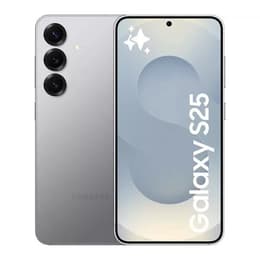
Galaxy S25
Galaxy S25
Starting at

Refurbished price:£435.00

Versus £766.13 new

See options
Google Pixel 8
Google Pixel 8
Starting at

Refurbished price:£189.00

Versus £699.99 new

See options

Ratings

The Samsung Galaxy S25, released in February 2025, and the Google Pixel 8, launched in October 2023, are both advanced Android smartphones. While the Galaxy S25 offers a more recent hardware platform and a versatile triple-camera system, the Pixel 8 distinguishes itself with its strong focus on artificial intelligence capabilities and a streamlined software experience. Both devices run on the Android operating system, providing users with a wide ecosystem of applications and services.

Scores

Durability

When considering the long-term usability of these devices, both the Galaxy S25 and the Pixel 8 offer substantial software support, ensuring they remain current for an extended period.

  • Release Timeline: The Galaxy S25 was released in February 2025, making it a newer device compared to the Google Pixel 8, which launched in October 2023. This difference in release dates means the Galaxy S25 will receive software updates for a longer duration into the future.
  • OS Support Duration: Both Samsung and Google have committed to providing seven years of operating system upgrades and security updates for their respective devices. The Galaxy S25 is expected to receive updates up to Android 22, while the Pixel 8's support extends until at least October 2030.
  • Repairability: The Samsung Galaxy S25 (base model) generally shows a higher repairability score, with some assessments giving it up to 9 out of 10, partly due to features like easier battery removal with pull tabs. The Google Pixel 8 typically receives moderate repairability scores, around 5.5 to 7 out of 10, with some challenges noted for battery removal and the charging port being soldered to the main board.

Year of Release

2025

2023

OS

Android

Android

Foldable

No

No

Performance

The performance of a smartphone is crucial for daily tasks, from app usage to demanding games, and both devices are equipped to handle modern mobile computing needs.

  • Processor Capabilities: The Galaxy S25 features a powerful, current-generation processor, which contributes to smooth operation and efficient handling of demanding applications. The Pixel 8 is powered by its own custom-designed processor, optimized for AI tasks and a fluid Android experience.
  • Multitasking and Responsiveness: With 12GB of RAM, the Galaxy S25 offers ample memory for extensive multitasking, allowing users to switch between numerous applications without noticeable slowdowns. The Pixel 8, equipped with 8GB of RAM, also provides a responsive experience for everyday use and moderate multitasking.
  • Battery Behavior: The Galaxy S25 houses a 4000 mAh battery, and its efficient processor helps in achieving respectable battery life for its size, often lasting a full day for many users. The Pixel 8 comes with a larger 4575 mAh battery, but user experiences suggest that heavy usage might still require more frequent charging, though it generally lasts a full day for typical use.

Memory (GB)

12 GB

8 GB

Screen quality

The display is a primary interface for smartphone interaction, and both the Galaxy S25 and Pixel 8 offer high-quality viewing experiences with distinct characteristics.

  • Display Technology and Clarity: The Galaxy S25 features a 6.2-inch Dynamic AMOLED 2X LTPO display, known for its vibrant colors, deep blacks, and excellent contrast. The Pixel 8 also sports a 6.2-inch OLED 'Actua Display' which provides clear visuals and good color accuracy. Both offer Full HD+ resolutions, ensuring sharp text and images.
  • Brightness and Outdoor Visibility: The Galaxy S25 boasts a peak brightness of 2600 nits, making it highly visible even in bright outdoor conditions. The Pixel 8 offers a peak brightness of 2000 nits, which also provides good visibility under direct sunlight.
  • Refresh Rate and Smoothness: Both devices feature an adaptive 120Hz refresh rate, which contributes to smoother scrolling, more fluid animations, and a more responsive feel during gaming or general navigation.

Resolution

1080x2340

1080 x 2400

Screen type

Dynamic LTPO AMOLED 2X

OLED

Audiovisual

Both smartphones offer advanced camera systems, but they approach photography with slightly different philosophies, catering to varying user preferences.

  • Camera System Configuration: The Galaxy S25 features a versatile triple-camera setup, including a 50 MP main sensor, a 12 MP ultra-wide lens, and a 10 MP telephoto lens with 3x optical zoom, providing flexibility for various shooting scenarios. The Pixel 8 comes with a dual-camera system, comprising a 50 MP main sensor and a 12 MP ultrawide lens, relying on advanced computational photography for zoom beyond its optical capabilities.
  • Photography Performance: The Galaxy S25 delivers dependable camera quality with vibrant and detailed photos, and it includes features like LOG video for more professional video capture. The Pixel 8 is highly praised for its computational photography, excelling in areas like low-light performance, dynamic range, and AI-enhanced features such as 'Magic Eraser' and 'Best Take'.
  • Video Recording and Audio: Both phones are capable of high-quality video recording, with the Galaxy S25 supporting up to 8K at 30fps and the Pixel 8 offering 4K at 60fps. Both devices also feature stereo speakers for an immersive media consumption experience, and their microphones are suitable for clear calls and recordings.

Miscellaneous

Beyond the core features, several practical elements contribute to the overall user experience and daily convenience of these smartphones.

  • Connectivity and Ports: Both the Galaxy S25 and Pixel 8 support modern connectivity standards, including 5G for fast mobile data, and the latest Wi-Fi and Bluetooth versions for seamless wireless connections. The Galaxy S25 uses a USB-C port, while the Pixel 8 also features a USB-C port (USB 3.2). Neither device includes a traditional 3.5mm headphone jack.
  • Biometrics and Security: The Galaxy S25 incorporates an ultrasonic in-screen fingerprint sensor for secure unlocking. The Pixel 8 also features an in-display fingerprint scanner and supports facial recognition, though user feedback indicates the latter can be inconsistent in certain lighting conditions.
  • Design and Build Materials: The Galaxy S25 has a glass rear (Corning Gorilla Glass Victus 2) and an aluminum frame, offering IP68 dust and water resistance. It measures 146.9 x 70.5 x 7.2 mm and weighs 162.0 g. The Pixel 8 features Gorilla Glass Victus on both the front and back, with an aluminum frame, and also carries an IP68 rating. It measures 150.5 x 70.8 x 8.9 mm and weighs 187 g, making it slightly thicker and heavier.

Weight

162 g

187 g

Screen size (in)

6.2

6.2

Mobile network

5G

5G

SIM card

Physical SIM + eSIM

Physical SIM + eSIM

Carrier compatibility

Unlocked

Unlocked

The Samsung Galaxy S25 and Google Pixel 8 each present a compelling package, catering to different user priorities. Users frequently praise the Galaxy S25 for its compact size, powerful performance, and vibrant display. Its triple-camera system, including a dedicated telephoto lens, is often highlighted for its versatility in capturing various scenes. Some common criticisms, however, point to its average charging speeds and the camera system, while dependable, not always offering a significant generational leap.

The Google Pixel 8 receives consistent acclaim for its exceptional camera capabilities, particularly its advanced computational photography and AI-driven editing features. Its clean Android experience and long-term software support are also strong points. On the other hand, some users have noted that the battery life can be unimpressive for heavy use, and the performance, while generally smooth, might not match the raw power of some competitors for intensive gaming. The in-display fingerprint sensor and facial recognition have also received mixed feedback regarding consistency.

Users prioritizing a newer device with a dedicated telephoto camera and a slightly more compact, lighter design may find the Samsung Galaxy S25 well-suited to their needs. Those who value cutting-edge computational photography, a streamlined software experience with unique AI features, and a slightly larger battery capacity might lean towards the Google Pixel 8. Both devices offer excellent long-term software support, making them sustainable choices for extended use. For those considering an eco-friendly alternative, quality-assured refurbished options for both models are available, providing a way to make an informed and sustainable choice.

See all articles

Our recent comparisons