Galaxy S25 Ultra Vs iPhone 17

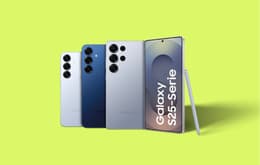
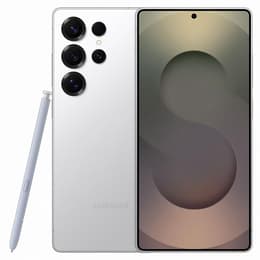
Galaxy S25 Ultra
Galaxy S25 Ultra
Starting at

Refurbished price:£649.00

Versus £1,249.00 new

See options
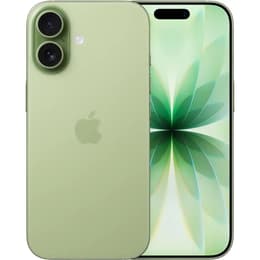
iPhone 17
iPhone 17
Starting at

Refurbished price:£689.00

Versus £799.00 new

See options

Ratings

The Samsung Galaxy S25 Ultra and the iPhone 17 represent the latest iterations of their respective flagship smartphone lines, released in early 2025 and late 2025, respectively. While both devices offer premium mobile experiences, they cater to different user preferences through their distinct operating systems and core functionalities. The Galaxy S25 Ultra continues to emphasize a versatile camera system and integrated stylus, running on the Android ecosystem, whereas the iPhone 17 focuses on a refined user experience within iOS, with advancements in its display and processing capabilities.

Scores

Durability

When considering the long-term usability of these devices, both the Galaxy S25 Ultra and the iPhone 17 offer substantial software support and robust build quality, though with some differences in repairability and update policies.

  • Software Longevity: The Samsung Galaxy S25 Ultra is expected to receive up to seven years of Android OS upgrades and security updates, a commitment that began with flagships from 2024 onwards. This means it is projected to receive updates through approximately 2032. The iPhone 17, running iOS 26 at launch, typically receives major iOS updates for five to seven years, with security patches often extending for up to eight years, suggesting support until around 2037.
  • Repairability: The iPhone 17 (and its 'e' variant) has received an iFixit repairability score of 7 out of 10, indicating a design that facilitates easier repairs, particularly for components like the battery, due to independent front and back panel access. In contrast, the Galaxy S25 Ultra achieved a provisional iFixit score of 5 out of 10, which is an improvement for Samsung but still presents challenges, especially with screen removal.
  • Practical Lifespan: Both devices are built with durable materials, including Gorilla Glass Armor 2 on the S25 Ultra and Ceramic Shield 2 on the iPhone 17, along with IP68 water and dust resistance. Users can expect a practical lifespan of several years from either device, with software support being a primary factor in long-term usability.

Year of Release

2025

2025

Compatible with latest Update

Yes

Yes

OS

Android

iOS

Foldable

No

No

Performance

Both the Galaxy S25 Ultra and the iPhone 17 are equipped with advanced internal components designed to deliver smooth and efficient performance across various tasks, though their underlying architectures differ.

  • Processing Power: The Galaxy S25 Ultra is powered by a current-generation processor, optimized for the Galaxy series, which enables it to handle demanding applications, intensive multitasking, and advanced on-device AI tasks with efficiency. The iPhone 17 features Apple's latest A-series chip, designed to provide exceptional performance for everything from everyday use to graphically intensive gaming and complex AI models.
  • Multitasking and Responsiveness: With ample RAM, both devices offer fluid multitasking capabilities, allowing users to switch between applications without noticeable delays. The iPhone 17 is expected to feature 12GB of RAM in some configurations, contributing to its smooth operation. The Galaxy S25 Ultra can be configured with up to 16GB of RAM, providing significant headroom for power users.
  • Battery Behavior: The Galaxy S25 Ultra is equipped with a large battery capacity, supporting fast wired charging, and is designed for extended use even with heavy demands. The iPhone 17 is noted for strong battery life results, with user reports suggesting it can last through a full day of typical usage, benefiting from an efficient processor and optimized software.

Memory (GB)

12 GB

8 GB

Screen quality

The visual experience on both the Galaxy S25 Ultra and the iPhone 17 is characterized by high-quality displays, each leveraging advanced technology to present vibrant and clear imagery.

  • Display Technology and Clarity: The Galaxy S25 Ultra features a 6.9-inch LTPO AMOLED display, offering a high resolution that results in sharp text and detailed images. The iPhone 17 comes with a 6.3-inch Super Retina XDR OLED display, providing deep blacks and vibrant colors with a resolution of 2622 × 1206 pixels, resulting in a pixel density of 460 pixels per inch.
  • Brightness and Smoothness: The S25 Ultra's display can reach up to 2,600 nits of peak brightness, coupled with an anti-reflective coating, enhancing visibility in bright outdoor conditions. It also supports a refresh rate of up to 120Hz for smooth scrolling and responsive interactions. The iPhone 17 also features ProMotion technology, offering an adaptive refresh rate up to 120Hz for fluid motion and responsiveness, and includes an Always-On display functionality.
  • Viewing Experience: Both devices provide an immersive viewing experience for media consumption and daily tasks. The S25 Ultra's larger screen size offers more expansive real estate, while the iPhone 17's display, with its high pixel density, delivers crisp visuals. Some reports for the S26 Ultra (a successor) mention a 'privacy display' feature that could impact brightness and color quality when viewed from certain angles, which might be a consideration for future Samsung models.

Resolution

1440x3120

2622x1206

Audiovisual

Both the Galaxy S25 Ultra and the iPhone 17 offer sophisticated camera systems designed to capture high-quality photos and videos in various conditions, with distinct approaches to their optical configurations and computational photography.

  • Rear Camera Systems: The Galaxy S25 Ultra boasts a versatile quad-camera setup, including a 200MP wide-angle main sensor, a 50MP ultra-wide camera, a 10MP telephoto lens with 3x optical zoom, and a 50MP periscope telephoto lens offering 5x optical zoom. The iPhone 17 features a dual-lens camera system, with two 48MP lenses, including a Fusion camera and a 2x optical telephoto capability, benefiting from upgraded image signal processing and algorithms.
  • Photography Performance: The S25 Ultra's large main sensor and improved ProVisual Engine contribute to detailed images, enhanced low-light performance, and better noise reduction. Its 50MP ultrawide camera also offers higher detail and improved macro capabilities. The iPhone 17's camera system, with its Fusion camera, is designed to capture stunning photos, including next-generation portraits, and benefits from Apple's focus on consistent image quality across its lenses.
  • Video Capabilities and Audio: The Galaxy S25 Ultra supports 8K 30fps video recording and captures videos in 10-bit HDR by default, offering richer colors. The iPhone 17 is capable of recording 4K Dolby Vision video. Both devices are expected to provide clear microphone quality for calls and recordings, and deliver a good media consumption experience through their integrated speakers.

Front camera

12

18 megapixels

Miscellaneous

Beyond their core features, both smartphones integrate a range of practical elements that enhance user interaction and connectivity, reflecting their respective design philosophies.

  • Connectivity and Ports: The Galaxy S25 Ultra supports 5G, Wi-Fi 7, and Bluetooth, and includes a USB-C port. The iPhone 17 also features 5G connectivity, an advanced cellular modem for faster speeds, and a USB-C port, aligning with modern connectivity standards.
  • Biometric Security: Both devices offer secure biometric authentication. The Galaxy S25 Ultra typically utilizes an ultrasonic under-display fingerprint sensor, while the iPhone 17 relies on its advanced facial recognition system for secure unlocking and payments.
  • Design and Handling: The S25 Ultra features a titanium frame and Gorilla Glass Armor 2, with a design that is slightly thinner and lighter than its predecessor, aiming for an improved in-hand feel. It retains the integrated S Pen. The iPhone 17 incorporates Ceramic Shield 2 for enhanced durability and maintains a familiar design language, with a focus on a balanced form factor.
  • Unique Features: The Galaxy S25 Ultra integrates the S Pen for note-taking and navigation, though its Bluetooth capabilities have been removed. It also features advanced AI capabilities like Gemini Live. The iPhone 17 includes MagSafe for wireless charging and accessories, and offers satellite communication features for emergencies.

Weight

233 g

177 g

Screen size (in)

6.9

6.3

Mobile network

5G

5G

SIM card

Dual Physical SIM + eSIM

Physical SIM + eSIM

Carrier compatibility

Unlocked

Unlocked

Connector

USB-C

USB-C

The Samsung Galaxy S25 Ultra and the iPhone 17 each present a compelling package for users seeking a high-end smartphone experience, albeit with distinct strengths and ecosystems. User sentiment often highlights the Galaxy S25 Ultra's comprehensive feature set, particularly its versatile camera system and the utility of the integrated S Pen, making it a favored choice for those who appreciate extensive customization and productivity tools within the Android environment. Some users, however, have noted the device's size and the learning curve associated with its numerous features.

Conversely, the iPhone 17 is frequently praised for its seamless integration within the Apple ecosystem, its intuitive iOS experience, and its robust performance. Users often commend its display quality and consistent camera output. Criticisms, when present, sometimes revolve around the more controlled nature of the iOS platform compared to Android's openness.

Users prioritizing a highly customizable Android experience, a multi-lens camera system with extensive zoom capabilities, and an integrated stylus for creative or professional tasks may find the Galaxy S25 Ultra well-suited to their needs. Its larger display and advanced AI features also appeal to those who consume a lot of media or leverage smart assistance. On the other hand, users who value a streamlined and intuitive operating system, a strong emphasis on privacy and security, and a tightly integrated ecosystem of devices and services will likely lean towards the iPhone 17. Its consistent performance and long-term software support are also significant draws. Both devices offer a quality-assured refurbished option, providing an eco-friendly alternative for consumers looking to make a sustainable choice.

See all articles

Our recent comparisons