
Galaxy S24 Ultra Vs Google Pixel 8

Galaxy S24 Ultra
Galaxy S24 Ultra
Starting at

Refurbished price:£422.00

Versus £1,357.64 new

See options
Google Pixel 8
Google Pixel 8
Starting at

Refurbished price:£185.99

Versus £699.99 new

See options

Ratings

The Samsung Galaxy S24 Ultra, released in January 2024, and the Google Pixel 8, launched in October 2023, represent distinct approaches to the modern smartphone experience. While both operate on the Android platform, the S24 Ultra emphasizes a comprehensive feature set with an integrated stylus, whereas the Pixel 8 focuses on a streamlined user experience and advanced computational photography.

Scores

Durability

When considering the longevity of these devices, several factors come into play, including their release timelines, software support, and physical durability.

  • Release Timeline: The Galaxy S24 Ultra is a newer device, having been released in January 2024, while the Pixel 8 launched a few months earlier in October 2023. This difference means the S24 Ultra will likely receive software updates for a slightly longer period from its initial release date.
  • Software Support: Both manufacturers have committed to providing extensive software support. The Galaxy S24 Ultra and the Pixel 8 are both promised seven years of operating system and security updates, offering users a long practical lifespan for software functionality and security.
  • Durability and Materials: The Galaxy S24 Ultra features a titanium frame and Corning Gorilla Glass Armor on its display, which is designed for enhanced scratch resistance and drop protection. The Pixel 8 utilizes an aluminum frame and Corning Gorilla Glass Victus for its display. Both devices carry an IP68 rating for dust and water resistance, indicating robust protection against environmental elements.

Year of Release

2024

2023

Compatible with latest Update

Yes

Yes

OS

Android

Android

Foldable

No

No

Performance

The performance of a smartphone is crucial for daily tasks, from navigating apps to demanding multimedia use. Both devices offer capable performance, though with different underlying architectures.

  • Processing Capabilities: The Galaxy S24 Ultra is equipped with a current-generation processor that delivers high raw performance, making it well-suited for intensive gaming and complex applications. The Pixel 8 features a processor designed with a strong emphasis on artificial intelligence and machine learning tasks, which enhances features like computational photography and voice processing.
  • System Responsiveness: Users generally report the Galaxy S24 Ultra offers a very smooth and responsive experience across its interface and applications, with minimal stuttering even during heavy use. The Pixel 8 provides a fluid experience for most everyday tasks, though some users have noted occasional stutters when scrolling through certain apps or websites.
  • Multitasking and Storage: The Galaxy S24 Ultra comes with 12GB of RAM, supporting extensive multitasking and keeping numerous applications open simultaneously without performance degradation. The Pixel 8 typically offers 8GB of RAM, which is sufficient for general multitasking but may show limitations with a very high number of demanding applications running concurrently. Both devices offer various storage options, with the S24 Ultra starting at 256GB and the Pixel 8 starting at 128GB.

Memory (GB)

12 GB

8 GB

Screen quality

The display is a primary interface for smartphone interaction, and both devices offer high-quality viewing experiences with distinct characteristics.

  • Display Technology and Size: The Galaxy S24 Ultra features a large 6.8-inch Dynamic AMOLED 2X display, providing deep blacks and vibrant colors. The Pixel 8 has a more compact 6.2-inch OLED display, also offering rich colors and good contrast.
  • Resolution and Clarity: The S24 Ultra boasts a higher resolution of 1440 x 3120 pixels, resulting in a very sharp image with a pixel density of 505 pixels per inch. The Pixel 8 offers a Full HD+ resolution of 1080 x 2400 pixels, with a pixel density of 428 ppi, which provides clear visuals for most content.
  • Brightness and Refresh Rate: The Galaxy S24 Ultra's display can reach a peak brightness of 2600 nits, making it highly visible even in bright outdoor conditions. It also features an adaptive refresh rate that can scale from 1Hz to 120Hz for smooth scrolling and power efficiency. The Pixel 8 has a peak brightness of 2000 nits and an adaptive refresh rate that ranges from 60Hz to 120Hz.

Resolution

1440 x 3120

1080 x 2400

Screen type

Dynamic LTPO AMOLED 2X

OLED

Audiovisual

Both smartphones are designed to capture high-quality images and videos, each with its own strengths in camera hardware and software processing.

  • Camera System Configuration: The Galaxy S24 Ultra features a versatile quad-camera system on the rear, including a 200MP main sensor, a 12MP ultrawide, a 10MP telephoto with 3x optical zoom, and a 50MP periscope telephoto with 5x optical zoom. This setup provides a wide range of focal lengths. The Pixel 8 comes with a dual-camera system, comprising a 50MP main sensor and a 12MP ultrawide sensor, relying heavily on computational photography for zoom beyond its optical capabilities.
  • Photography Performance: The S24 Ultra is noted for its vibrant and detailed photos, with strong dynamic range and excellent zoom capabilities, including up to 10x optical quality zoom. The Pixel 8 is praised for its natural color reproduction and strong computational photography, which excels in challenging lighting conditions and offers features like Magic Editor. Some users find the Pixel's low-light photos to be more realistic.
  • Video Recording and Front Camera: The Galaxy S24 Ultra supports video recording up to 8K resolution at 30 frames per second, offering high detail for video content creators. Its front camera is a 12MP sensor. The Pixel 8 records video up to 4K and features a 10.5MP front camera, known for producing natural-looking selfies.

Main camera

200 megapixels

50 megapixels

Front camera

12 megapixels

10.5 megapixels

Miscellaneous

Beyond the core features, several practical elements contribute to the overall user experience and device utility.

  • Connectivity and Ports: Both devices support modern connectivity standards, including 5G, Wi-Fi 6E (or Wi-Fi 802.11 a/b/g/n/ac/ax), and Bluetooth 5.3 (or 5.4 for S24 Ultra). The Galaxy S24 Ultra uses a USB-C port and supports dual-SIM functionality. The Pixel 8 also features a USB-C port.
  • Biometrics and Sensors: The Galaxy S24 Ultra incorporates an ultrasonic in-screen fingerprint sensor for secure unlocking. The Pixel 8 uses an optical in-screen fingerprint sensor and offers reliable face recognition. Both devices include a standard array of sensors such as accelerometers, gyroscopes, and proximity sensors.
  • Design and Handling: The S24 Ultra is a larger and heavier device, weighing 232 grams with dimensions of 162.3 x 79 x 8.6mm. It features a flat display and sharp edges. The Pixel 8 is more compact and lighter at 187 grams, with dimensions of 150.5 x 70.8 x 8.9mm, making it easier for one-handed use for some users.
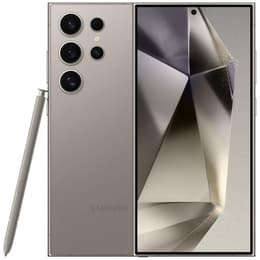
  • Unique Features: A significant differentiator for the Galaxy S24 Ultra is its integrated S Pen, which offers functionalities like note-taking, drawing, remote camera control, and handwriting-to-text conversion. The Pixel 8 leverages its AI capabilities for features like Call Screen and enhanced photo editing tools.

Weight

232 g

187 g

Screen size (in)

6.8

6.2

Mobile network

5G

5G

SIM card

Dual Physical SIM + eSIM

Physical SIM + eSIM

Carrier compatibility

Unlocked

Unlocked

User feedback for the Galaxy S24 Ultra often highlights its exceptional display, long-lasting battery, and the versatility of its camera system, particularly the extensive zoom capabilities. The integrated S Pen is consistently praised for enhancing productivity and creative tasks. Some users, however, note that Samsung's camera processing can sometimes lead to oversaturated colors. The Pixel 8 receives acclaim for its natural-looking photos, clean Android interface, and comfortable, compact design. Its AI-driven features are also a frequent point of praise. Criticisms sometimes point to the processor being less powerful than competitors for raw performance and occasional UI stutters.

Users who prioritize a large, vibrant display, a highly versatile camera system with extensive zoom, and the unique productivity features of an integrated stylus will find the Samsung Galaxy S24 Ultra well-suited to their needs. Conversely, those who prefer a more compact device, a streamlined Android experience, and a camera that excels in natural image processing and AI-enhanced features may lean towards the Google Pixel 8. Both devices offer long-term software support, making them viable choices for extended use. For those considering a more sustainable choice, both models are available as quality-assured refurbished options.


See all articles

Our recent comparisons