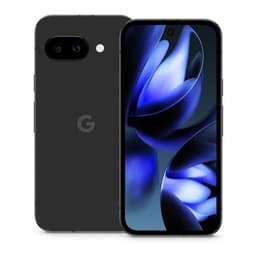

Galaxy S22 Ultra 5G Vs Google Pixel 9a

Galaxy S22 Ultra 5G
Galaxy S22 Ultra 5G
Starting at

Refurbished price:£247.00

Versus £1,364.00 new

See options
Google Pixel 9a
Google Pixel 9a
Starting at

Refurbished price:£319.00

Versus £499.00 new

See options

Ratings

The Samsung Galaxy S22 Ultra 5G, released in February 2022, and the Google Pixel 9A, launched in April 2025, represent different approaches to the smartphone experience from their respective manufacturers. While the Galaxy S22 Ultra was a top-tier flagship device at its release, the Pixel 9A enters the market as a more recent, feature-rich option within Google's A-series lineup. A primary distinction lies in their camera systems and the integration of advanced AI capabilities, alongside their respective software support commitments.

Scores

Durability

The expected practical lifespan of these devices is influenced by their release timelines and the manufacturers' software support policies.

  • Software Longevity: The Google Pixel 9A launched with Android 15 and is anticipated to receive seven years of software and security updates, offering an extended period of current software features and protection. The Samsung Galaxy S22 Ultra 5G, released with Android 12, was promised four major Android OS upgrades (up to Android 16) and five years of security updates, with support expected to conclude within 2027. [17]
  • Age and Updates: As a more recently released device, the Pixel 9A benefits from a longer runway for future updates, ensuring access to newer operating system features and security patches for a more extended duration. The Galaxy S22 Ultra, being an older model, is nearing the end of its guaranteed software support cycle.
  • Repairability: Both devices feature robust builds. The Pixel 9A carries an IP68 rating for dust and water protection, indicating a good level of durability against environmental elements. [2, 5] The Galaxy S22 Ultra also boasts an IP68 rating and features Corning Gorilla Glass Victus+ on both its front and back, along with an Armor aluminum frame for enhanced resistance to drops and scratches. [13]

Year of Release

2022

2025

Compatible with latest Update

Yes

Yes

OS

Android

Android

Foldable

No

No

Performance

Performance varies between these two devices, reflecting their different release eras and design philosophies, impacting how they handle daily tasks and demanding applications.

  • Processing Power: The Google Pixel 9A is powered by the Google Tensor G4, the same generation of processor found in Google's flagship Pixel 9 series. [7] This allows it to handle everyday tasks smoothly, run demanding applications, and manage multitasking effectively without significant slowdowns. The Samsung Galaxy S22 Ultra 5G, at its release, featured a high-performance processor (Snapdragon 8 Gen 1 or Exynos 2200 depending on region) that delivered powerful performance for multitasking and gaming. [10, 15] While still capable, its older architecture may exhibit less efficiency compared to newer chipsets, and some users reported it could generate heat under sustained heavy loads. [15]
  • Multitasking and Storage: The Pixel 9A typically comes with 8GB of RAM and offers storage options of 128GB or 256GB, utilizing UFS 3.1 technology for faster data access. [2, 5, 8] The Galaxy S22 Ultra offered more varied configurations, including models with 12GB of RAM and storage options up to 1TB, providing ample space and memory for intensive use. [10, 17] Neither device includes a microSD card slot for expandable storage. [17]
  • Real-world Responsiveness: Users of the Pixel 9A can expect a fluid experience across the operating system and applications, benefiting from the optimized integration of Google's hardware and software. The Galaxy S22 Ultra, while a strong performer in its time, may show slight differences in long-term responsiveness compared to a newer device with a more recent processor, especially with the increasing demands of modern applications.

Memory (GB)

8 GB

8 GB

Screen quality

The visual experience on both smartphones is delivered through high-quality displays, though with distinct characteristics in size, resolution, and brightness.

  • Display Technology and Size: The Samsung Galaxy S22 Ultra 5G features a larger 6.8-inch Dynamic AMOLED 2X display, offering a more expansive viewing area. [10, 13] The Google Pixel 9A comes with a 6.3-inch OLED display. [3, 7] Both technologies provide deep blacks and vibrant colors, characteristic of OLED panels.
  • Resolution and Clarity: The Galaxy S22 Ultra boasts a QHD+ resolution (1440 x 3088 pixels), resulting in a higher pixel density and exceptionally sharp images and text. [13] The Pixel 9A offers a Full HD+ resolution (1080 x 2424 pixels), which still provides clear visuals for everyday use. [2, 3]
  • Brightness and Smoothness: The S22 Ultra can reach a peak brightness of 1750 nits, making it highly visible even in bright outdoor conditions. [10, 13] It also features an adaptive refresh rate that can scale from 1Hz to 120Hz for smooth scrolling and power efficiency. [10, 13] The Pixel 9A's display supports a 120Hz refresh rate for fluid motion and offers a peak brightness of up to 2700 nits, with HDR brightness at 1800 nits, ensuring good visibility outdoors. [3, 5, 9]

Resolution

1440 x 3088

2424 x 1080

Audiovisual

Both devices offer capable camera systems, but they approach photography with different hardware configurations and processing strengths.

  • Rear Camera Systems: The Samsung Galaxy S22 Ultra 5G features a versatile quad-camera setup, including a 108 MP main sensor, a 12 MP ultrawide lens, and two telephoto lenses (10 MP with 3x optical zoom and 10 MP with 10x optical zoom). [13] This configuration provides exceptional flexibility, particularly for zooming. The Google Pixel 9A has a dual-camera system, comprising a 48 MP main sensor with optical image stabilization and a 13 MP ultrawide lens. [2, 5, 7, 9]
  • Photography Performance: The S22 Ultra is known for its detailed daylight photos, strong low-light performance, and its standout telephoto capabilities, allowing for impressive zoomed-in shots. [15, 19] The Pixel 9A, while having fewer lenses, leverages Google's computational photography to produce high-quality images, often excelling in color accuracy and dynamic range, even with its main 48 MP sensor. [8]
  • Video and Front Camera: The Galaxy S22 Ultra supports video recording up to 8K resolution at 24fps and 4K at 30/60fps, along with a 40 MP front-facing camera. [13] The Pixel 9A records video at up to 4K resolution and features a 13 MP front camera. [2, 7] Both offer good quality for video calls and self-portraits.

Front camera

40 megapixels

13 megapixels

Miscellaneous

Beyond core performance and display, several practical elements contribute to the overall user experience and device utility.

  • Connectivity and Ports: Both smartphones support 5G connectivity, Wi-Fi 6E, and Bluetooth for wireless communication. [2, 3, 4, 10, 13] They both feature a USB Type-C port for charging and data transfer. [2, 4, 13] Neither device includes a traditional 3.5mm headphone jack.
  • Biometric Security: The Galaxy S22 Ultra utilizes an ultrasonic in-display fingerprint scanner for secure unlocking. [10] The Pixel 9A also features a fingerprint sensor, typically an under-display optical sensor in the Pixel A-series. Both offer reliable biometric authentication.
  • Design and Handling: The Galaxy S22 Ultra is a larger and heavier device, measuring 163.3 x 77.9 x 8.9 mm and weighing around 228-229 grams. [13] Its size can make one-handed use challenging for some users. [16] The Pixel 9A is more compact and lighter at 154.70 x 73.30 x 8.90mm and 185.90 grams, potentially offering a more comfortable grip. [2] The S22 Ultra integrates an S Pen stylus, offering unique productivity features for note-taking and drawing. [10, 15] The Pixel 9A does not include stylus support.

Weight

228 g

186 g

Screen size (in)

6.8

6.3

Mobile network

5G

5G

SIM card

Physical SIM + eSIM

Physical SIM + eSIM

Carrier compatibility

Unlocked

Unlocked

Connector

USB-C

USB-C

The Samsung Galaxy S22 Ultra 5G and the Google Pixel 9A cater to different user priorities, largely due to their release timelines and design focuses. The S22 Ultra, a 2022 flagship, is often praised for its expansive, high-resolution display, versatile camera system with impressive optical zoom capabilities, and the integrated S Pen, which appeals to users seeking advanced productivity features. [19] However, some users have noted its considerable size and weight, and as a device from 2022, its battery performance may have degraded over time for long-term owners. [16, 20]

The Pixel 9A, released in 2025, is lauded for its strong software support, promising seven years of updates, and its deep integration of Google's AI features, including Gemini. [4, 7] Users appreciate its capable camera, which, despite having fewer lenses than the S22 Ultra, delivers consistent results through computational photography. Its newer processor also offers efficient performance for modern applications. Some common feedback for Pixel A-series devices often points to a focus on software experience and camera quality over raw hardware specifications. [25]

Users prioritizing a large, high-resolution display, advanced optical zoom photography, and integrated stylus functionality may find the Galaxy S22 Ultra well-suited to their needs. Conversely, those who value extended software longevity, cutting-edge AI features, and a more recent, optimized performance experience, particularly within Google's ecosystem, may lean toward the Pixel 9A. Both devices offer a quality-assured refurbished option, providing an eco-friendly alternative for consumers looking to make an informed and sustainable choice.


See all articles

Our recent comparisons