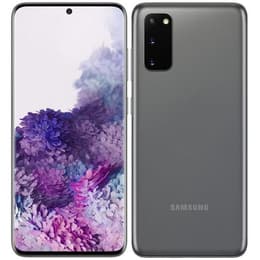


Galaxy S20 5G Vs Google Pixel 7 Pro

Galaxy S20 5G
Galaxy S20 5G
Starting at

Refurbished price:£133.00

Versus £899.00 new

See options
Google Pixel 7 Pro
Google Pixel 7 Pro
Starting at

Refurbished price:£169.75

Versus £899.99 new

See options

Ratings

The Samsung Galaxy S20 5G, released in early 2020, and the Google Pixel 7 Pro, launched in late 2022, represent different generations of flagship smartphones. While both devices offer premium experiences, the Pixel 7 Pro benefits from more recent advancements in camera technology and software integration, whereas the Galaxy S20 5G, despite its age, still provides a capable hardware foundation. Both run on the Android operating system, but their software philosophies and update timelines differ significantly.

Scores

Durability

The practical lifespan of a smartphone is heavily influenced by its release date and the manufacturer's commitment to software updates.

  • Release Timeline: The Samsung Galaxy S20 5G was released in March 2020, making it over six years old as of early 2026. The Google Pixel 7 Pro, launched in October 2022, is a significantly newer device.
  • Software Support: Samsung officially ended software and security updates for the Galaxy S20 series in April 2025, meaning it no longer receives new Android versions or security patches. The Pixel 7 Pro, on the other hand, is guaranteed OS and security updates until at least October 2027, offering a longer period of official support.
  • Repairability: The Galaxy S20 5G generally received a moderate repairability score, with some sources indicating a 7.0 out of 10, noting accessible battery and screen cables, though adhesive use was a challenge. The Pixel 7 Pro received a lower repairability score of 5.5 out of 10 from some assessments, with challenges noted for battery removal due to strong adhesive and a charging port soldered to the motherboard.

Year of Release

2020

2022

Compatible with latest Update

No

Yes

OS

Android

Android

Foldable

No

No

Performance

Performance in daily use is a key differentiator, influenced by the underlying hardware and software optimization.

  • Storage Options: The Galaxy S20 5G typically comes with 128GB of internal storage and offers expandable storage via a microSD card, providing flexibility for users with large media libraries. The Pixel 7 Pro offers more internal storage options, including 128GB, 256GB, and 512GB, but lacks a microSD card slot for expansion.
  • Battery Behavior: The Galaxy S20 5G features a 4000mAh battery, which for heavy users, may require more frequent charging given its age and the demands of modern applications. The Pixel 7 Pro is equipped with a larger 5000mAh battery, and user reports suggest it generally provides a full day of use for many, though some heavy usage scenarios can lead to faster depletion.
  • System Responsiveness: The Pixel 7 Pro, with its more recent processor, handles demanding applications and multitasking with notable smoothness, offering a fluid user experience. The Galaxy S20 5G, while still capable for everyday tasks, may exhibit slower app loading times and less seamless transitions in comparison, especially with newer, more resource-intensive applications.

Memory (GB)

12 GB

12 GB

Screen quality

The display is a primary interface, and both devices offer high-quality viewing experiences with distinct characteristics.

  • Display Technology: The Galaxy S20 5G features a 6.2-inch Dynamic AMOLED 2X display, known for its vibrant colors and deep blacks. The Pixel 7 Pro sports a larger 6.7-inch LTPO AMOLED display, which allows for more dynamic refresh rate adjustments to conserve battery.
  • Resolution and Clarity: Both phones offer high resolutions, with the Galaxy S20 5G at 1440x3200 pixels and the Pixel 7 Pro at 3120x1440 pixels, resulting in sharp and detailed visuals for text and images.
  • Brightness and Refresh Rate: The Galaxy S20 5G provides a 120Hz refresh rate at FHD resolution, contributing to smoother scrolling and animations, with a peak brightness of 1200 nits. The Pixel 7 Pro also offers a 120Hz variable refresh rate and can reach a higher peak brightness of 1500 nits, which can improve visibility in bright outdoor conditions.

Resolution

1440 x 3200

1440 x 3120

Screen type

Dynamic AMOLED 2X

LTPO AMOLED

Audiovisual

Camera performance is a significant factor for many users, and both devices offer versatile camera systems.

  • Camera System Capabilities: The Galaxy S20 5G includes a triple-camera setup with a 12MP wide, 64MP telephoto (offering 3x hybrid optical zoom), and 12MP ultrawide lens. The Pixel 7 Pro also features a triple-camera system, comprising a 50MP wide, 12MP ultrawide, and a 48MP telephoto lens with 5x optical zoom, providing greater reach for distant subjects.
  • Photography Performance: The Pixel 7 Pro is often praised for its computational photography, delivering consistent and detailed images, particularly in everyday and challenging lighting conditions. The Galaxy S20 5G also captures high-quality photos, though its low-light performance and overall image processing may not match the more advanced algorithms of the newer Pixel.
  • Video Recording Quality: The Galaxy S20 5G was notable for its ability to record 8K video at 24 frames per second, alongside 4K at 30/60fps. The Pixel 7 Pro records 4K video at 30/60fps, with a strong focus on video stabilization and clarity.

Main camera

12 megapixels

50 megapixels

Front camera

10 megapixels

10.8 megapixels

Miscellaneous

Beyond core features, several practical elements contribute to the overall user experience.

  • Connectivity Options: Both devices support 5G connectivity, along with modern Wi-Fi standards (Wi-Fi 6 for S20 5G) and Bluetooth for wireless accessories.
  • Biometric Security: The Galaxy S20 5G uses an in-display ultrasonic fingerprint sensor. The Pixel 7 Pro features an under-display optical fingerprint sensor and also includes Face Unlock for convenient access.
  • Physical Design and Handling: The Galaxy S20 5G is a more compact device, weighing 163 grams and measuring 151.7 x 69.1 x 7.9 mm, making it easier for one-handed use. The Pixel 7 Pro is larger and heavier at 212 grams and 162.9 x 76.6 x 8.9 mm, which might appeal to users who prefer a larger screen, but could be less comfortable for smaller hands.

Weight

163 g

212 g

Screen size (in)

6.2

6.7

Mobile network

5G

5G

SIM card

Dual Physical SIM

Physical SIM + eSIM

Carrier compatibility

Unlocked

Unlocked

User feedback for the Samsung Galaxy S20 5G often highlights its still-capable display and the inclusion of expandable storage as strong points. Some common criticisms have included battery degradation over time and, for the Exynos variant, occasional overheating. Users of the Google Pixel 7 Pro frequently praise its exceptional camera performance, clean Android experience, and consistent software updates. Some reported concerns have included battery life not always meeting expectations for heavy users and occasional reports of the device warming up.

For users prioritizing a more compact device with expandable storage and who are comfortable with an older software version, the Galaxy S20 5G could be a suitable option. However, those who value the latest camera innovations, a longer period of software support, and a larger, brighter display will likely find the Pixel 7 Pro better suited to their needs. Both devices offer a quality-assured refurbished option, providing a sustainable choice for consumers looking to extend the life cycle of electronic products.

See all articles

Our recent comparisons