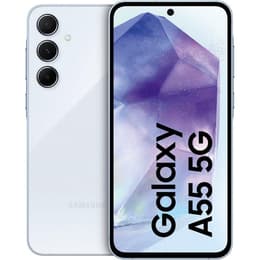
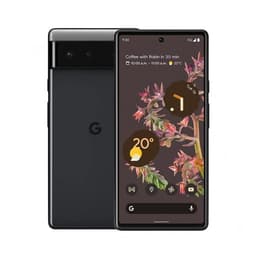

Galaxy A55 Vs Google Pixel 6

Galaxy A55
Galaxy A55
Starting at

Refurbished price:£193.21

Versus £479.00 new

See options
Google Pixel 6
Google Pixel 6
Starting at

Refurbished price:£101.00

Versus £649.99 new

See options

Ratings

The Samsung Galaxy A55 (released March 2024) and the Google Pixel 6 (released October 2021) are both Android smartphones that offer distinct user experiences. While the Galaxy A55 is a more recent offering from Samsung's popular A-series, the Pixel 6 represents Google's vision for Android, featuring its custom-designed processor and a focus on computational photography. Key differentiators include their release timelines, software support longevity, and camera philosophies, with the A55 providing a newer hardware platform and the Pixel 6 emphasizing a streamlined Android experience with advanced imaging capabilities.

Scores

Durability

The practical lifespan of a smartphone is significantly influenced by its release date and the manufacturer's commitment to software updates. These factors determine how long a device remains secure, compatible with new applications, and performs optimally.

  • Release Timeline: The Galaxy A55, launched in March 2024, benefits from a more recent hardware and software foundation compared to the Google Pixel 6, which was released in October 2021. This three-year difference in release dates directly impacts their remaining support windows.
  • Software Longevity: Samsung typically provides four years of Android OS upgrades and five years of security updates for the Galaxy A55. The Pixel 6, having launched with Android 12, was guaranteed three years of OS updates and five years of security updates, meaning its OS update cycle is nearing its end, though security updates continue. Users prioritizing the latest Android versions for the longest period will find the A55 offers a longer runway.
  • Durability Features: Both devices offer robust build quality. The Galaxy A55 features Gorilla Glass Victus+ on the front and back, along with an IP67 rating for dust and water resistance. The Pixel 6 also includes Gorilla Glass Victus on both sides and boasts an IP68 rating, indicating slightly better water resistance.

Year of Release

2024

2021

Compatible with latest Update

Yes

Yes

OS

Android

Android

Foldable

No

No

Performance

Performance in smartphones is about more than just raw speed; it encompasses how smoothly the device handles daily tasks, multitasking, and demanding applications, alongside efficient power management.

  • Everyday Responsiveness: The Galaxy A55, powered by its Exynos 1480 processor, delivers smooth performance for everyday tasks, web browsing, and social media. Users report a snappy and fluid experience, though some minor UI animation choppiness can occur. The Pixel 6, with its custom-designed Tensor processor, was engineered to provide a responsive Android experience, particularly excelling in AI-driven tasks and system optimizations.
  • Multitasking and Storage: The Galaxy A55 is available with 8GB or 12GB of RAM and offers 128GB or 256GB of internal storage, with the added flexibility of expandable storage via a microSD card. The Pixel 6 comes with 8GB of RAM and 128GB or 256GB of internal storage, but it does not support expandable storage. For users who require extensive local storage for media and apps, the A55's expandable storage is a notable advantage.
  • Battery Behavior: The Galaxy A55 features a 5000 mAh battery, which generally provides long-lasting power, often extending to two days of moderate use. The Pixel 6 has a 4614 mAh battery, and while it can last a full day for many users, some reports indicate more frequent charging for heavy use, particularly with 5G connectivity.

Memory (GB)

8 GB

8 GB

Screen quality

The display is a primary interface for smartphone interaction, and differences in technology, resolution, and refresh rate significantly impact the visual experience.

  • Display Technology and Clarity: Both devices feature vibrant OLED displays. The Galaxy A55 has a 6.6-inch Super AMOLED display with a 1080 x 2340 pixel resolution, offering sharp and colorful visuals. The Pixel 6 features a 6.4-inch AMOLED display with a 1080 x 2400 pixel resolution, also providing clear and accurate colors.
  • Brightness and Refresh Rate: The Galaxy A55's display supports a 120Hz refresh rate for smoother scrolling and animations, and it can reach a peak brightness of 1000 nits, with some tests showing even higher peaks, ensuring good visibility in various lighting conditions. The Pixel 6 offers a 90Hz refresh rate, which provides a noticeable improvement in smoothness over standard 60Hz panels, and its display is bright enough for outdoor use, reaching around 750-770 nits for full-screen white.
  • Viewing Experience: The A55's slightly larger screen size offers a more expansive canvas for media consumption and productivity. Both displays deliver deep blacks and good contrast, characteristic of OLED technology, making them suitable for watching videos and viewing photos.

Resolution

1080 x 2340

1080 x 2400

Screen type

Super AMOLED

AMOLED

Audiovisual

Camera performance is a crucial aspect for many users, with both hardware and software playing significant roles in image and video quality.

  • Rear Camera System: The Galaxy A55 features a triple-camera setup with a 50MP main sensor (with OIS), a 12MP ultrawide, and a 5MP macro lens. It generally produces detailed photos with good dynamic range in daylight, and improved low-light performance due to aggressive noise reduction. The Pixel 6 also has a dual-camera system with a 50MP main sensor (with OIS) and a 12MP ultrawide lens. Its camera is highly praised for its computational photography, delivering excellent detail, color accuracy, and impressive low-light capabilities, often without needing Night Sight mode.
  • Video Recording and Front Camera: Both phones are capable of recording video in 4K resolution at 30 frames per second. The Pixel 6 can also record 4K at 60 frames per second. The Galaxy A55 has a 32MP front-facing camera, which performs well in good lighting. The Pixel 6 has an 8MP front camera, which delivers good selfies in well-lit conditions, though low-light selfies can show noise.
  • Special Features: The Pixel 6 leverages its Tensor chip for advanced camera features like Magic Eraser and Real Tone, which enhance photo editing and skin tone representation. The Galaxy A55 offers various camera modes, including a Pro mode for photos and videos.

Main camera

50 megapixels

50 megapixels

Front camera

32 megapixels

8 megapixels

Miscellaneous

Beyond core performance and display, several practical features contribute to the overall user experience, from connectivity to physical design.

  • Connectivity and Ports: Both the Galaxy A55 and Pixel 6 support 5G connectivity, Wi-Fi 6, and Bluetooth for wireless communication. The Galaxy A55 uses USB-C 2.0 for charging and data transfer, while the Pixel 6 features USB-C 3.1, offering potentially faster data speeds. Neither phone includes a traditional 3.5mm headphone jack.
  • Biometrics and Security: Both devices incorporate an under-display optical fingerprint sensor for secure unlocking. The Galaxy A55 also offers face recognition and includes Samsung Knox Vault for enhanced hardware and software security. The Pixel 6 integrates the Titan M2 security module for robust data protection.
  • Design and Handling: The Galaxy A55 features an aluminum frame and a glass back, giving it a premium feel, and it is slightly larger and heavier than its predecessor. The Pixel 6 also has an aluminum frame and a glass back, with a distinctive two-tone design and a prominent camera bar. The A55 measures 161.1 x 77.4 x 8.2 mm and weighs 213g, while the Pixel 6 is 158.6 x 74.8 x 8.9 mm and weighs 207g.

Weight

213 g

207 g

Screen size (in)

6.6

6.4

Mobile network

5G

5G

SIM card

Dual Physical SIM

Physical SIM + eSIM

Carrier compatibility

Unlocked

Unlocked

Choosing between the Samsung Galaxy A55 and the Google Pixel 6 involves weighing their respective strengths and how they align with individual user priorities. The Galaxy A55, being a newer device, offers a longer software support window and a larger battery capacity, which translates to extended usage between charges. Users often praise its vibrant display, premium build quality, and reliable performance for everyday tasks.

On the other hand, the Google Pixel 6, despite its earlier release, is highly regarded for its exceptional camera system, driven by Google's computational photography and the Tensor chip. Users frequently highlight its ability to capture stunning photos in various conditions, particularly in low light, and its clean, unadulterated Android experience. However, some users have noted mixed experiences with its battery life and the speed of its in-display fingerprint sensor.

Users prioritizing a device with the most up-to-date software support for the longest period and a larger, long-lasting battery may find the Samsung Galaxy A55 more suitable. Its expandable storage is also a significant advantage for those who need ample space for media. Conversely, users who place a premium on camera performance, especially for still photography, and prefer a pure Android experience with Google's unique AI features, might lean towards the Google Pixel 6. Both devices represent solid choices in their respective categories, and considering a quality-assured refurbished option for either model can be an eco-friendly alternative to extend their lifecycle.

See all articles

Our recent comparisons