
Galaxy A33 5G Vs Galaxy A36

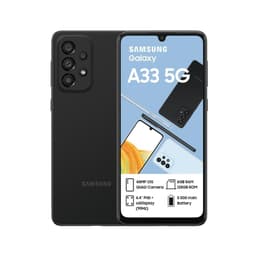
Galaxy A33 5G
Galaxy A33 5G
Starting at

Refurbished price:£102.00

Versus £389.00 new

See options
Galaxy A36
Galaxy A36
Starting at

Refurbished price:£206.00

Versus £369.00 new

See options

Ratings

The Samsung Galaxy A33 5G, released in March 2022, and the Samsung Galaxy A36, launched in March 2025, are both mid-range smartphones from Samsung's popular A series. While they share the common Android operating system with Samsung's One UI, the three-year gap between their releases brings notable advancements in display technology, processing capabilities, and long-term software support. This comparison will explore the practical differences to help users determine which device aligns best with their needs.

Scores

Durability

The longevity of a smartphone is significantly influenced by its release timeline and the manufacturer's commitment to software updates.

  • Release and Software Support: The Galaxy A33 5G, released in March 2022, launched with Android 12 and is eligible for four major Android OS upgrades and five years of security updates. This means it can receive updates up to Android 16, with security patches extending until March 2027. In contrast, the Galaxy A36, released in March 2025 with Android 15, benefits from Samsung's extended policy, offering six Android OS upgrades and six years of security patches. This provides the A36 with a considerably longer period of up-to-date software and security.
  • Physical Durability: Both devices feature an IP67 rating for dust and water resistance, indicating protection against immersion in up to 1 meter of fresh water for 30 minutes. The Galaxy A33 5G uses Corning Gorilla Glass 5 for screen protection, while the newer Galaxy A36 upgrades to Gorilla Glass Victus+, offering enhanced resistance against drops and scratches. The A36 also features a glass body for both front and back, compared to the A33's plastic back and frame.
  • Expected Lifespan: For users prioritizing the longest possible software support and physical resilience, the Galaxy A36 offers a more extended practical lifespan due to its newer release, enhanced screen protection, and longer update commitment. The A33 5G, while still supported, is nearing the end of its major OS upgrade cycle.

Year of Release

2022

2025

OS

Android

Android

Foldable

No

No

Performance

Performance in daily use is a key consideration, and both devices offer capable experiences, though with generational differences in their underlying hardware.

  • Processing Power: The Galaxy A33 5G is powered by the Exynos 1280 processor, which handles everyday applications and multitasking smoothly. The Galaxy A36 features the newer Snapdragon 6 Gen 3 chipset, providing improved efficiency and responsiveness for more demanding applications and gaming. Users engaging in graphically intensive games or heavy video editing may notice the performance gains on the A36.
  • Multitasking and Storage: Both models offer configurations with 6GB or 8GB of RAM, with the A36 also available in a 12GB RAM option, which can further enhance multitasking capabilities. Storage options for both include 128GB and 256GB, and both support expandable storage via a microSD card, allowing users to significantly increase their storage capacity for photos, videos, and apps.
  • Battery Behavior: Both smartphones are equipped with a 5000 mAh battery, designed to provide a full day of typical usage. However, the Galaxy A36 supports faster 45W wired charging, allowing for quicker replenishment of the battery compared to the A33 5G's 25W fast charging.

Memory (GB)

6 GB

6 GB

Screen quality

The display is a primary interface for smartphone interaction, and both devices offer vibrant viewing experiences with distinct differences.

  • Display Technology and Size: Both the Galaxy A33 5G and Galaxy A36 feature Super AMOLED displays, known for their deep blacks and vibrant colors. The A33 5G has a 6.4-inch display, while the A36 offers a larger 6.7-inch screen, providing more screen real estate for media consumption and productivity.
  • Resolution and Clarity: Both phones provide Full HD+ resolution (1080x2400 for A33, 2340x1080 for A36), ensuring sharp and clear visuals for text and images. The pixel density remains high on both, contributing to a detailed viewing experience.
  • Smoothness and Brightness: The Galaxy A33 5G features a 90Hz refresh rate, offering smoother scrolling and animations than standard 60Hz displays. The Galaxy A36 elevates this with a 120Hz refresh rate, resulting in an even more fluid visual experience. The A36 also boasts higher peak brightness levels, which can improve visibility in bright outdoor conditions.

Resolution

1080 x 2400

1080 x 2340

Audiovisual

For many users, camera capabilities are a significant factor, and both the Galaxy A33 5G and A36 offer versatile camera systems for capturing moments.

  • Rear Camera System: The Galaxy A33 5G features a quad-camera setup with a 48MP main sensor with optical image stabilization (OIS), an 8MP ultrawide, a 5MP macro, and a 2MP depth sensor. The Galaxy A36 simplifies this to a triple-camera array, featuring a 50MP main sensor, an 8MP ultrawide, and a 5MP macro lens. The A36's main sensor offers a higher megapixel count, which can translate to more detailed images.
  • Photography Performance: Both devices are capable of capturing clear photos in good lighting conditions. The A33 5G's OIS on its main sensor helps reduce blur from handshakes, particularly in challenging light. The A36, with its newer sensor and potentially improved image processing from the newer chipset, may offer enhancements in low-light performance and overall image quality.
  • Video and Front Camera: Both phones support video recording at resolutions suitable for social media and casual viewing. For selfies and video calls, the Galaxy A33 5G has a 13MP front camera, while the Galaxy A36 features a 12MP front camera.

Front camera

13 megapixels

12

Miscellaneous

Beyond the core features, several practical elements contribute to the overall user experience and daily convenience.

  • Connectivity Standards: Both the Galaxy A33 5G and Galaxy A36 support 5G connectivity, ensuring access to faster mobile network speeds where available. They also include modern Wi-Fi standards and Bluetooth for wireless connections to accessories and networks.
  • Ports and Biometrics: The Galaxy A33 5G uses a USB-C 2.0 port for charging and data transfer and notably omits a 3.5mm headphone jack. The Galaxy A36 also features a USB Type-C port. Both devices incorporate an in-display fingerprint sensor for secure and convenient unlocking.
  • Design and Handling: The Galaxy A33 5G measures 159.7 x 74 x 8.1 mm and weighs 186g. The Galaxy A36 is slightly larger and heavier at 162.90 x 78.20 x 7.40mm and 195g, which is expected given its larger screen size. The A36's glass body provides a different in-hand feel compared to the A33's plastic back.

Weight

186 g

195 g

Screen size (in)

6.4

6,74

Mobile network

5G

5G

SIM card

Dual Physical SIM

Dual Physical SIM + eSIM

Carrier compatibility

Unlocked

Unlocked

Connector

USB-C

USB-C

User sentiment often highlights the Galaxy A33 5G as a reliable and well-rounded device for its time, praised for its AMOLED display and consistent performance for everyday tasks. Common feedback points to its solid battery life and the inclusion of OIS on the main camera as strong advantages. Some users, however, noted the absence of a headphone jack and the 25W charging speed as areas that could be improved.

The Galaxy A36, being a newer model, generally receives positive remarks for its larger, smoother 120Hz display and the significant upgrade in software support longevity. Users appreciate the faster 45W charging and the enhanced durability offered by Gorilla Glass Victus+ and its glass construction. While its camera system is robust, some discussions might focus on the specific improvements over its predecessors rather than groundbreaking new features.

Users prioritizing long-term software updates, a larger and smoother display, and faster charging will find the Galaxy A36 well-suited to their needs. Its newer processor also offers a performance edge for more demanding applications. Conversely, users who value a slightly more compact form factor and are content with a 90Hz display and slightly slower charging may still find the Galaxy A33 5G to be a capable device, especially if their usage patterns are less intensive. Both devices offer a quality-assured refurbished option, providing an eco-friendly alternative for consumers looking to make informed and sustainable choices.


See all articles

Our recent comparisons