
Galaxy A26 Vs Google Pixel 8a

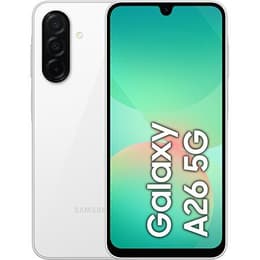
Galaxy A26
Galaxy A26
Starting at

Refurbished price:£152.00

Versus £419.55 new

See options
Google Pixel 8a
Google Pixel 8a
Starting at

Refurbished price:£216.00

Versus £467.97 new

See options

Ratings

The Samsung Galaxy A26 and the Google Pixel 8A are both mid-range smartphones, released in March 2025 and May 2024, respectively. While both devices offer a robust Android experience, the Galaxy A26 emphasizes a larger display and expandable storage, whereas the Pixel 8A focuses on extended software support and advanced computational photography features. Both run on the Android operating system, with distinct user interfaces and update policies.

Scores

Durability

When considering the long-term usability of these devices, their release timelines and software support policies are key differentiators.

  • Software Longevity: The Google Pixel 8A stands out with an impressive commitment to seven years of OS and security updates from its May 2024 release, extending support until at least 2031. This means it will receive major Android version upgrades and security patches for a significantly longer period. The Samsung Galaxy A26, released in March 2025, is rumored to offer six years of software support, which is still substantial for an Android device.
  • Physical Durability: The Galaxy A26 features Gorilla Glass Victus+ on both its front and back, paired with an IP67 rating for dust and water resistance, suggesting a robust build. The Pixel 8A also carries an IP67 rating and uses Corning Gorilla Glass 3 for screen protection, offering good resistance against dust and splashes.
  • Repairability: The Pixel 8A has received moderate to low repairability scores from some assessments, often due to the use of strong adhesives and delicate internal components, making DIY repairs challenging. Information on the specific repairability score for the Galaxy A26 is less detailed, but Samsung's A-series phones generally present similar challenges due to their construction.

Year of Release

2024

2024

Compatible with latest Update

Yes

Yes

OS

Android

Android

Foldable

No

No

Performance

The performance of a smartphone is crucial for daily tasks, from app usage to multitasking and gaming.

  • Processing Power: The Google Pixel 8A is equipped with a current-generation processor that enables smooth navigation, quick app loading, and efficient multitasking. Users generally report a snappy experience, even with demanding applications. The Samsung Galaxy A26 is powered by a processor designed for everyday use, handling general tasks effectively. While capable for most users, some reports indicate occasional lag during heavy multitasking or in certain settings.
  • Memory and Storage: Both devices offer 8GB of RAM in some configurations, which contributes to capable multitasking. The Pixel 8A comes with 128GB or 256GB of internal storage. The Galaxy A26 also offers 128GB or 256GB storage options, with the added benefit of expandable storage via a microSD card, which can be a significant advantage for users who require more space for media and files.
  • Battery Performance: The Galaxy A26 features a larger 5000 mAh battery, supporting 25W wired charging. The Pixel 8A has a 4492 mAh battery and supports 18W wired charging, along with wireless charging capabilities. In real-world usage, the Pixel 8A generally provides a full day of use for most users, though heavy usage might require more frequent charging.

Memory (GB)

8 GB

8 GB

Screen quality

The display is a primary interface for any smartphone, influencing everything from media consumption to daily interactions.

  • Display Technology and Size: The Samsung Galaxy A26 features a larger 6.7-inch Super AMOLED display, offering vibrant colors and deep blacks. The Google Pixel 8A has a more compact 6.1-inch OLED display, also known for its rich color reproduction and contrast. Both utilize OLED technology, providing excellent visual quality.
  • Resolution and Refresh Rate: Both phones offer a Full HD+ resolution (2400x1080 pixels), ensuring sharp and clear visuals for typical viewing distances. They also both support a 120Hz refresh rate, which contributes to smoother scrolling and a more fluid user experience, particularly noticeable in animations and gaming.
  • Brightness and Protection: The Pixel 8A's display can reach a peak brightness of 2000 nits, enhancing visibility in bright outdoor conditions. The Galaxy A26 also offers good brightness, though specific peak nits are not consistently reported across all sources. The Galaxy A26 benefits from Corning Gorilla Glass Victus+ for enhanced screen protection, while the Pixel 8A uses Corning Gorilla Glass 3.

Resolution

1080 x 2340

1080 x 2400

Audiovisual

Camera capabilities are a significant factor for many users, and both devices offer distinct approaches to photography.

  • Rear Camera Systems: The Google Pixel 8A features a dual-camera setup on the rear, comprising a 64MP main sensor with optical image stabilization (OIS) and a 13MP ultrawide lens. It leverages advanced computational photography to produce detailed and color-accurate images in various lighting conditions. The Samsung Galaxy A26 sports a triple-camera array, with a 50MP main sensor (OIS), an 8MP ultrawide, and a 2MP macro lens.
  • Photography Features: The Pixel 8A includes AI-powered features such as Magic Editor, Best Take, and Magic Eraser, which allow for advanced photo editing directly on the device. It excels in point-and-shoot scenarios and low-light performance, though it lacks a dedicated telephoto lens or macro mode. The Galaxy A26's camera system provides versatility with its macro lens, catering to users who enjoy close-up photography.
  • Video and Audio: The Pixel 8A can record video in 4K at up to 60 frames per second (fps). The Galaxy A26 supports 1080p video recording at 30fps with its front camera. For audio, the Pixel 8A offers a generally good media consumption experience, while the Galaxy A26 features a single bottom-firing speaker with Dolby Atmos support.

Front camera

13 megapixels

13 megapixels

Miscellaneous

Beyond core specifications, several practical elements contribute to the overall user experience of a smartphone.

  • Connectivity and Ports: Both the Galaxy A26 and Pixel 8A support 5G connectivity, along with modern Wi-Fi standards and Bluetooth 5.3. The Galaxy A26 uses a USB Type-C 2.0 port, while the Pixel 8A features a USB Type-C 3.2 port, offering potentially faster data transfer speeds. Neither device includes a traditional 3.5mm headphone jack.
  • Biometric Security: The Pixel 8A incorporates an under-display optical fingerprint sensor for secure unlocking. The Galaxy A26 opts for a side-mounted fingerprint sensor, integrated into the power button, which can be quick and intuitive for many users. The Pixel 8A also offers face unlock.
  • Design and Handling: The Galaxy A26 has a larger form factor, measuring 164 x 77.5 x 7.7mm and weighing 200g. It features a flat display with a waterdrop-style notch for the front camera. The Pixel 8A is more compact at 152.1 x 72.7 x 8.9mm and 188g, with a matte plastic back and rounded corners for a comfortable grip.

Weight

197 g

188 g

Screen size (in)

6.5

6.1

Mobile network

5G

5G

SIM card

Dual Physical SIM

Physical SIM + eSIM

Carrier compatibility

Unlocked

Unlocked

The choice between the Samsung Galaxy A26 and the Google Pixel 8A depends largely on individual priorities and usage patterns. User sentiment for the Pixel 8A often highlights its exceptional camera performance, particularly its computational photography features and AI tools, which are frequently praised for delivering consistent and high-quality images. Its extended software support of seven years is also a significant advantage, ensuring long-term relevance and security. Some users, however, note that its battery life, while generally good for a day, might not be sufficient for very heavy users without a top-up.

For the Galaxy A26, common praise points revolve around its larger Super AMOLED display, which offers an expansive viewing experience, and its substantial 5000 mAh battery, suggesting reliable endurance. The inclusion of expandable storage via microSD card is also a notable benefit for those who need more space. Criticisms, where present, sometimes point to its processor not being a top-tier performer for intensive tasks and the presence of a waterdrop notch, which some users might find less modern than punch-hole designs.

Users prioritizing a compact device with class-leading camera capabilities and the longest possible software support will find the Google Pixel 8A well-suited to their needs. Its focus on AI-enhanced features and a streamlined Android experience makes it a strong contender for those who value smart software and photography. Conversely, users who prefer a larger display for media consumption, require expandable storage, and appreciate a larger battery capacity may lean toward the Samsung Galaxy A26. Both devices represent solid choices in the mid-range segment, and considering a quality-assured refurbished option for either model can be a sustainable choice for consumers.


See all articles

Our recent comparisons