
Compare models

Galaxy A26 Vs Galaxy Z Flip7

  • 1-year minimum warranty
  • Free delivery on all items
  • Free 30-day returns
Galaxy A26
Starting at

Refurbished price:£189.00

Versus £425.70 new

See options
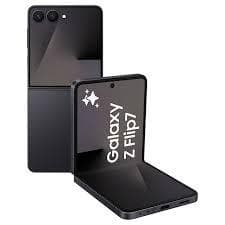
Galaxy Z Flip7
Starting at

Refurbished price:£494.00

Versus £1,156.31 new

See options

Differences at a glance

The Samsung Galaxy A26 (2025) and the Samsung Galaxy Z Flip7 (2025) represent two entirely different approaches to modern smartphone engineering within the Android ecosystem. While the Galaxy A26 is a conventional slate device built for reliability and everyday efficiency, the Galaxy Z Flip7 introduces an innovative foldable clamshell form factor with a compact footprint. Both run on Samsung's customized interface built over Android, but their distinct hardware designs cater to fundamentally separate user expectations regarding portability and functionality.

Available Models

Colour

Storage (GB)

Scores

Durability

When evaluating structural longevity and software support, both devices offer robust timelines suitable for long-term ownership, though their physical builds differ significantly in resilience.

  • Software longevity: Both smartphones receive multi-year operating system upgrades and security patches, ensuring up-to-date software performance throughout their expected lifespans.
  • Physical durability: The Galaxy A26 uses a traditional rigid structure with dependable dust and water resistance, whereas the Galaxy Z Flip7 features a folding display mechanism that requires careful handling despite modern hinge reinforcements.
  • Repairability and wear: Traditional slate handsets like the Galaxy A26 generally present straightforward maintenance options, while complex folding screens on devices like the Galaxy Z Flip7 involve specialized components for upkeep.

Year of Release

2025

2025

Performance

Underneath their exteriors, both models handle daily tasks smoothly, though they utilize different tiers of processing hardware and memory configurations to manage workloads.

  • Multitasking and responsiveness: Both devices switch between web browsing, social media applications, and streaming services without noticeable lag, though the Z Flip7 includes higher random access memory allocations for demanding workflows.
  • Storage configurations: Users can choose from multiple capacity tiers to store large media libraries and applications, with the Galaxy A26 additionally offering expandable storage via a memory card slot.
  • Battery behavior: The Galaxy A26 relies on a large-capacity power cell designed to comfortably clear a full day of mixed use, whereas the sleeker profile of the Galaxy Z Flip7 accommodates a smaller battery that may require a top-up during heavy usage days.

Screen quality

Visual output is a primary differentiator, contrasting a standard expansive viewing panel with a versatile dual-screen folding setup.

  • Display technology: The Galaxy A26 features a spacious flat panel with sharp resolution, while the Galaxy Z Flip7 utilizes a foldable vibrant organic light-emitting diode main screen paired with a functional outer cover display for quick interactions.
  • Refresh rate and smoothness: Both devices support high refresh rates, ensuring fluid scrolling through menus, web pages, and supported applications.
  • Outdoor visibility: High peak brightness capabilities on both models allow content to remain legible under direct sunlight, though screen reflections can vary depending on the folding crease of the clamshell model.

Audiovisual

Photography and media consumption hardware cater to different creative styles and practical utility requirements.

  • Camera systems: The Galaxy A26 provides a versatile multi-lens rear array including standard and ultra-wide options, while the Galaxy Z Flip7 leverages its folding design to enable unique angles and hands-free framing without a tripod.
  • Video and low-light performance: Both phones capture clear footage in daylight and steady clips using integrated stabilization features, handling moderate indoor lighting conditions reliably.
  • Audio output: Stereo speaker setups on both devices deliver balanced sound for casual video viewing, hands-free calls, and media playback.

Miscellaneous

Practical daily usability features highlight distinct choices in physical design, connectivity, and security integration.

  • Connectivity standards: Both models support modern fifth-generation cellular networks, rapid local wireless standards, and global positioning systems.
  • Biometric security: The Galaxy A26 incorporates a side-mounted fingerprint sensor within the power key, while the Galaxy Z Flip7 places its fingerprint reader conveniently on the side frame alongside facial recognition options.
  • Form factor and handling: The Galaxy A26 maintains a standard slim slate profile weighing around 200 grams, whereas the Galaxy Z Flip7 folds in half to fit easily into smaller pockets, reducing its footprint significantly when transported.

Screen size (in)

6.7

6.9

Mobile network

5G

5G

SIM card

Dual Physical SIM

Physical SIM + eSIM

Carrier compatibility

Unlocked

Unlocked

Connector

USB-C

USB-C

What the community thinks

Choosing between these two devices depends heavily on personal preferences regarding form factor and daily utility. Users prioritizing traditional reliability, expandable storage, and a large single-panel viewing experience will find the Galaxy A26 well-suited to their needs. Conversely, users prioritizing pocket portability, innovative folding mechanics, and a compact footprint often lean toward the Galaxy Z Flip7.

For those looking to make a sustainable choice, opting for a quality-assured refurbished option from Back Market provides a reliable path to acquiring either device while reducing electronic waste. Ultimately, balancing your preference for a classic slate layout versus a modern clamshell design will guide you toward the right smartphone for your lifestyle.