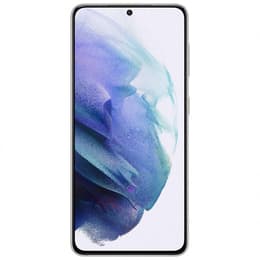

Galaxy A26 Vs Galaxy S21 5G

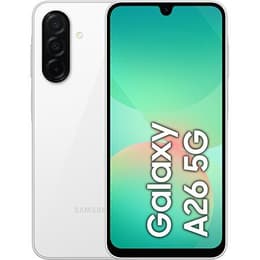
Galaxy A26
Galaxy A26
Starting at

Refurbished price:£152.00

Versus £419.55 new

See options
Galaxy S21 5G
Galaxy S21 5G
Starting at

Refurbished price:£133.00

Versus £829.00 new

See options

Ratings

The Samsung Galaxy A26 (2025) and the Samsung Galaxy S21 5G (2021) represent different segments and generations within Samsung's smartphone lineup. While the Galaxy S21 5G was a flagship device upon its release, the Galaxy A26 is a more recent mid-range offering. The primary distinctions lie in their release timelines, which impact software support longevity, and their core hardware capabilities, influencing overall user experience.

Scores

Durability

The age of a device significantly influences its practical lifespan, particularly concerning software updates and hardware resilience. The Galaxy A26, being a newer model, benefits from an extended support window compared to the older Galaxy S21 5G.

  • Release Timeline: The Galaxy A26 was released in March 2025, making it a current-generation device. In contrast, the Galaxy S21 5G launched in January 2021, positioning it as an older model in the market.
  • OS Support Duration: The Galaxy A26 is expected to receive six major Android OS updates and six years of security updates, offering a long period of software relevance. The Galaxy S21 5G, having launched with Android 11, has received four major OS updates, including Android 15, and five years of security updates, meaning its software support is nearing its conclusion.
  • Durability Features: The Galaxy A26 features an IP67 rating for water and dust resistance, along with a glass back. The Galaxy S21 5G, on the other hand, boasts an IP68 rating and a Gorilla Glass Victus front, paired with a plastic back and an aluminum frame, offering robust protection against environmental elements and drops.

Year of Release

2024

2021

Compatible with latest Update

Yes

Yes

OS

Android

Android

Foldable

No

No

Performance

Performance varies between these two devices, reflecting their different market positions and release years. The Galaxy S21 5G, as a former flagship, offers a higher-tier processing experience, while the Galaxy A26 provides capable mid-range performance.

  • Processor Capabilities: The Galaxy S21 5G is equipped with a processor that delivered top-tier performance at its launch, enabling smooth operation for demanding applications and graphics-intensive games. The Galaxy A26 features a modern mid-range processor, which handles everyday tasks and general use effectively, though it may show some limitations with intensive multitasking or high-end gaming.
  • Multitasking and Storage: Both devices offer multiple storage configurations, typically 128GB or 256GB. The Galaxy A26 also supports expandable storage via a microSD card, a feature not present in the Galaxy S21 5G. The Galaxy S21 5G generally comes with 8GB of RAM, facilitating efficient multitasking, while the Galaxy A26 offers 6GB or 8GB RAM options.
  • Battery Behavior: The Galaxy A26 is powered by a 5000mAh battery, which typically provides excellent battery life, often lasting more than a full day even with moderate to heavy use. The Galaxy S21 5G has a 4000mAh battery, which users often report as providing average battery life, sometimes requiring a midday charge for heavy usage scenarios.

Memory (GB)

8 GB

8 GB

Screen quality

Both smartphones feature vibrant displays, but there are differences in their underlying technology and specifications that affect the viewing experience.

  • Display Technology and Size: The Galaxy A26 features a 6.7-inch Super AMOLED display, offering rich colors and deep blacks. The Galaxy S21 5G has a slightly smaller 6.2-inch Dynamic AMOLED 2X display, which also provides excellent color reproduction and contrast.
  • Resolution and Brightness: Both devices offer Full HD+ resolution, ensuring clear and sharp visuals for typical viewing distances. The Galaxy S21 5G's display can reach a peak brightness of 1300 nits, making it highly visible in bright outdoor conditions. The Galaxy A26's display also offers good brightness, suitable for various lighting environments.
  • Refresh Rate: Both the Galaxy A26 and Galaxy S21 5G feature a 120Hz refresh rate, contributing to smoother scrolling and more fluid animations. The Galaxy S21 5G's display offers an adaptive refresh rate, which can adjust dynamically to conserve battery life.

Resolution

1080 x 2340

1080 x 2400

Audiovisual

The camera systems on the Galaxy A26 and Galaxy S21 5G cater to different photography needs, with the S21 5G offering a more versatile and advanced setup from its flagship heritage.

  • Rear Camera Configuration: The Galaxy A26 includes a triple camera setup with a 50MP main sensor with optical image stabilization (OIS), an 8MP ultrawide lens, and a 2MP macro lens. The Galaxy S21 5G features a more advanced triple camera system with a 12MP main sensor with OIS, a 12MP ultrawide lens, and a 64MP telephoto lens capable of 3x hybrid optical zoom.
  • Photography Performance: The Galaxy A26's main camera performs well in good lighting conditions, capturing decent detail and dynamic range, though low-light performance may be less refined. The Galaxy S21 5G, even as an older flagship, offers strong overall photography performance, with good detail, color accuracy, and capable low-light performance for its time, particularly benefiting from its telephoto lens.
  • Video Recording: The Galaxy A26 supports video recording up to UHD 4K at 30 frames per second. The Galaxy S21 5G offers more advanced video capabilities, including recording up to 8K resolution and 4K at 60 frames per second, providing greater flexibility for video creators.

Front camera

13 megapixels

10 megapixels

Miscellaneous

Beyond core features, several practical elements differentiate these two smartphones, impacting daily usability and connectivity.

  • Connectivity Options: Both devices support 5G connectivity for faster mobile data speeds. The Galaxy S21 5G includes Wi-Fi 6 and Bluetooth 5.0, while the Galaxy A26 features Wi-Fi 5 and Bluetooth 5.3, offering slightly newer Bluetooth technology.
  • Ports and Biometrics: Both phones utilize a USB-C port for charging and data transfer. The Galaxy A26 notably lacks a headphone jack, a feature also absent on the Galaxy S21 5G. For security, the Galaxy A26 incorporates a side-mounted fingerprint sensor, whereas the Galaxy S21 5G uses an in-display ultrasonic fingerprint sensor.
  • Design and Handling: The Galaxy A26 features a slim design with a glass back, contributing to a modern aesthetic. The Galaxy S21 5G combines a Gorilla Glass Victus front with a plastic back and an aluminum frame, offering a blend of premium feel and durability. The physical dimensions and weight of both devices contribute to their in-hand feel, with the A26 being slightly larger due to its display.

Weight

197 g

169 g

Screen size (in)

6.5

6.2

Mobile network

5G

5G

SIM card

Dual Physical SIM

Dual Physical SIM + eSIM

Carrier compatibility

Unlocked

Unlocked

Choosing between the Galaxy A26 and the Galaxy S21 5G involves weighing the benefits of a newer mid-range device against an older, but formerly flagship, model. User feedback for the Galaxy A26 often praises its long battery life and extended software support, making it a reliable choice for users who prioritize longevity and consistent daily performance. Some users note that while its camera is competent for its class, it may not excel in challenging lighting conditions, and its processor, while capable, is not designed for the most demanding tasks.

Conversely, the Galaxy S21 5G is frequently lauded for its still-capable camera system, particularly its telephoto lens, and its robust performance for applications and gaming, a testament to its original flagship status. However, common concerns revolve around its battery life, which for many heavy users necessitates more frequent charging, and its approaching end-of-life for major software updates.

Users prioritizing a device with the longest possible software support and excellent battery endurance for everyday tasks will find the Galaxy A26 well-suited to their needs. Its newer release means it will receive updates for a significantly longer period. For those who value a more advanced camera system, particularly with telephoto capabilities, and a higher-tier performance for demanding applications, the Galaxy S21 5G could still be a compelling option, especially if its shorter remaining software support window is not a primary concern. Both devices offer a pathway to a quality smartphone experience, and considering a quality-assured refurbished option for either model can be an eco-friendly alternative to purchasing new.


See all articles

Our recent comparisons