
Galaxy A26 Vs Galaxy S25+

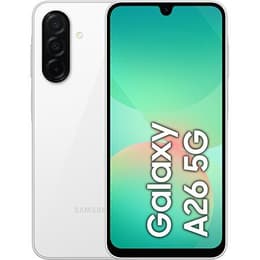
Galaxy A26
Galaxy A26
Starting at

Refurbished price:£152.00

Versus £419.55 new

See options
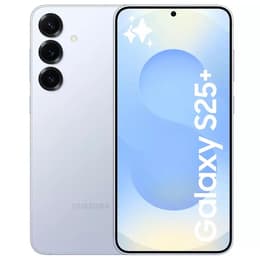
Galaxy S25+
Galaxy S25+
Starting at

Refurbished price:£549.00

Versus £958.39 new

See options

Ratings

The Samsung Galaxy A26 5G, released in March 2025, and the Samsung Galaxy S25 Plus, launched in February 2025, represent different segments within Samsung's smartphone portfolio. While both devices operate on the Android platform with Samsung's One UI, the Galaxy S25 Plus offers a premium experience with advanced features and enhanced performance, whereas the Galaxy A26 5G is positioned as a capable mid-range option. These differences extend across their core specifications, camera systems, and overall build quality.

Scores

Durability

The practical lifespan of these devices varies due to their release timelines and software support policies, influencing how long they remain current and secure.

  • Release Timeline: The Galaxy A26 5G was released in March 2025, making it a relatively new device. The Galaxy S25 Plus launched slightly earlier in February 2025.
  • Software Support: The Galaxy A26 5G is expected to receive six major Android OS upgrades and six years of security updates, extending its software longevity until around 2031. The Galaxy S25 Plus, as a flagship device, benefits from Samsung's extended support, promising seven years of OS and security updates, which means support will continue well into 2032.
  • Build Quality: The Galaxy S25 Plus features a more robust construction with premium materials like an Armor Aluminum frame and Gorilla Glass Victus 2 on both the front and back, offering enhanced resistance to drops and scratches. The Galaxy A26 5G utilizes a plastic frame but incorporates Gorilla Glass Victus+ on the front and back, and it carries an IP67 rating for dust and water resistance. The S25 Plus has a higher IP68 rating, providing greater protection against dust and water immersion.

Year of Release

2024

2025

OS

Android

Android

Foldable

No

No

Performance

Performance capabilities differ substantially between these two devices, catering to different user demands and application types.

  • Everyday Responsiveness: The Galaxy A26 5G handles daily tasks such as browsing, social media, and light gaming smoothly, providing a responsive experience for most users. The Galaxy S25 Plus, equipped with a more powerful processor, manages intensive multitasking, graphic-heavy games, and professional-grade applications without noticeable slowdowns.
  • Multitasking and Storage: The Galaxy A26 5G offers 6GB or 8GB of RAM and 128GB or 256GB of internal storage, with a microSD card slot for expansion. The Galaxy S25 Plus comes with 12GB of RAM and 256GB or 512GB of faster internal storage, contributing to a more fluid experience when switching between many open applications, though it lacks a microSD card slot.
  • Battery Behavior: The Galaxy A26 5G features a 5000 mAh battery, while the Galaxy S25 Plus has a 4900 mAh battery. Both support 25W wired charging, but the S25 Plus also includes wireless charging and reverse wireless charging capabilities.

Memory (GB)

8 GB

12 GB

Screen quality

Both phones feature vibrant AMOLED displays, but the Galaxy S25 Plus offers a superior visual experience with higher resolution and brightness.

  • Display Technology and Resolution: The Galaxy A26 5G features a 6.7-inch Super AMOLED display with a Full HD+ resolution (1080 x 2340 pixels), providing good contrast and color. The Galaxy S25 Plus utilizes a 6.7-inch Dynamic AMOLED 2X panel with a Quad HD+ resolution (1440 x 3120 pixels), resulting in noticeably crisper text and finer details.
  • Brightness and Refresh Rate: The Galaxy A26 5G offers a 120Hz refresh rate for smooth scrolling and animations, with a peak brightness of around 1000 nits. The Galaxy S25 Plus also features a 120Hz refresh rate, but it is adaptive, dynamically adjusting from 1Hz to 120Hz to conserve battery life. It also achieves significantly higher peak brightness, reaching up to 2600 nits, making content much easier to view clearly in direct sunlight.
  • Screen Protection: The Galaxy A26 5G is protected by Corning Gorilla Glass Victus+, while the Galaxy S25 Plus features Gorilla Glass Victus 2, offering enhanced durability against scratches and drops.

Resolution

1080 x 2340

1440x3120

Audiovisual

The camera systems are a key differentiator, with the Galaxy S25 Plus offering a more versatile and advanced setup compared to the Galaxy A26 5G.

  • Main Camera Performance: Both phones feature a 50 MP main sensor capable of capturing detailed photos in good lighting. The Galaxy S25 Plus generally produces images with better dynamic range and color accuracy, especially in challenging conditions, thanks to its advanced processing.
  • Versatility and Features: The Galaxy A26 5G includes an 8 MP ultrawide and a 2 MP macro lens, offering some flexibility for different shot types. The Galaxy S25 Plus, however, provides a more comprehensive system with a 12 MP ultrawide lens and a 10 MP telephoto lens for 3x optical zoom, allowing for high-quality zoomed-in shots without significant loss of detail.
  • Video Recording and Front Camera: The Galaxy A26 5G can record video up to 4K at 30fps with its rear camera and has a 13 MP front camera. The Galaxy S25 Plus can record up to 8K video with its rear cameras and features a 12 MP front-facing camera.

Miscellaneous

Beyond core specifications, several practical elements contribute to the overall user experience and handling of these devices.

  • Connectivity and Ports: Both devices support 5G connectivity. The Galaxy A26 5G features a USB-C 2.0 port and Bluetooth 5.3. The Galaxy S25 Plus comes with a faster USB-C 3.2 (or newer) port for quicker data transfers and Bluetooth 5.4. Neither phone includes a traditional headphone jack.
  • Biometrics and Additional Features: The Galaxy A26 5G uses a side-mounted fingerprint sensor for secure unlocking. The Galaxy S25 Plus features an in-display ultrasonic fingerprint sensor and supports Samsung DeX, allowing for a desktop-like experience when connected to an external display.
  • Dimensions and Materials: The Galaxy A26 5G measures 164 x 77.5 x 7.7 mm and weighs 200g, with a plastic frame and Gorilla Glass Victus+ on the front and back. The Galaxy S25 Plus is slightly more compact and lighter at 158.4 x 75.8 x 7.3 mm and 190g, featuring an Armor Aluminum frame and Gorilla Glass Victus 2.

Weight

197 g

190 g

Screen size (in)

6.5

6.7

Mobile network

5G

5G

SIM card

Dual Physical SIM

Dual Physical SIM

Carrier compatibility

Unlocked

Unlocked

Choosing between the Samsung Galaxy A26 5G and the Samsung Galaxy S25 Plus depends heavily on individual priorities and usage patterns. User feedback often highlights the Galaxy S25 Plus for its top-tier performance, advanced camera system, and premium display. Users appreciate its responsiveness for demanding applications and the extended software support. Some common praise points for the S25 Plus include its vibrant screen, robust build, and versatile camera capabilities, particularly the optical zoom.

Conversely, the Galaxy A26 5G is frequently praised for offering a reliable and feature-rich experience for everyday tasks, social media, and entertainment. Its larger battery capacity is often noted as a positive, and the inclusion of a microSD card slot is a significant advantage for users needing expandable storage. Criticisms for the A26 5G sometimes point to its performance not being suited for hardcore gaming or very heavy multitasking, and its camera performance in low light could be improved.

Users prioritizing cutting-edge performance, a comprehensive camera system with optical zoom, a brighter and higher-resolution display, and the longest possible software support will find the Galaxy S25 Plus well-suited to their needs. This device is ideal for professionals, content creators, or power users who demand the most from their smartphone. For those seeking a dependable device for daily use, with good battery life and expandable storage, the Galaxy A26 5G presents a strong option. It offers a balanced experience for students, casual users, or those who typically upgrade their devices within a few years. Both models are available as quality-assured refurbished options, providing an eco-friendly alternative for consumers.


See all articles

Our recent comparisons