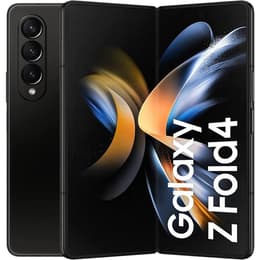
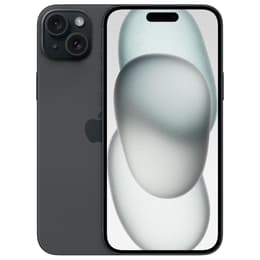

Galaxy Z Fold4 Vs iPhone 15 Plus

Galaxy Z Fold4
Galaxy Z Fold4
Starting at

Refurbished price:£352.00

Versus £1,889.00 new

See options
iPhone 15 Plus
iPhone 15 Plus
Starting at

Refurbished price:£344.00

Versus £799.00 new

See options

Ratings

The Samsung Galaxy Z Fold4, released in August 2022, is a foldable smartphone running on the Android operating system. In contrast, the iPhone 15 Plus, launched in September 2023, is a traditional slab-style smartphone powered by Apple's iOS. The primary distinction lies in their form factor, with the Z Fold4 offering a large, tablet-like internal display when unfolded, while the iPhone 15 Plus provides a consistent, expansive screen experience.

Scores

Durability

When considering the longevity of these devices, several factors come into play, including software support and physical resilience.

  • Software Updates: The Galaxy Z Fold4, running Android, typically receives four major OS updates and five years of security updates from its release, meaning it will likely be supported up to Android 16 and receive security patches until August 2027. The iPhone 15 Plus, on the other hand, benefits from Apple's longer software support, generally receiving iOS updates for five to seven years, extending its functional lifespan further into the future.
  • Physical Durability: The iPhone 15 Plus features a Ceramic Shield front and an IP68 rating for water and dust resistance, offering robust protection against everyday elements. The Galaxy Z Fold4 has an IPX8 water resistance rating, but its foldable design introduces unique durability considerations, such as the internal screen's crease and hinge mechanism, which some users have reported as potential points of concern over time.
  • Expected Lifespan: Users seeking the longest possible software support and a traditional, highly durable build might find the iPhone 15 Plus more aligned with their needs. Those who prioritize the innovative foldable form factor and are comfortable with the specific care requirements of a folding screen will find the Z Fold4 offers a distinct experience.

Year of Release

2022

2023

Compatible with latest Update

Yes

Yes

OS

Android

iOS

Foldable

Yes

No

Performance

Both devices offer capable performance for daily tasks, but their underlying architectures and user experiences differ.

  • Processing Power: The Galaxy Z Fold4 is equipped with a processor designed for efficient multitasking and handling demanding applications across its large, adaptable display. It features 12GB of RAM, which contributes to smooth transitions between multiple open applications. The iPhone 15 Plus utilizes a powerful and efficient processor, ensuring a fluid user experience, responsive app launches, and capable handling of graphics-intensive tasks. It comes with 6GB of RAM, optimized for iOS's performance management.
  • Storage Options: The Galaxy Z Fold4 offers storage capacities of 256GB, 512GB, and 1TB, providing ample space for extensive media libraries and applications. The iPhone 15 Plus is available with 128GB, 256GB, or 512GB of internal storage.
  • Battery Behavior: The Galaxy Z Fold4 houses a 4400 mAh battery, and its efficient processor and adaptive refresh rate displays contribute to respectable battery life, with some users reporting it can last a full day with moderate to heavy use. The iPhone 15 Plus, with its 4383 mAh battery, is widely recognized for its exceptional battery endurance, often lasting well over a day even with intensive usage.

Memory (GB)

12 GB

6 GB

Screen quality

The display experience is a significant differentiator between these two smartphones, primarily due to the Z Fold4's unique foldable design.

  • Display Technology and Size: The Galaxy Z Fold4 features two Dynamic AMOLED 2X displays. The main internal screen measures 7.6 inches when unfolded, offering a large canvas for productivity and media consumption. The external cover screen is 6.2 inches, providing a more traditional smartphone experience when folded. The iPhone 15 Plus boasts a 6.7-inch Super Retina XDR OLED display, offering a consistently large and vibrant viewing area.
  • Resolution and Clarity: The Z Fold4's main display has a resolution of 2176 x 1812 pixels, while its cover screen is 2316 x 904 pixels, both delivering sharp visuals. The iPhone 15 Plus features a resolution of 2796 x 1290 pixels, resulting in crisp text and detailed images.
  • Brightness and Refresh Rate: Both devices offer high brightness levels for good outdoor visibility, with the Z Fold4 reaching up to 1200 nits peak brightness on its main screen and the iPhone 15 Plus achieving up to 2000 nits peak outdoor brightness. The Z Fold4's displays feature an adaptive refresh rate of 1-120Hz for smooth scrolling and animations. The iPhone 15 Plus has a standard 60Hz refresh rate.

Resolution

1812 x 2176

1290 x 2796

Screen type

Foldable Dynamic AMOLED 2X

Super Retina XDR OLED

Audiovisual

Both smartphones provide capable camera systems for capturing moments, though with different strengths and features.

  • Rear Camera Systems: The Galaxy Z Fold4 features a versatile triple-camera setup on the rear, including a 50MP wide-angle lens, a 12MP ultrawide lens, and a 10MP telephoto lens with 3x optical zoom. This configuration allows for a range of photographic styles, from expansive landscapes to detailed close-ups. The iPhone 15 Plus comes with a dual-camera system, comprising a 48MP main camera and a 12MP ultrawide camera.
  • Photography Performance: The Z Fold4's cameras are generally considered good for everyday photography, producing clear and vibrant images. The iPhone 15 Plus is known for its consistent and reliable camera performance, excelling in various lighting conditions and producing high-quality photos with natural colors.
  • Front-Facing Cameras and Video: The Z Fold4 has a 10MP camera on its cover screen and a 4MP under-display camera on its main screen. The iPhone 15 Plus features a 12MP front-facing camera, known for its clarity in selfies and video calls. Both devices offer strong video recording capabilities, capturing detailed and stable footage.

Main camera

50 megapixels

48 megapixels

Front camera

4 megapixels

12 megapixels

Miscellaneous

Beyond core features, several practical elements contribute to the overall user experience of each device.

  • Connectivity and Ports: Both the Galaxy Z Fold4 and the iPhone 15 Plus support 5G connectivity for fast mobile data. The Z Fold4 includes Wi-Fi 6E and Bluetooth 5.2, while the iPhone 15 Plus features Wi-Fi 6 and Bluetooth 5.3. A notable difference is the charging port: the Z Fold4 uses USB-C 3.2, offering faster data transfer speeds, whereas the iPhone 15 Plus has a USB-C 2.0 port.
  • Biometrics and Sensors: The Galaxy Z Fold4 incorporates a side-mounted fingerprint sensor for secure unlocking. The iPhone 15 Plus relies on Face ID for facial recognition. Both devices include a standard suite of sensors such as accelerometers, gyroscopes, and ambient light sensors.
  • Design and Handling: The Z Fold4, with its foldable design, weighs 263 grams and has dimensions of 155.1 x 67.1 x 14.2-15.8 mm when folded, expanding to 155.1 x 130.1 x 6.3 mm when unfolded. This allows for a compact phone experience and a larger tablet experience. The iPhone 15 Plus is a lighter device at 201 grams, with dimensions of 160.9 x 77.8 x 7.8 mm, offering a more traditional smartphone feel in hand.

Weight

263 g

201 g

Screen size (in)

7.6

6.7

Mobile network

5G

5G

SIM card

Dual Physical SIM + eSIM

Physical SIM + eSIM

Carrier compatibility

Unlocked

Unlocked

The Samsung Galaxy Z Fold4 and the iPhone 15 Plus cater to different user preferences, each excelling in distinct areas. User feedback for the Galaxy Z Fold4 often highlights its innovative foldable design and the enhanced productivity offered by its large internal screen, making it a compelling choice for multitasking and media consumption. Users appreciate the ability to have a compact phone that unfolds into a tablet-like display. However, some common concerns revolve around the long-term durability of the folding screen and hinge, as well as the camera performance not always matching that of traditional flagship devices.

Conversely, the iPhone 15 Plus receives widespread praise for its exceptional battery life, often cited as one of the best in its class, providing extended usage without frequent recharging. Its camera system is consistently lauded for its reliability and ability to capture high-quality everyday photos. Users also value the smooth and consistent performance of the iOS ecosystem. Criticisms sometimes point to the 60Hz display refresh rate, which some users accustomed to higher refresh rates might notice, and the absence of a dedicated telephoto lens.

Users prioritizing a unique, adaptable form factor for productivity and a large screen experience may find the Galaxy Z Fold4 well-suited to their needs. Those who value outstanding battery life, a consistently reliable camera, and the streamlined experience of iOS in a traditional smartphone design will likely lean towards the iPhone 15 Plus. Both devices represent quality options, and considering a quality-assured refurbished option can be an eco-friendly alternative for either model.


See all articles

Our recent comparisons