
Galaxy A25 Vs Google Pixel 6

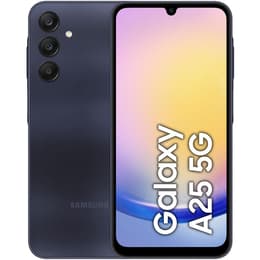
Galaxy A25
Galaxy A25
Starting at

Refurbished price:£121.00

Versus £272.58 new

See options
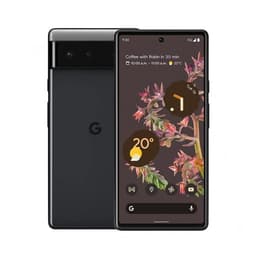
Google Pixel 6
Google Pixel 6
Starting at

Refurbished price:£101.00

Versus £649.99 new

See options

Ratings

The Samsung Galaxy A25 and the Google Pixel 6 are both Android smartphones, though they target different segments and were released in different years. The Galaxy A25, launched in December 2023, is a more recent device from Samsung's mid-range A-series, while the Google Pixel 6, released in October 2021, was Google's flagship offering at the time. These devices primarily differ in their processing power, camera philosophies, and software support timelines, offering distinct experiences for users.

Scores

Durability

The practical lifespan of a smartphone is often influenced by its release timeline, software support, and physical durability.

  • Release Timeline: The Galaxy A25 was released in December 2023, making it a newer device compared to the Pixel 6, which launched in October 2021. This difference in release dates inherently gives the A25 a longer potential period of relevance in terms of current technology.
  • Software Longevity: Samsung has committed to providing the Galaxy A25 with four major OS upgrades and five years of security updates from its release, extending its software support until late 2028. The Google Pixel 6, on the other hand, is guaranteed five years of both OS and security updates from its launch, meaning its support will conclude around October 2026. This indicates the Galaxy A25 will receive software updates for a longer duration.
  • Repairability: The Pixel 6 has been noted for its relatively straightforward screen repair, with Google providing tools for fingerprint sensor calibration after replacement. Information regarding the specific repairability score for the Galaxy A25 is less detailed, though some Samsung A-series phones have shown good repairability.

Year of Release

2023

2021

Compatible with latest Update

Yes

Yes

OS

Android

Android

Foldable

No

No

Performance

Performance in smartphones is determined by a combination of processing power, memory, and how efficiently the software utilizes these resources, impacting daily usage and multitasking capabilities.

  • Processing Capabilities: The Pixel 6 is equipped with a custom-designed processor that was Google's flagship offering at its release, enabling it to handle demanding applications and multitasking with notable speed and smoothness. The Galaxy A25 features a mid-range processor that provides sufficient performance for everyday tasks like social media, web browsing, and document editing. However, some users have reported that the A25's processor can exhibit mediocre speed and noticeable lag during more intensive use.
  • Multitasking and Storage: The Pixel 6 comes with 8GB of RAM, contributing to its smooth multitasking experience. The Galaxy A25 is available with either 6GB or 8GB of RAM, with the 8GB variant offering a more fluid experience for users who frequently switch between multiple applications. For storage, both devices offer 128GB and 256GB options, but the Galaxy A25 includes a microSD card slot for expandable storage up to 1TB, a feature absent on the Pixel 6.
  • Battery Behavior: The Galaxy A25 houses a larger 5000 mAh battery, which generally translates to extended usage times, with many users reporting it can last a full day. The Pixel 6 has a 4614 mAh battery, and while it generally offers good day-to-day battery life, some users have expressed that it could be better, especially with heavy use.

Memory (GB)

6 GB

8 GB

Screen quality

The display is a primary interface for smartphone interaction, and its quality significantly impacts the viewing experience.

  • Display Technology and Clarity: Both the Galaxy A25 and the Pixel 6 feature OLED display technology, known for deep blacks and vibrant colors. Both offer Full HD+ resolutions (1080x2340 for A25, 1080x2400 for Pixel 6), providing clear and sharp visuals for typical viewing distances.
  • Refresh Rate and Brightness: The Galaxy A25 boasts a 120Hz refresh rate, contributing to smoother scrolling and more fluid animations, and can reach a peak brightness of 1000 nits, which aids visibility in bright outdoor conditions. The Pixel 6 features a 90Hz refresh rate, offering a smooth experience, and its OLED panel provides good brightness for various environments.
  • Screen Size and Protection: The Galaxy A25 has a slightly larger 6.5-inch display, while the Pixel 6 features a 6.4-inch screen. The Galaxy A25 uses Gorilla Glass 5 for screen protection, whereas the Pixel 6 is protected by the more robust Gorilla Glass Victus.

Resolution

1080 x 2340

1080 x 2400

Screen type

Super AMOLED

AMOLED

Audiovisual

Camera performance is a key differentiator, with both hardware and software processing playing significant roles in image and video quality.

  • Rear Camera Systems: The Galaxy A25 features a versatile triple-camera setup, including a 50MP main sensor with optical image stabilization (OIS), an 8MP ultrawide lens, and a 2MP macro lens. The Pixel 6 opts for a dual-camera system, comprising a 50MP wide main sensor and a 12MP ultrawide lens.
  • Photography Performance: The Pixel 6 is widely praised for its exceptional photography, particularly its ability to produce sharp, clear, and well-lit images with accurate color and dynamic range, even in challenging conditions. Its computational photography features are a strong point. User opinions on the Galaxy A25's camera are mixed; some find it decent for everyday photos and videos with 4K capture, while others report struggles with low-light performance and blurry images.
  • Front Camera and Video: For selfies, the Galaxy A25 has a 13MP front camera, while the Pixel 6 features an 8MP front camera. Both devices are capable of recording quality video, with the Galaxy A25 supporting 4K video capture.

Main camera

50 megapixels

50 megapixels

Front camera

13 megapixels

8 megapixels

Miscellaneous

Beyond core specifications, several practical elements contribute to the overall user experience and device utility.

  • Connectivity and Ports: Both smartphones support 5G connectivity, ensuring access to faster mobile networks. The Galaxy A25 supports Wi-Fi 6 (802.11ax) and Bluetooth 5.3, while the Pixel 6 supports Wi-Fi 6E (802.11ax) and Bluetooth 5.2. Both utilize a USB-C port for charging and data transfer. The Galaxy A25 retains a 3.5mm headphone jack, which is absent on the Pixel 6.
  • Security and Build: The Pixel 6 features an in-display optical fingerprint sensor and an IP68 rating for dust and water resistance, indicating a high level of protection against environmental elements. The Galaxy A25 has a side-mounted fingerprint reader and does not carry an official IP rating, suggesting less formal protection against dust and water ingress. Both devices incorporate NFC for contactless payments.
  • Physical Characteristics: The Galaxy A25 weighs 197g and measures 161 x 76.5 x 8.3 mm. The Pixel 6 is slightly heavier at 207g and has dimensions of 158.6 x 74.8 x 8.9 mm. The Pixel 6 features a glass back and a more premium feel, while the Galaxy A25 typically uses plastic for its build materials.

Weight

197 g

207 g

Screen size (in)

6.5

6.4

Mobile network

5G

5G

SIM card

Dual Physical SIM

Physical SIM + eSIM

Carrier compatibility

Unlocked

Unlocked

The Samsung Galaxy A25 and Google Pixel 6 offer distinct advantages, catering to different user priorities. The Pixel 6 is frequently praised for its exceptional camera performance, delivering high-quality photos and videos, and its smooth, fast software experience, often attributed to its custom-designed processor. However, some users have noted occasional software bugs and a battery life that, while generally good, might not meet the demands of very heavy users.

The Galaxy A25, being a more recent release, benefits from a longer software update commitment from Samsung, ensuring extended access to the latest Android features and security patches. Its larger battery capacity is often highlighted as a strong point for all-day use. Criticisms sometimes point to its mid-range processor, which some users find can lead to noticeable lag with intensive tasks, and its camera performance can be inconsistent, particularly in low-light conditions.

Users prioritizing a top-tier camera experience and a consistently fluid software interface may find the Google Pixel 6 well-suited to their needs. Those who value extended software support, a larger battery, and expandable storage, and who primarily engage in everyday tasks, might lean towards the Samsung Galaxy A25. Both devices represent solid choices within their respective categories, and considering a quality-assured refurbished option for either model can be an eco-friendly alternative for consumers.
See all articles

Our recent comparisons