Compare models

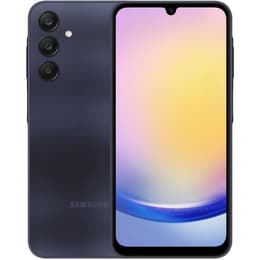
Galaxy A25 Vs Galaxy S25 FE

  • 1-year minimum warranty
  • Free delivery on all items
  • Free 30-day returns
Galaxy A25
Starting at

Refurbished price:£162.00

Versus £278.90 new

See options
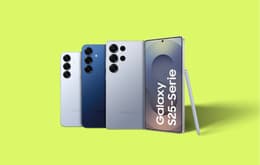
Galaxy S25 FE
Starting at

Refurbished price:£319.00

Versus £651.00 new

See options

Differences at a glance

The Samsung Galaxy A25 (2023) and the Samsung Galaxy S25 FE (2025) represent two different tiers within Samsung's smartphone ecosystem, designed to target varying user preferences. While both devices run on the Android operating system paired with Samsung's custom interface, they diverge significantly in release timing, processing capability, and hardware refinement.

Understanding how these two models contrast in everyday use helps clarify which handset aligns best with specific user requirements, whether focusing on everyday essentials or advanced multimedia capabilities.

Available Models

Colour

Storage

Scores

Durability

When examining longevity and durability, both models offer solid software support timelines, though their launch years and hardware build standards establish different expected life spans.

  • Software Support and Updates: The Galaxy S25 FE benefits from a newer launch date and extended update commitments, whereas the Galaxy A25 provides reliable multi-year OS upgrades relative to its 2023 introduction.
  • Build Materials and Durability: The Galaxy S25 FE incorporates higher-grade glass and aluminum framing with robust water and dust resistance, while the Galaxy A25 utilizes functional plastics designed for everyday handling.
  • Expected Practical Lifespan: Both units maintain stable daily operation over several years, with users seeking an eco-friendly, quality-assured refurbished option finding long-term viability well-supported by regular security patches.

Year of Release

2023

2025

Compatible with latest Update

Yes

Yes

OS

Android

Android

Foldable

No

No

Performance

System performance and responsiveness differ notably between these two smartphones, affecting how they handle intensive apps, background multitasking, and power consumption.

  • Everyday Speed and Multitasking: The Galaxy S25 FE handles demanding games and heavy multitasking smoothly thanks to its high-tier processor, whereas the Galaxy A25 manages standard daily tasks, web browsing, and messaging efficiently with its mid-range configuration.
  • Battery Behavior: Both devices house large batteries capable of lasting through a full day of standard use, though fast-charging speeds vary, with the Galaxy S25 FE supporting quicker replenishment intervals.
  • Storage Configurations: Multiple internal storage capacities are available across both lines, giving users flexibility for offline media storage and application installation.

Screen quality

Visual output and display technologies shape the media consumption experience, offering clear differences in brightness, panel quality, and motion smoothness.

  • Display Technology: Both models feature vibrant OLED-based screens that deliver deep blacks and high contrast, ensuring sharp text and vivid imagery for daily viewing.
  • Refresh Rate and Fluidity: Both displays support high refresh rates, resulting in smooth scrolling through web pages and fluid animations throughout the user interface.
  • Outdoor Visibility: Peak brightness levels on both screens allow content to remain legible under direct sunlight, though higher-tier panels achieve slightly greater luminance in intense lighting conditions.

Audiovisual

Imaging hardware and audio reproduction vary between these two models, impacting photography, video recording, and multimedia playback quality.

  • Camera System Versatility: The Galaxy S25 FE features a more advanced multi-lens array with enhanced low-light processing, while the Galaxy A25 relies on a dependable main sensor suited for casual everyday snapshots.
  • Video Recording: Higher stabilization standards and advanced resolution options on the Galaxy S25 FE provide refined video capture, whereas the Galaxy A25 handles standard home videos adequately.
  • Media and Audio Output: Stereo speaker configurations on both smartphones deliver clear sound for hands-free calls and casual video streaming, complemented by microphone systems that isolate voice audio effectively.

Miscellaneous

Practical daily features, physical dimensions, and connectivity standards round out the functional differences between the two handsets.

  • Connectivity and Ports: Both models support fast 5G networks, modern Wi-Fi standards, and Bluetooth connectivity, utilizing reversible USB-C ports for charging and data transfer.
  • Biometrics and Sensors: Secure unlocking is handled via responsive fingerprint recognition and facial scanning options integrated into each device.
  • Handling and Dimensions: The physical footprint and weight differ slightly, influencing how comfortably each phone rests in pockets or hands during prolonged use.

Weight

197 g

190 g

Screen size (in)

6.5

6.7

Mobile network

5G

5G

SIM card

Physical SIM

Physical SIM + eSIM

Carrier compatibility

Unlocked

Unlocked

Connector

USB-C

USB-C

What the community thinks

User discussions across community forums highlight distinct patterns of praise and criticism for each smartphone. Owners of the Galaxy A25 frequently commend its reliable daily battery endurance and clear display quality relative to its classification. Conversely, users of the Galaxy S25 FE often emphasize satisfaction with its rapid processing speeds, robust build materials, and versatile camera output. Common criticisms for the entry-level model focus on occasional stuttering during heavy gaming, while feedback on the higher-tier model occasionally notes standard thermal warmth during extended high-performance tasks.

Users prioritizing general daily communication, messaging, and media playback at a practical level will find the Galaxy A25 well-suited to their needs. Meanwhile, users prioritizing advanced processing power, refined photography, and longer-term software relevance may lean toward the Galaxy S25 FE. Exploring a quality-assured refurbished option provides a sustainable choice for acquiring either device while reducing electronic waste. Ultimately, the choice depends on matching individual workflow demands and feature preferences with the appropriate hardware tier.


Our recent comparisons