
Compare models

Galaxy S23 FE Vs Galaxy S25 FE

  • 1-year minimum warranty
  • Free delivery on all items
  • Free 30-day returns
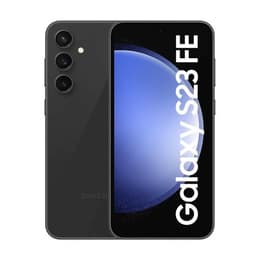
Galaxy S23 FE
Starting at

Refurbished price:£182.00

Versus £605.75 new

See options
Galaxy S25 FE
Starting at

Refurbished price:£307.00

Versus £651.00 new

See options

Differences at a glance

The Samsung Galaxy S23 FE (2023) and the Samsung Galaxy S25 FE (2025) are part of Samsung's established lineup of accessible flagship-tier smartphones. While both devices share a similar philosophy of delivering high-end features at a balanced tier, the Galaxy S25 FE introduces a larger display footprint, improved battery capacity, and a newer generation of internal hardware compared to its predecessor. Both models operate on the Android operating system paired with Samsung's custom interface, providing a familiar software environment while differing in their long-term update windows.

Available Models

Colour

Storage (GB)

Scores

Durability

When examining hardware longevity and support timelines, the Galaxy S25 FE benefits from a more recent release year, granting it an extended software support horizon compared to the older Galaxy S23 FE.

  • Release timeline: The Galaxy S23 FE launched in late 2023, whereas the Galaxy S25 FE arrived in late 2025, positioning the newer model further along the software support lifecycle.
  • Software updates: Both devices receive regular security patches and operating system upgrades from Samsung, though the Galaxy S25 FE will continue receiving support for two additional years past its counterpart.
  • Durability ratings: Both smartphones feature robust aluminum frames and certified water and dust resistance, helping them withstand daily wear and tear equally well over years of use.

Year of Release

2023

2025

Compatible with latest Update

Yes

Yes

OS

Android

Android

Foldable

No

No

Performance

Under everyday conditions, both smartphones handle multitasking, web browsing, and demanding mobile applications smoothly, though the newer model provides additional headroom for resource-intensive tasks.

  • System responsiveness: The Galaxy S25 FE features a more advanced processor that accelerates app loading times and improves thermal management during extended gaming sessions.
  • Memory and storage: Both models commonly pair their processors with ample memory for background app retention, while offering storage tiers starting at standard capacities without expandable card slots.
  • Battery endurance: The Galaxy S25 FE includes a larger internal battery capacity that translates into longer use times between charges compared to the smaller power cell housed in the Galaxy S23 FE.

Screen quality

Visual output differs primarily in physical dimensions and screen area, while both devices utilize vibrant display technology to ensure sharp text and media playback.

  • Display technology: Both models use high-contrast panel technology that delivers deep black levels and vivid color reproduction suitable for streaming video.
  • Size and viewing area: The Galaxy S23 FE provides a compact 6.4-inch screen that is easier to operate with one hand, while the Galaxy S25 FE expands to a more spacious 6.7-inch display for immersive media viewing.
  • Refresh rate and brightness: Both screens support fast refresh rates for fluid scrolling and maintain high peak brightness levels to remain legible under direct sunlight.

Audiovisual

Photography and media recording capabilities across both generations cover everyday scenarios well, featuring versatile multi-lens rear arrays and clear audio capture.

  • Main camera performance: Both smartphones utilize high-resolution primary sensors supported by optical image stabilization to capture detailed photos in varied lighting conditions.
  • Supplementary lenses: Each model includes ultra-wide options for landscape framing and telephoto lenses for distant subjects, though image processing software on the newer model yields sharper details in low-light environments.
  • Audio and video: Built-in stereo speakers deliver clear media playback, while multi-microphone arrays isolate voices effectively during calls and video recordings.

Miscellaneous

Physical dimensions, connectivity standards, and daily handling characteristics vary noticeably between the two generations due to design updates.

  • Dimensions and weight: The Galaxy S25 FE features a thinner profile and optimized weight distribution despite its larger screen size, whereas the Galaxy S23 FE is slightly more compact and heavier relative to its display dimensions.
  • Connectivity: Both models support rapid cellular data networks, Bluetooth standards, and Wi-Fi protocols for stable wireless connections.
  • Biometric security: Secure unlocking is handled via integrated under-display fingerprint sensors and facial recognition capabilities on both devices.

Weight

209 g

190 g

Screen size (in)

6.4

6.7

Mobile network

5G

5G

SIM card

Physical SIM

Physical SIM + eSIM

Carrier compatibility

Unlocked

Unlocked

What the community thinks

User discussions across community forums frequently highlight the Galaxy S23 FE for its manageable physical footprint and reliable core feature set, though some users note that its battery life requires more frequent top-ups during heavy daily routines. Conversely, owners of the Galaxy S25 FE frequently praise its expanded screen estate and enduring battery capacity, though a few point out that its larger physical body is less comfortable for single-handed use. Choosing between these two devices depends largely on personal preference regarding physical dimensions and longevity requirements.

Users prioritizing a compact form factor that is easy to manage with one hand may find the Galaxy S23 FE well-suited to their daily habits. Meanwhile, users prioritizing maximum screen area for media consumption and extended battery endurance will lean toward the Galaxy S25 FE. For those exploring sustainable purchasing routes, opting for a quality-assured refurbished option provides a reliable way to acquire either model while supporting eco-friendly technology cycles.