Compare models
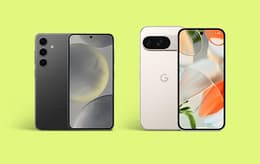
Galaxy S23+ Vs Google Pixel 10
- 1-year minimum warranty
- Free delivery on all items
- Free 30-day returns
Differences at a glance
The Samsung Galaxy S23+ (2023) and the Google Pixel 10 (2025) are prominent smartphones that cater to users seeking high-level everyday reliability and refined mobile experiences. While both models occupy a similar tier in their respective manufacturer lineups, they differ notably in release timelines, interface philosophies, and hardware integration. The Galaxy S23+ runs on Samsung's customized One UI over Android, whereas the Google Pixel 10 delivers a clean software experience directly aligned with Google's vision for Android.
Choosing between these two devices involves weighing practical aspects like software longevity, display sizing, and day-to-day handling preferences. Exploring how each phone approaches performance, optics, and durability helps clarify which device fits specific daily routines.
Available Models
Colour
Storage
Scores
Durability
When examining longevity and durability, the Galaxy S23+ and the Google Pixel 10 reflect different generations of mobile engineering and software support policies.
- Release timeline and software support: The Galaxy S23+ launched in early 2023 with a multi-year update commitment, while the Google Pixel 10 debuted in late 2025 with an extended software lifecycle spanning up to seven major operating system updates. Users prioritizing longer official software support timelines will find the Pixel model suited to extended use.
- Build resilience: Both devices feature robust aluminum frames and durable front and back glass panels designed to withstand everyday wear and tear. Water and dust resistance ratings are robust on both units, ensuring protection against accidental spills or outdoor exposure.
- Practical lifespan: Solid physical construction combined with modern internal configurations allows both phones to maintain reliable functionality over several years of continuous daily operation.
Year of Release
2023
2025
Compatible with latest Update
Yes
Yes
OS
Android
Android
Foldable
No
No
Performance
Underneath their exteriors, both smartphones deliver responsive daily operation, though they utilize distinct hardware architectures to manage multitasking and application loading.
- Everyday responsiveness and multitasking: Both devices handle demanding applications, rapid web browsing, and smooth multitasking effortlessly. Generous RAM allocation ensures that switching between multiple active programs remains fluid without sudden reloading.
- Battery behavior and endurance: Battery capacities differ slightly, but both models manage power efficiently through optimized software and hardware integration. Typical users can expect both devices to comfortably last through a full day of standard usage involving messaging, streaming, and navigation.
- Storage configurations: Multiple internal storage tiers accommodate varying user needs for local media and application storage, though neither device includes expandable storage slots.
Screen quality
Display characteristics shape the primary interaction point for media consumption, reading, and navigation on both handsets.
- Display technology: Both smartphones employ advanced OLED panels that deliver deep contrast levels, rich colors, and sharp text rendering for comfortable viewing in various lighting conditions.
- Brightness and outdoor visibility: High peak brightness levels ensure that content remains legible even under direct sunlight, making outdoor map reading or photography straightforward.
- Refresh rate and smoothness: Fluid refresh rates up to 120Hz enable seamless scrolling through long documents and responsive touch feedback during gaming or interface navigation.
Resolution
1080 x 2340
1080x2424
Screen type
Dynamic AMOLED 2X
OLED
Audiovisual
Optics and media playback capabilities differ in hardware layout and processing approach between the two manufacturers.
- Camera system versatility: Both phones offer multi-lens rear camera arrays that capture detailed everyday photographs and expansive landscape views, supported by optical image stabilization to minimize blur.
- Low-light and video performance: Advanced computational processing helps both devices pull clean details from shadowed environments and record stable, high-resolution video clips for personal archives or sharing.
- Audio output: Stereo speaker configurations on both models provide clear dialogue and balanced sound output for hands-free calls, podcasts, and casual video viewing.
Front camera
12 megapixels
42 megapixels
Miscellaneous
Practical daily usability is further defined by physical dimensions, connectivity options, and sensor integrations.
- Handling and dimensions: The Galaxy S23+ offers a slightly larger screen real estate within a slim profile, whereas the Google Pixel 10 balances a compact feel with comfortable weight distribution for one-handed use.
- Connectivity and charging: Both models support modern 5G cellular networks, rapid Wi-Fi standards, and convenient wireless charging alongside standard wired power delivery options.
- Security sensors: Secure biometric authentication is handled via responsive fingerprint sensors and facial recognition capabilities, ensuring quick unlocking without compromising security.
Weight
196 g
204 g
Screen size (in)
6.6
6.3
Mobile network
5G
5G
SIM card
Dual Physical SIM + eSIM
Physical SIM + eSIM
Carrier compatibility
Unlocked
Unlocked
What the community thinks
Community discussions and user feedback highlight distinct preferences for each device. Users frequently praise the Galaxy S23+ for its refined hardware ergonomics, consistent battery reliability, and balanced overall performance. Meanwhile, users often commend the Google Pixel 10 for its clean software interface, deep integration of intelligent assistant features, and extended software support timeline. Common concerns for both models typically focus on the lack of expandable storage and the gradual battery wear inherent to rechargeable lithium-ion cells over years of heavy use.
Users prioritizing a polished, streamlined software environment with long-term update commitments may prefer the Google Pixel 10, while those leaning toward a traditional, balanced layout with proven hardware longevity often choose the Galaxy S23+ as a quality-assured refurbished option. Evaluating personal software preferences and physical sizing requirements will ultimately guide the right decision for your daily needs.