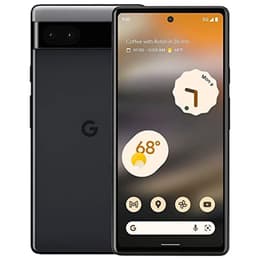

Galaxy A26 Vs Google Pixel 6A

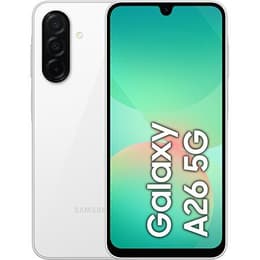
Galaxy A26
Galaxy A26
Starting at

Refurbished price:£152.00

Versus £419.55 new

See options
Google Pixel 6A
Google Pixel 6A
Starting at

Refurbished price:£107.00

Versus £459.00 new

See options

Ratings

The Samsung Galaxy A26 (released March 2025) and the Google Pixel 6A (released July 2022) are both Android smartphones designed to offer a balanced experience. While the Galaxy A26 is a more recent offering from Samsung's popular A-series, the Pixel 6A represents Google's approach to a capable device at a competitive point. The primary distinctions lie in their release timelines, display technologies, and camera philosophies, with both running on the Android operating system.

Scores

Durability

The expected practical lifespan of a smartphone is influenced by its initial release date and the manufacturer's commitment to software updates. These factors determine how long a device remains secure, compatible with new applications, and performs optimally.

  • Release Timeline: The Samsung Galaxy A26 was released in March 2025, making it a newer device compared to the Google Pixel 6A, which launched in July 2022. This difference in age directly impacts their remaining support cycles.
  • Software Longevity: The Galaxy A26 is set to receive six major Android OS upgrades and six years of security updates, extending its software support until approximately 2031. The Pixel 6A, while initially promised three years of OS updates and five years of security updates, has had its support extended, with OS updates guaranteed until at least July 2025 and security updates until at least July 2027. This means the Galaxy A26 offers a significantly longer period of guaranteed software support.
  • Physical Durability: Both devices feature an IP67 rating for dust and water resistance, providing protection against immersion in up to 1 meter of fresh water for 30 minutes. The Galaxy A26 incorporates Corning Gorilla Glass Victus+ on both its front and back, offering enhanced scratch and drop resistance. The Pixel 6A uses Corning Gorilla Glass 3 for its display.

Year of Release

2024

2022

Compatible with latest Update

Yes

Yes

OS

Android

Android

Foldable

No

No

Performance

Performance in a smartphone is about how smoothly it handles daily tasks, from browsing and social media to more demanding applications and gaming. The core processing unit and memory configuration play a significant role in this experience.

  • Processing Capabilities: The Google Pixel 6A is powered by a processor designed by Google, which at its release, offered performance comparable to higher-end devices, enabling smooth operation for demanding apps and multitasking. The Samsung Galaxy A26 uses a Samsung-designed processor, which provides reliable performance for everyday use and general purposes. Users report that the Galaxy A26 handles daily tasks well, though some have noted occasional lag during intensive multitasking or with graphically demanding games.
  • Memory and Storage: The Pixel 6A comes with 6GB of RAM and 128GB of internal storage, which is not expandable. The Galaxy A26 offers configurations with either 6GB or 8GB of RAM and 128GB or 256GB of internal storage, with the added flexibility of expandable storage via a microSD card. This allows Galaxy A26 users to increase their storage capacity as needed.
  • System Responsiveness: Users of the Pixel 6A generally report a very fluid and responsive experience, with applications loading quickly and smooth transitions between tasks. The Galaxy A26 also provides a generally smooth experience for most users, though some have observed that it may not be as consistently snappy as devices with more powerful processors, particularly under heavy load.

Memory (GB)

8 GB

6 GB

Screen quality

The display is a primary interface for any smartphone, and its quality significantly impacts the user's visual experience, from viewing content to navigating the interface.

  • Display Technology and Size: The Samsung Galaxy A26 features a larger 6.7-inch Super AMOLED display, offering vibrant colors and deep blacks. The Google Pixel 6A has a more compact 6.1-inch OLED display, also known for its excellent contrast and color reproduction. Both technologies provide a rich visual experience.
  • Resolution and Clarity: Both devices offer Full HD+ resolution, ensuring sharp text and clear images. The Pixel 6A's smaller screen size results in a slightly higher pixel density (approximately 429 ppi) compared to the Galaxy A26 (approximately 385 ppi), meaning individual pixels are less discernible on the Pixel 6A.
  • Refresh Rate and Smoothness: A key difference is the refresh rate; the Galaxy A26 boasts a 120Hz refresh rate, which contributes to smoother scrolling and a more fluid visual experience, especially in fast-paced content. The Pixel 6A features a standard 60Hz refresh rate. While many users find 60Hz perfectly adequate, the higher refresh rate on the A26 offers a noticeable improvement in visual fluidity.

Resolution

1080 x 2340

1080 x 2400

Audiovisual

Camera capabilities are often a deciding factor for many users, encompassing everything from capturing everyday moments to high-quality photos and videos in various lighting conditions.

  • Rear Camera System: The Google Pixel 6A features a dual-camera setup with a 12.2MP main sensor and a 12MP ultrawide lens. It is highly regarded for its computational photography, which enhances image quality, particularly in challenging conditions. The Samsung Galaxy A26 comes with a triple-camera system, including a 50MP main sensor with optical image stabilization (OIS), an 8MP ultrawide, and a 2MP macro lens. While the A26 offers a higher megapixel count on its main sensor, user reviews suggest that its low-light performance and overall image processing may not consistently match the Pixel 6A's strengths. The 2MP macro lens on the A26 is often described as having limited utility.
  • Photography Performance: The Pixel 6A excels in producing consistently good photos with accurate colors and dynamic range, even with its older sensor hardware, thanks to Google's advanced image processing. Its Night Sight mode is effective in low-light scenarios. The Galaxy A26's main camera performs well in good lighting conditions, capturing detailed and vibrant images, but its low-light performance can be less consistent, and colors may appear muted compared to real life.
  • Video Recording and Front Camera: Both devices are capable of recording 4K video with their main rear cameras, with the Pixel 6A supporting up to 60 frames per second, while the Galaxy A26 records at 30 frames per second. For selfies, the Galaxy A26 has a 13MP front camera, which users generally find to be good, capturing natural-looking images. The Pixel 6A features an 8MP front camera, which is considered adequate for casual selfies but may struggle in lower light.

Front camera

13 megapixels

8 megapixels

Miscellaneous

Beyond the core specifications, several practical features contribute to the overall user experience, affecting connectivity, security, and daily handling.

  • Connectivity and Ports: Both the Galaxy A26 and Pixel 6A support 5G connectivity, along with modern Wi-Fi standards and Bluetooth for wireless connections. Both devices feature a USB Type-C port for charging and data transfer. The Galaxy A26 does not include a 3.5mm headphone jack, a trend also seen in the Pixel 6A.
  • Biometric Security: The Samsung Galaxy A26 incorporates a side-mounted fingerprint sensor, which is often praised for its speed and reliability. The Google Pixel 6A utilizes an in-display fingerprint sensor. While convenient, some Pixel 6A users have reported mixed experiences with its responsiveness.
  • Design and Handling: The Pixel 6A is a more compact device, measuring 152.2 x 71.8 x 8.7 mm and weighing 178g, making it comfortable for one-handed use. The Galaxy A26 is larger at 164 x 77.5 x 7.7 mm and weighs 200g, offering a more expansive screen but potentially requiring two hands for comfortable operation for some users. The Galaxy A26 features a modern design with a minimal bezel and an Infinity-U display, while the Pixel 6A retains the distinct Pixel design language with a camera bar.

Weight

197 g

250 g

Screen size (in)

6.5

6.1

Mobile network

5G

5G

SIM card

Dual Physical SIM

Physical SIM + eSIM

Carrier compatibility

Unlocked

Unlocked

Connector

USB-C

USB-C

The Samsung Galaxy A26 and Google Pixel 6A cater to different priorities, largely influenced by their respective release dates and design philosophies. User feedback for the Pixel 6A often praises its exceptional camera performance, particularly its computational photography capabilities, which deliver impressive results even with its older hardware. Many users also appreciate its compact size and the clean, fluid Android experience. Criticisms sometimes point to its 60Hz display and the occasional unreliability of its in-display fingerprint sensor. Some users have also noted that the battery life, while generally acceptable for a full day, might not be as robust for heavy users compared to some competitors.

For the Galaxy A26, common praise highlights its large, vibrant 120Hz Super AMOLED display, offering a smooth visual experience. Its extended software support policy is also a significant advantage for users seeking long-term device longevity. However, some users have expressed concerns regarding its performance under heavy load, with reports of occasional lag and overheating. The camera system, while featuring a high-megapixel main sensor, receives mixed reviews, particularly for low-light performance and the utility of its macro lens.

Users prioritizing a compact device with a highly capable camera and a pure Android experience may find the Google Pixel 6A well-suited to their needs. Its strengths lie in its image processing and consistent software updates, making it a strong contender for photography enthusiasts. Conversely, users who value a larger, smoother display for media consumption and a longer guaranteed software support period, along with expandable storage, might lean towards the Samsung Galaxy A26. It offers a more modern display and a commitment to extended updates, making it a compelling choice for those seeking a device with a longer lifespan. Both devices, whether new or as quality-assured refurbished options, provide excellent choices depending on individual user preferences.

See all articles

Our recent comparisons