Galaxy A25 Vs Galaxy S21 Ultra 5G

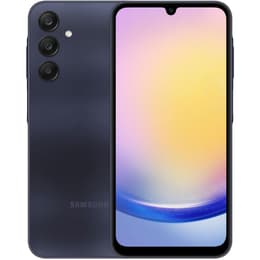
Galaxy A25
Galaxy A25
Starting at

Refurbished price:£121.00

Versus £272.58 new

See options
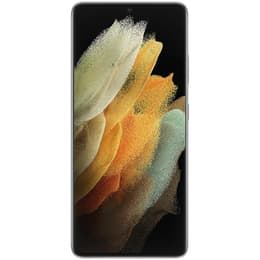
Galaxy S21 Ultra 5G
Galaxy S21 Ultra 5G
Starting at

Refurbished price:£187.00

Versus £1,800.00 new

See options

Ratings

The Samsung Galaxy A25 5G, released in December 2023, and the Samsung Galaxy S21 Ultra 5G, launched in January 2021, represent different segments of Samsung's smartphone offerings. While both operate on the Android platform, the A25 is positioned as a more accessible device, focusing on core functionalities and extended software support, whereas the S21 Ultra was a premium flagship, emphasizing advanced camera capabilities, a high-end display, and overall sophisticated performance.

Scores

Durability

When considering the practical lifespan of these devices, several factors come into play, including their release timelines, software support, and physical build.

  • Release Timeline: The Galaxy A25 5G is a newer device, released in late 2023, giving it an inherent advantage in terms of its lifecycle. The Galaxy S21 Ultra 5G, released in early 2021, is an older model.
  • Software Longevity: Samsung has committed to providing the Galaxy A25 5G with four years of OS updates and five years of security updates, meaning it is expected to receive support until around 2027-2028 for OS and 2028-2029 for security. The Galaxy S21 Ultra 5G, having launched with Android 11, has already received updates up to Android 14 and is expected to receive four generations of Android OS updates and five years of security updates, extending its support to around 2025 for OS and 2026 for security.
  • Build Materials: The Galaxy A25 5G features a Gorilla Glass 5 front and a plastic back, with some sources indicating an IP67 rating for dust and water resistance. The Galaxy S21 Ultra 5G boasts Gorilla Glass Victus on both the front and back, coupled with an aluminum frame and an IP68 rating, offering a higher level of protection against dust and water immersion.

Year of Release

2023

2021

Compatible with latest Update

Yes

Yes

OS

Android

Android

Foldable

No

No

Performance

The performance of these two Galaxy phones varies significantly, reflecting their different market positions and release years. These differences impact how smoothly applications run, how quickly tasks are completed, and the overall responsiveness of the user experience.

  • Processing Power: The Galaxy A25 5G is equipped to handle everyday tasks, web browsing, and light gaming smoothly. Users generally report that it keeps up with daily demands without significant sluggishness. The Galaxy S21 Ultra 5G, on the other hand, features a more powerful processor designed for demanding applications, intensive multitasking, and high-fidelity gaming, offering a more robust and responsive experience.
  • Storage and RAM: The A25 5G comes with 6GB or 8GB of RAM and 128GB or 256GB of internal storage, with the added flexibility of a microSD card slot for expansion. The S21 Ultra 5G offers higher RAM configurations, typically 12GB or 16GB, and storage options up to 512GB, but it does not include a microSD card slot.
  • Battery Behavior: Both devices house a 5000 mAh battery. The Galaxy A25 5G generally provides a full day of use for most users, with some reporting up to two days with moderate usage. The S21 Ultra 5G's battery life can also extend through a full day, though heavy use, especially with its high-resolution, high refresh rate display enabled, can lead to more frequent charging.

Memory (GB)

6 GB

12 GB

Screen quality

The visual experience offered by the displays of the Galaxy A25 5G and the Galaxy S21 Ultra 5G presents a clear distinction in terms of technology and capabilities.

  • Display Technology and Resolution: The Galaxy A25 5G features a 6.5-inch Super AMOLED display with a resolution of 2340 x 1080 pixels (FHD+). The Galaxy S21 Ultra 5G has a larger 6.8-inch Dynamic AMOLED 2X display with a higher resolution of 3200 x 1440 pixels (WQHD+), providing a sharper and more detailed image.
  • Brightness and Refresh Rate: The A25 5G offers a peak brightness of 1000 nits and a 120Hz refresh rate, contributing to smooth scrolling and good outdoor visibility. The S21 Ultra 5G reaches a higher peak brightness of 1500 nits and features an adaptive 120Hz refresh rate, which can dynamically adjust to content for both smoothness and power efficiency.
  • Viewing Experience: While both displays offer vibrant colors characteristic of AMOLED technology, the S21 Ultra 5G's higher resolution and greater brightness provide a more immersive and refined viewing experience, particularly for high-quality media and detailed content.

Resolution

1080 x 2340

1440 x 3200

Screen type

Super AMOLED

Dynamic AMOLED 2X

Audiovisual

The camera systems on the Galaxy A25 5G and the Galaxy S21 Ultra 5G are designed for different photographic needs, with the Ultra model offering a more comprehensive and advanced setup.

  • Rear Camera System: The Galaxy A25 5G includes a triple-camera setup with a 50 MP main sensor with optical image stabilization (OIS), an 8 MP ultrawide lens, and a 2 MP macro lens. The S21 Ultra 5G features a quad-camera system, highlighted by a 108 MP main sensor with OIS, a 12 MP ultrawide lens, and two 10 MP telephoto lenses (one with 3x optical zoom and another with 10x optical zoom), also with OIS.
  • Photography Performance: The A25 5G's main camera performs well in good lighting conditions, producing decent and usable photos, though low-light performance can be a challenge. The S21 Ultra 5G excels in various lighting conditions, offering superior detail, dynamic range, and low-light capabilities, especially with its advanced Night mode. Its dual telephoto lenses provide significant zoom flexibility.
  • Video Recording and Front Camera: The A25 5G supports 4K video recording at 30fps and has a 13 MP front camera. The S21 Ultra 5G can record video up to 8K at 24fps and 4K at 30/60fps, and features a high-resolution 40 MP front camera, offering more detail for selfies and video calls.

Main camera

50 megapixels

108 megapixels

Front camera

13 megapixels

40 megapixels

Miscellaneous

Beyond the core specifications, several practical elements differentiate the Galaxy A25 5G and the Galaxy S21 Ultra 5G, influencing their overall user experience and utility.

  • Connectivity and Ports: Both devices support 5G connectivity. The A25 5G includes Wi-Fi 5 (802.11ac), Bluetooth 5.3, NFC, a USB-C 2.0 port, and notably, a 3.5mm headphone jack. The S21 Ultra 5G offers more advanced connectivity with Wi-Fi 6E, Bluetooth 5.2, NFC, and a faster USB-C 3.2 port, but it omits the 3.5mm headphone jack.
  • Biometric Security and Design: The A25 5G features a side-mounted fingerprint sensor integrated into the power button. The S21 Ultra 5G utilizes an under-display ultrasonic fingerprint sensor and also supports face recognition. In terms of physical design, the A25 5G has a plastic back and a slightly thicker profile, while the S21 Ultra 5G features a more premium glass and aluminum construction.
  • Additional Features: The S21 Ultra 5G supports S Pen functionality, allowing for note-taking and drawing, though the S Pen is sold separately. Both phones offer stereo speakers for an enhanced audio experience.

Weight

197 g

227 g

Screen size (in)

6.5

6.8

Mobile network

5G

5G

SIM card

Dual Physical SIM

Dual Physical SIM + eSIM

Carrier compatibility

Unlocked

Unlocked

Connector

USB-C

USB-C

The Samsung Galaxy A25 5G and Galaxy S21 Ultra 5G cater to distinct user needs, a fact reflected in user sentiment. The A25 5G is frequently praised for its strong battery life, bright AMOLED display, and Samsung's commitment to extended software updates, which is a significant advantage for a device in its category. Users appreciate its reliable performance for daily tasks and its inclusion of a headphone jack. Some common criticisms include its less powerful processor compared to higher-end models, and camera performance that can struggle in low-light conditions.

Conversely, the Galaxy S21 Ultra 5G is widely lauded for its exceptional camera system, particularly its versatile zoom capabilities and high-resolution main sensor, as well as its stunning display quality and powerful performance for demanding applications. However, some users have noted that its battery life can be significantly impacted by heavy use of its high-resolution, high refresh rate screen, and its larger size and weight might not appeal to everyone. The absence of a headphone jack and microSD card slot are also points of consideration for some.

Users prioritizing long-term software support, a headphone jack, and reliable everyday performance without needing top-tier camera zoom or the absolute fastest processing speeds may find the Galaxy A25 5G well-suited to their needs. It stands as a solid, eco-friendly alternative for those seeking a quality-assured refurbished option. On the other hand, individuals who demand a highly advanced camera system, a premium display for media consumption, and robust performance for intensive tasks will likely lean towards the Galaxy S21 Ultra 5G. Considering refurbished options for either model can provide a sustainable choice for consumers.
See all articles

Our recent comparisons