
Compare models

Galaxy A23 5G Vs Galaxy S25 FE

  • 1-year minimum warranty
  • Free delivery on all items
  • Free 30-day returns
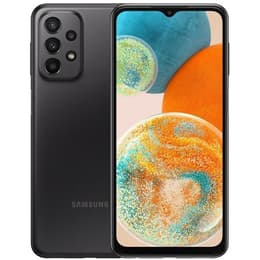
Galaxy A23 5G
Starting at

Refurbished price:£96.00

Versus £300.00 new

See options
Galaxy S25 FE
Starting at

Refurbished price:£307.00

Versus £651.00 new

See options

Differences at a glance

The Samsung Galaxy A23 5G (2022) and the Samsung Galaxy S25 FE (2025) represent two distinct tiers within Samsung's smartphone ecosystem, bridging standard everyday functionality and flagship-level capability. While both models support modern cellular networks and run on the Android operating system with Samsung's custom interface, they cater to different expectations regarding processing power, display technology, and overall hardware refinement. Understanding their core distinctions helps clarify which device aligns with specific daily usage patterns.

Available Models

Colour

Storage (GB)

Scores

Durability

When examining longevity, software support timelines and hardware robustness dictate how long each device remains practical for daily use.

  • Software Support Window: The Galaxy S25 FE benefits from a much later release date and extended software commitment, offering multi-year operating system upgrades. The Galaxy A23 5G, having launched earlier, sits further along its update lifecycle.
  • Build Integrity: The Galaxy S25 FE utilizes strengthened glass panels and an aluminum frame alongside formal water resistance ratings, whereas the Galaxy A23 5G relies on a plastic frame and back construction.
  • Expected Lifespan: Higher-tier internal components and longer software backing give the Galaxy S25 FE an advantage for multi-year retention, while the Galaxy A23 5G serves as a capable short-to-medium-term choice.

Year of Release

2022

2025

Compatible with latest Update

Yes

Yes

OS

Android

Android

Foldable

No

No

Performance

Processing capabilities and day-to-day responsiveness differ noticeably, influencing how smoothly demanding applications and multitasking operate.

  • Multitasking and Speed: The Galaxy S25 FE handles intensive gaming, rapid app switching, and heavy background tasks smoothly due to its high-tier internal processor and generous memory allocation. The Galaxy A23 5G manages standard web browsing, messaging, and lighter apps reliably, though demanding software can occasionally introduce minor loading delays.
  • Storage Configurations: Both devices offer ample internal storage variants, with the Galaxy A23 5G uniquely supporting expandable storage via microSD, whereas the Galaxy S25 FE relies strictly on fixed onboard storage capacity.
  • Battery Behavior: Each model houses a large capacity battery capable of getting a typical user through a full day, though the Galaxy S25 FE supports faster wired and wireless replenishment speeds.

Screen quality

Display technology shapes the media consumption experience, outdoor visibility, and visual fluidity.

  • Panel Technology: The Galaxy S25 FE features a Dynamic AMOLED display, delivering deep contrast levels and vivid color reproduction. The Galaxy A23 5G employs a standard PLS LCD panel, which provides adequate clarity but lacks the contrast depth of organic light-emitting diode technology.
  • Brightness and Outdoors: Peak luminance levels on the Galaxy S25 FE ensure comfortable legibility under direct sunlight, while the Galaxy A23 5G requires manual shade adjustment in very bright environments.
  • Refresh Rate: Both screens support a 120Hz refresh rate, ensuring fluid scrolling through web pages and menus, though the Galaxy S25 FE pairs this smoothness with higher resolution sharpness.

Audiovisual

Imaging hardware and acoustic output define the multimedia capture and playback capabilities of both smartphones.

  • Camera Systems: The Galaxy S25 FE includes a versatile triple-lens setup featuring a dedicated telephoto lens for optical zoom and an advanced main sensor that excels in low-light photography. The Galaxy A23 5G provides a functional main and macro arrangement suitable for casual daylight snapshots.
  • Video and Audio: Video recording on the Galaxy S25 FE benefits from advanced stabilization and higher resolution options, whereas the Galaxy A23 5G handles standard casual clips. Internal speaker output on the Galaxy S25 FE is fuller, while the Galaxy A23 5G retains a physical 3.5mm headphone jack for wired audio accessories.

Miscellaneous

Physical dimensions, connectivity standards, and daily handling characteristics complete the practical profile of each smartphone.

  • Handling and Form Factor: The Galaxy S25 FE offers a slightly slimmer profile with premium glass finishes, while the Galaxy A23 5G has a marginally thicker plastic chassis that provides a grippy texture in the hand.
  • Connectivity: Both models integrate 5G cellular compatibility, though the Galaxy S25 FE incorporates newer Wi-Fi standards and faster Bluetooth versions for stable accessory pairing.
  • Authentication: The Galaxy A23 5G utilizes a side-mounted fingerprint sensor embedded in the power button, whereas the Galaxy S25 FE uses an optical in-display fingerprint reader alongside facial recognition.

Weight

197 g

190 g

Screen size (in)

6.6

6.7

Mobile network

5G

5G

SIM card

Dual Physical SIM

Physical SIM + eSIM

Carrier compatibility

Unlocked

Unlocked

Connector

USB-C + Jack 3.5mm

USB-C

What the community thinks

Users prioritizing high-end processing speeds, advanced photography options, and long-term software updates will find the Galaxy S25 FE well-suited to their needs. Conversely, individuals seeking a straightforward, reliable device for core daily communication, casual media viewing, and expandable storage flexibility may lean toward the Galaxy A23 5G. Reviewers and everyday users frequently praise the Galaxy S25 FE for its vibrant display and robust build quality, while noting that its higher tier positioning comes with fewer legacy ports. Meanwhile, users appreciate the Galaxy A23 5G for its practical battery life and headphone jack, though they note limitations in low-light photography and heavy gaming performance.

For consumers exploring sustainable choices, choosing a quality-assured refurbished option provides a reliable way to access these capabilities while reducing electronic waste. Ultimately, the right choice depends on whether your daily routine demands advanced multitasking and premium media features or dependable, straightforward everyday communication.