
Compare models

Galaxy A17 Vs Google Pixel 8a

  • 1-year minimum warranty
  • Free delivery on all items
  • Free 30-day returns
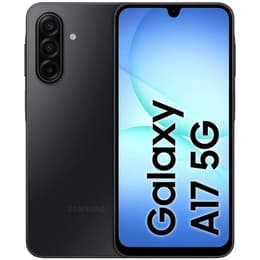
Galaxy A17
Starting at

Refurbished price:£125.00

Versus £243.85 new

See options
Google Pixel 8a
Starting at

Refurbished price:£187.00

Versus £463.65 new

See options

Differences at a glance

The Samsung Galaxy A17 (2025) and the Google Pixel 8a (2024) are mid-range Android smartphones tailored for everyday mobile users. While both devices deliver reliable everyday functionality, they approach mobile computing differently through distinct hardware sizing, software experiences, and build philosophies. Operating on Google's tailored interface versus Samsung's feature-rich customization layer, these devices cater to users seeking practical, long-lasting performance.

Available Models

Colour

Storage (GB)

Scores

Durability

The Samsung Galaxy A17 and Google Pixel 8a differ in release timing and software support windows, both offering exceptional longevity for their respective classes.

  • Software Support Window: The Samsung Galaxy A17 features a multi-year update commitment spanning six years, while the Google Pixel 8a provides a similarly robust seven-year update schedule covering major operating system upgrades.
  • Repairability and Build Longevity: Both handsets utilize durable outer shells and standardized internal layouts, though standard professional repair services can easily source replacement components for routine maintenance like battery swaps.
  • Expected Practical Lifespan: Thanks to energy-efficient processors and prolonged software security patching, both models remain fully functional and secure for years of daily use.

Year of Release

2025

2024

OS

Android

Android

Foldable

No

No

Performance

Performance capabilities vary based on processor architecture and memory configuration, influencing how each device handles multitasking and demanding applications.

  • Multitasking and App Switching: Both models handle everyday communication, web browsing, and media streaming smoothly, backed by ample memory configurations that prevent frequent app reloads.
  • Battery Behavior: The Samsung Galaxy A17 includes a larger capacity power cell designed to easily stretch through a full day of mixed use, while the Google Pixel 8a balances a slightly smaller battery with power-efficient internal processing.
  • Storage Management: Configurations vary across regional options, providing sufficient internal capacity for apps, offline media, and personal files without expandable card slots on the Google model.

Screen quality

Display characteristics differ significantly in physical dimensions and panel technology, affecting media consumption and outdoor legibility.

  • Display Technology: The Samsung Galaxy A17 features a larger Super AMOLED display with deep contrast levels, whereas the Google Pixel 8a utilizes a compact OLED panel with high pixel density for sharp text rendering.
  • Refresh Rates and Fluidity: Both devices support elevated refresh rates, ensuring smooth scrolling through web pages, social feeds, and user interface animations.
  • Outdoor Brightness: High peak brightness modes on both panels allow menus and maps to remain legible under direct sunlight conditions.

Resolution

1080x2340

1080 x 2400

Audiovisual

Imaging hardware and audio reproduction cater to varying content creation and media playback preferences.

  • Camera Systems: The Google Pixel 8a leans heavily on computational photography for balanced low-light shots and natural portrait separation, while the Samsung Galaxy A17 relies on a high-resolution primary sensor supported by stabilization features.
  • Video Recording: Both phones capture stable high-definition video with clear audio capture suitable for casual memories and video calls.
  • Speaker Output: Integrated stereo speaker setups deliver clear voice reproduction and adequate volume levels for hands-free calls and impromptu media viewing.

Front camera

13MP

13 megapixels

Miscellaneous

Physical dimensions and connectivity features define how each smartphone feels during daily handling and travel.

  • Handling and Form Factor: The Samsung Galaxy A17 offers a larger screen footprint with a slim profile, whereas the Google Pixel 8a provides a more compact, pocket-friendly body that is comfortable for single-handed use.
  • Biometrics and Security: Both handsets feature secure authentication options, utilizing responsive fingerprint sensors alongside facial recognition capabilities.
  • Connectivity Standards: Complete modern connectivity suites on both models include high-speed cellular networking, Wi-Fi compatibility, and near-field communication for contactless payments.

Weight

192 g

188 g

Screen size (in)

6.7

6.1

Mobile network

5G

5G

SIM card

Dual Physical SIM

Physical SIM + eSIM

Carrier compatibility

Unlocked

Unlocked

Connector

USB-C

USB-C

What the community thinks

User discussions and community feedback indicate that both smartphones excel in their respective design philosophies, though they attract different types of buyers. Users prioritizing a larger viewing workspace and extended battery capacity often favor the Samsung Galaxy A17, while those seeking a compact form factor coupled with advanced software assistance tend to prefer the Google Pixel 8a. Common praise centers on reliability and display clarity, while occasional notes mention that intensive gaming can cause warmth on either device under prolonged loads.

When making a final decision, users prioritizing screen size and battery endurance may lean toward the Samsung device, whereas users prioritizing a smaller pocket footprint and photo processing capabilities may find the Google alternative well-suited to their needs. For buyers exploring sustainable shopping habits, a quality-assured refurbished option serves as an eco-friendly alternative that reduces electronic waste while delivering the same core hardware performance.