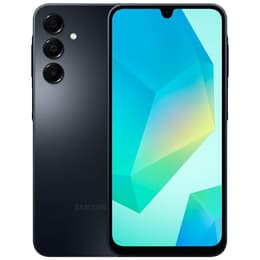

Galaxy A16 Vs Galaxy A54

Galaxy A16
Galaxy A16
Starting at

Refurbished price:£100.62

Versus £206.96 new

See options
Galaxy A54
Galaxy A54
Starting at

Refurbished price:£119.00

Versus £499.00 new

See options

Ratings

The Samsung Galaxy A16, released in late 2024 and early 2025, and the Samsung Galaxy A54, launched in March 2023, are both mid-range smartphones from Samsung's popular A-series. While both devices aim to provide a balanced user experience, they differ significantly in their software support longevity, display smoothness, and camera capabilities. Both run on the Android operating system with Samsung's One UI interface.

Scores

Durability

The practical lifespan of a smartphone is heavily influenced by its software support and physical durability. These two Galaxy models present different profiles in this regard.

  • Release Timeline and OS Support: The Galaxy A16, being a newer device from late 2024/early 2025, benefits from Samsung's extended update policy, promising six years of operating system upgrades and security updates, extending its support until at least October 2030. In contrast, the Galaxy A54, released in March 2023, is guaranteed four major Android OS upgrades and five years of security updates, with support expected to conclude around early 2028.
  • Physical Durability: The Galaxy A54 offers a more robust build with an IP67 rating for dust and water resistance, meaning it can withstand submersion in up to 1 meter of freshwater for 30 minutes. It also features Gorilla Glass 5 on both its front and back for enhanced scratch protection. The Galaxy A16 comes with an IP54 rating, providing protection against dust and splashes, and utilizes a plastic frame with a 'Glastic' back.
  • Expected Practical Lifespan: Users prioritizing the longest possible software longevity will find the Galaxy A16 more appealing due to its extended update commitment. However, the Galaxy A54 offers superior physical protection against environmental elements and accidental damage.

Year of Release

2024

2023

Compatible with latest Update

Yes

Yes

OS

Android

Android

Foldable

No

No

Performance

Performance in daily use is a key consideration, encompassing how smoothly applications run, how efficiently the battery manages power, and the overall responsiveness of the device.

  • Processor Capabilities: The Galaxy A54 is equipped with a processor that handles demanding applications and multitasking smoothly, providing a responsive experience for a variety of tasks. The Galaxy A16, while capable for everyday usage like social media, messaging, and video streaming, may exhibit less fluidity with more intensive applications or heavy multitasking.
  • Battery Behavior: Both devices feature a substantial 5000 mAh battery capacity. The Galaxy A16 is noted for its excellent battery life, often lasting up to two full days with average use, or over 13-16 hours in continuous usage tests. The Galaxy A54 also provides strong battery performance, typically lasting around 1.5 days or 10-12 hours in similar tests, with its adaptive refresh rate contributing to efficient power management. Both support 25W wired fast charging, though the charger is sold separately.
  • Storage and Responsiveness: Both models offer various RAM configurations (4GB, 6GB, 8GB) and storage options (128GB, 256GB), with expandable storage via microSDXC. The Galaxy A54's more capable processor generally contributes to a more consistently responsive system, particularly when switching between multiple applications.

Memory (GB)

4 GB

8 GB

Screen quality

The display is a primary interface for user interaction, and both the Galaxy A16 and A54 offer vibrant viewing experiences with some notable differences.

  • Display Technology and Clarity: Both smartphones feature Super AMOLED displays with Full HD+ resolution (1080 x 2340 pixels), delivering crisp visuals and vibrant colors. This technology provides deep blacks and high contrast, enhancing the viewing of photos, videos, and text.
  • Size and Refresh Rate: The Galaxy A16 boasts a larger 6.7-inch display, offering more screen real estate for content consumption. It features a 90Hz refresh rate, providing smoother scrolling and a more fluid visual experience compared to standard 60Hz screens. The Galaxy A54 has a slightly smaller 6.4-inch display but offers a higher 120Hz adaptive refresh rate, which results in even smoother animations and responsiveness, particularly noticeable in gaming and fast-paced content.
  • Brightness Levels: The Galaxy A54 can reach a peak brightness of 1000 nits, making it highly visible even in bright outdoor conditions. The Galaxy A16 offers a peak brightness of 800 nits, which is generally sufficient for indoor use and adequate for most outdoor scenarios, though it may struggle more in direct sunlight.

Resolution

1080 x 2340

1080 x 2340

Screen type

Super AMOLED

Super AMOLED

Audiovisual

The camera systems on the Galaxy A16 and A54 are designed to capture everyday moments, but they offer different levels of versatility and image quality.

  • Rear Camera System: Both phones feature a 50MP main camera. However, the Galaxy A54's main sensor includes Optical Image Stabilization (OIS) and larger pixels, which significantly improve low-light performance and reduce blur from handshakes. The A54 also includes a 12MP ultrawide camera and a 5MP macro lens. The Galaxy A16 has a 5MP ultrawide and a 2MP macro lens, which are less capable than those on the A54.
  • Front Camera and Video Recording: The Galaxy A54 is equipped with a 32MP front-facing camera, capable of recording 4K video at 30 frames per second. It also supports 4K video recording with its main rear camera and features Video Digital Image Stabilization (VDIS) for smoother footage. The Galaxy A16 has a 13MP front camera and is limited to 1080p video recording at 30 frames per second across all its cameras, utilizing Electronic Image Stabilization (EIS).
  • Photography Features: The Galaxy A54 benefits from advanced features like 'Nightography' for improved low-light photos, AI Image Enhancer, and Object Eraser, enhancing its photographic capabilities. The Galaxy A16 provides a more basic camera experience, suitable for general photography but without the advanced computational photography features found in the A54.

Main camera

50 megapixels

50 megapixels

Front camera

13 megapixels

32 megapixels

Miscellaneous

Beyond core specifications, several practical elements contribute to the overall user experience and daily convenience of these devices.

  • Connectivity Options: Both smartphones support 5G connectivity (for the 5G variant of A16), ensuring access to faster mobile data networks. The Galaxy A54 supports Wi-Fi 6, offering potentially faster and more stable wireless internet connections compared to the Galaxy A16's Wi-Fi 5 (802.11ac). Both include Bluetooth 5.3 and NFC for wireless accessories and contactless payments.
  • Ports and Biometrics: Both devices utilize a USB-C port for charging and data transfer. Neither includes a traditional 3.5mm headphone jack. For security, the Galaxy A54 features an in-display fingerprint sensor. The Galaxy A16 also includes fingerprint recognition, typically side-mounted.
  • Design and Handling: The Galaxy A54 has a more premium feel with Gorilla Glass 5 on both the front and back, and a design aesthetic similar to Samsung's flagship S-series. It weighs 202g and measures 158.2 x 76.7 x 8.2mm. The Galaxy A16, at 200g and 164.4 x 77.9 x 7.9mm, is slightly taller and wider but marginally lighter and thinner, featuring a plastic frame and 'Glastic' back. Its larger screen size might appeal to users who prefer more expansive viewing, while the A54's slightly more compact form factor could be preferred for one-handed use.

Weight

200 g

202 g

Screen size (in)

6.7

6.4

Mobile network

4G

5G

SIM card

Dual Physical SIM

Dual Physical SIM

Carrier compatibility

Unlocked

Unlocked

Connector

USB-C

USB-C

User feedback for the Galaxy A54 often praises its capable camera system, particularly its low-light performance and OIS, as well as its vibrant 120Hz AMOLED display and robust build quality. Some users have noted that while its processor is competent for daily tasks, it might not match the performance of some competitors in its original price segment. Battery life is generally considered good, though some heavy users report needing more frequent charging.

For the newer Galaxy A16, common praise points revolve around its impressive software update commitment, offering six years of support, which is a significant advantage for long-term usability. Its large 6.7-inch Super AMOLED display and excellent battery life are also frequently highlighted. Criticisms often point to its more modest processor performance and the absence of 4K video recording, as well as a less premium build compared to higher-tier models.

Users prioritizing extended software support and a larger display for media consumption will find the Galaxy A16 well-suited to their needs. It is an ideal choice for those seeking a device that remains updated and secure for many years, making it a sustainable option. Conversely, users who prioritize a more advanced camera system with OIS, smoother display animations, a more premium build, and a higher degree of water and dust resistance may lean toward the Galaxy A54. Both devices offer a reliable Android experience, and choosing between them depends on whether long-term software commitment and screen size or camera capabilities and physical durability are the primary decision factors. Opting for a quality-assured refurbished option for either model can provide an eco-friendly alternative.
See all articles

Our recent comparisons