Galaxy A16 5G Vs Galaxy S21 Ultra 5G

Galaxy A16 5G
Galaxy A16 5G
Starting at

Refurbished price:£103.00

Versus £205.87 new

See options
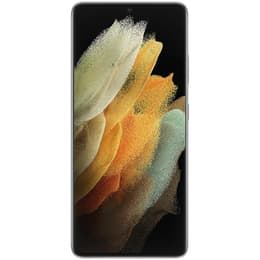
Galaxy S21 Ultra 5G
Galaxy S21 Ultra 5G
Starting at

Refurbished price:£186.00

Versus £1,800.00 new

See options

Ratings

The Samsung Galaxy A16 5G, released in late 2024 and early 2025, and the Samsung Galaxy S21 Ultra 5G, launched in early 2021, represent different tiers within Samsung's smartphone lineup. While both devices offer 5G connectivity and run on the Android operating system, they cater to distinct user expectations. The A16 5G focuses on extended software support and essential features, whereas the S21 Ultra 5G, a former flagship, prioritizes advanced performance, camera capabilities, and a premium user experience.

Scores

Durability

When considering the practical lifespan of these devices, their release timelines and software support policies are key differentiators.

  • Release Timeline: The Galaxy A16 5G was released in October 2024 in Europe and January 2025 in the US, making it a newer device. The Galaxy S21 Ultra 5G launched in January 2021, positioning it as an older, albeit still capable, model.
  • Software Longevity: The Galaxy A16 5G offers an impressive commitment of six years of major Android OS and security updates, extending support until October 2030. The Galaxy S21 Ultra 5G, as a former flagship, typically received four major OS updates and five years of security updates, meaning its official software support period is nearing its end or has concluded by early 2026.
  • Repairability: The Galaxy A16 5G has a reported repairability score of 8.0 or 9.0 out of 10, with features like pull tabs for battery removal and accessible screen cables, though some adhesive is used. While specific scores for the S21 Ultra 5G are less commonly cited, its more complex flagship design generally implies a more intricate repair process.

Year of Release

2024

2021

Compatible with latest Update

Yes

Yes

OS

Android

Android

Foldable

No

No

Performance

The performance capabilities of the Galaxy A16 5G and the Galaxy S21 Ultra 5G reflect their respective market segments, with notable differences in processing power and multitasking efficiency.

  • Processor Capabilities: The Galaxy A16 5G is equipped with a mid-range processor, either the Exynos 1330 or MediaTek Dimensity 6300, depending on the region. This allows it to handle everyday tasks like browsing, email, and media consumption smoothly. The Galaxy S21 Ultra 5G, featuring the Qualcomm Snapdragon 888 or Exynos 2100 chipset, delivers significantly more robust performance, designed for demanding applications and intensive multitasking.
  • System Responsiveness: Users of the A16 5G may experience occasional lag when switching between applications or taking burst photos. In contrast, the S21 Ultra 5G provides a consistently fluid and responsive experience, even with numerous apps open simultaneously, due to its more powerful processor and higher RAM configurations.
  • Storage and RAM: The A16 5G typically comes with 4GB of RAM and 128GB of internal storage, with some variants offering up to 8GB RAM and 256GB storage, and supports microSD expansion up to 1.5TB. The S21 Ultra 5G offers higher base RAM configurations, starting at 12GB and going up to 16GB, with internal storage options up to 512GB, though it lacks expandable storage.

Memory (GB)

4 GB

12 GB

Screen quality

The visual experience on both devices is shaped by their display technologies and specifications, offering different levels of clarity, brightness, and smoothness.

  • Display Technology and Resolution: Both phones feature Super AMOLED displays, known for vibrant colors and deep blacks. However, the Galaxy A16 5G has a 6.7-inch Full HD+ (2340 x 1080) display, while the Galaxy S21 Ultra 5G boasts a larger 6.8-inch Quad HD+ (3200 x 1440) Dynamic AMOLED 2X panel, providing a sharper and more detailed image.
  • Brightness and Refresh Rate: The A16 5G offers a 90Hz refresh rate for smoother scrolling and a peak brightness of 800 nits, which can struggle in direct sunlight. The S21 Ultra 5G features an adaptive refresh rate that dynamically adjusts between 10Hz and 120Hz for optimal smoothness and power efficiency, alongside a significantly higher peak brightness of 1500 nits, ensuring excellent outdoor visibility and HDR content viewing.
  • Design and Protection: The A16 5G has a U-shaped notch and noticeable bezels. The S21 Ultra 5G features a more immersive edge-to-edge display with a punch-hole cutout for the front camera and is protected by Gorilla Glass Victus.

Resolution

1080 x 2340

1440 x 3200

Screen type

Super AMOLED

Dynamic AMOLED 2X

Audiovisual

The camera systems on the Galaxy A16 5G and the Galaxy S21 Ultra 5G cater to different photography needs, with the S21 Ultra offering a more comprehensive and advanced setup.

  • Rear Camera Capabilities: The A16 5G features a triple camera system with a 50MP main sensor, a 5MP ultrawide, and a 2MP macro lens. It generally produces decent photos in good lighting, though low-light images can appear muddy. The S21 Ultra 5G boasts a versatile quad-camera array, including a 108MP main sensor with optical image stabilization (OIS), a 12MP ultrawide, a 10MP telephoto with 3x optical zoom, and another 10MP periscope telephoto with 10x optical zoom, all contributing to its advanced zoom capabilities and overall image quality.
  • Video Recording and Front Camera: The A16 5G records video at FHD (1920x1080) at 30fps, and has a 13MP front camera. The S21 Ultra 5G supports 8K video recording at 24fps with its main camera and 4K at 60fps across all five of its cameras (main, ultrawide, both telephoto, and front), which is a significant advantage for videographers. Its 40MP front camera also captures highly detailed selfies.
  • Additional Features: The S21 Ultra 5G includes advanced features like Director's View, the ability to snap high-resolution photos from 8K videos, and an ultrawide lens that doubles as a macro camera. The A16 5G's camera system is more straightforward, lacking these specialized functionalities.

Main camera

50 megapixels

108 megapixels

Front camera

13 megapixels

40 megapixels

Miscellaneous

Beyond core performance and display, several practical elements contribute to the overall user experience of these smartphones.

  • Connectivity and Ports: Both devices support 5G connectivity. The A16 5G includes Wi-Fi 5 and Bluetooth 5.3, with a USB 2.0 Type-C port. The S21 Ultra 5G offers more advanced Wi-Fi 6E and Bluetooth 5.2, along with a faster USB 3.2 Type-C port and Ultra-wideband (UWB) capabilities. Neither phone includes a 3.5mm headphone jack.
  • Sensors and Biometrics: The A16 5G features a side-mounted fingerprint sensor. The S21 Ultra 5G incorporates an in-display ultrasonic fingerprint scanner and also supports 2D face unlock for secure authentication.
  • Build Materials and Durability: The A16 5G has a plastic back and frame, with a glass front, and is rated IP54 for dust and splash resistance. User reports suggest it can be slippery. The S21 Ultra 5G features a more premium construction with Gorilla Glass Victus on both the front and back, an aluminum frame, and a higher IP68 rating for superior dust and water resistance. The S21 Ultra also supports the S Pen, though it is sold separately and has no integrated slot.

Weight

200 g

227 g

Screen size (in)

6.7

6.8

Mobile network

5G

5G

SIM card

Dual Physical SIM

Dual Physical SIM + eSIM

Carrier compatibility

Unlocked

Unlocked

Connector

USB-C

USB-C

User feedback for the Galaxy A16 5G often highlights its exceptional software support, with many appreciating the commitment to six years of updates, which is uncommon for its segment. Its long battery life is also a frequent praise point, making it suitable for extended daily use. However, common criticisms include occasional performance stuttering, especially during multitasking or gaming, and a display that, while vibrant, may not be bright enough for all outdoor conditions. The camera quality is generally considered acceptable for everyday use but not outstanding.

The Galaxy S21 Ultra 5G, as a former flagship, is consistently lauded for its powerful performance, capable of handling demanding applications and games with ease. Its versatile and high-quality camera system, particularly the advanced zoom capabilities and 8K video recording, receives significant praise. The vibrant, high-resolution, and adaptive refresh rate display is another strong point. Criticisms are less common but might include its larger size and weight, and the fact that its software support window is shorter compared to newer budget models like the A16 5G.

Users prioritizing long-term software support, extended battery life, and a device for essential daily tasks may find the Galaxy A16 5G well-suited to their needs. It represents a practical choice for those seeking a reliable smartphone without requiring top-tier performance or advanced camera features. Conversely, users who prioritize a premium display, exceptional camera versatility, and robust performance for demanding applications will likely lean towards the Galaxy S21 Ultra 5G. This device remains a strong option for photography enthusiasts, power users, and those who value a high-end multimedia experience. Both models, whether new or as quality-assured refurbished options, offer distinct advantages depending on individual user priorities.
See all articles

Our recent comparisons