
Galaxy A15 Vs Galaxy S23+

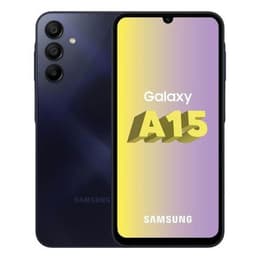
Galaxy A15
Galaxy A15
Starting at

Refurbished price:£88.00

Versus £169.00 new

See options
Galaxy S23+
Galaxy S23+
Starting at

Refurbished price:£257.00

Versus £1,199.99 new

See options

Ratings

The Samsung Galaxy A15, released in December 2023, and the Samsung Galaxy S23 Plus, launched in February 2023, represent different segments of Samsung's smartphone offerings. While both run on the Android operating system with Samsung's One UI, the S23 Plus is positioned as a higher-tier device with advanced features, whereas the A15 focuses on delivering essential smartphone capabilities. Key differentiators lie in their processing power, camera systems, and overall build quality.

Scores

Durability

The practical lifespan of a smartphone is significantly influenced by its release timeline, software support, and physical durability.

  • Release Timeline & Software Support: The Galaxy A15, released in late 2023, benefits from Samsung's commitment to providing four major Android OS upgrades and five years of security updates, extending its software longevity until approximately 2029. The Galaxy S23 Plus, launched earlier in 2023, also receives four Android OS updates and five years of security patches, meaning its support will likely conclude around 2027.
  • Physical Durability: The Galaxy A15 features a plastic back and frame with a glass front, offering a sturdy feel but without an official IP rating for water and dust resistance. In contrast, the Galaxy S23 Plus boasts a more robust construction with an aluminum frame and Gorilla Glass Victus 2 on both the front and back, along with an IP68 rating for significant dust and water resistance.
  • Repairability: While specific repairability scores can vary, devices with more premium builds like the S23 Plus often involve more complex repairs due to integrated components, whereas the A15's construction might allow for simpler component replacement in some cases.

Year of Release

2023

2023

Compatible with latest Update

Yes

Yes

OS

Android

Android

Foldable

No

No

Performance

Performance is a critical aspect, influencing how smoothly a device handles daily tasks and demanding applications.

  • Processor Capabilities: The Galaxy A15 is equipped with a processor designed for efficient everyday use, capably handling common applications, web browsing, and light gaming. The Galaxy S23 Plus, on the other hand, integrates a high-performance processor optimized for demanding tasks, ensuring exceptionally smooth operation, rapid app loading, and fluid multitasking, even with graphically intensive games.
  • Multitasking & Storage: The A15 typically comes with 4GB, 6GB, or 8GB of RAM, which is sufficient for moderate multitasking, though some users report occasional slowdowns with numerous apps open. It offers storage options up to 256GB and includes a microSD card slot for expansion. The S23 Plus features 8GB of RAM as standard, providing ample capacity for seamless app switching and heavy usage, alongside faster UFS 4.0 storage in 256GB or 512GB configurations, though it lacks a microSD slot.
  • Battery Behavior: Both devices offer strong battery performance. The Galaxy A15, with its 5000mAh battery, is noted for easily lasting a full day, often extending into a second day for many users. The Galaxy S23 Plus, with a 4700mAh battery and an efficient processor, is also praised for its impressive endurance, frequently providing two days of use on a single charge for typical usage patterns.

Memory (GB)

4 GB

8 GB

Screen quality

The display is a primary interface for user interaction, and both devices offer distinct viewing experiences.

  • Display Technology & Resolution: Both the Galaxy A15 and S23 Plus feature vibrant AMOLED displays, known for deep blacks and rich colors. The A15 has a 6.5-inch Super AMOLED panel with Full HD+ resolution (2340 x 1080 pixels), providing clear visuals for everyday content. The S23 Plus sports a slightly larger 6.6-inch Dynamic AMOLED 2X display, also with Full HD+ resolution (2340 x 1080 pixels), which delivers crisp images and enhanced color accuracy.
  • Brightness & Refresh Rate: The A15 offers a 90Hz refresh rate for smoother scrolling and a peak brightness of 800 nits, making it suitable for indoor and moderate outdoor use. The S23 Plus elevates the experience with an adaptive 120Hz refresh rate, providing exceptionally fluid motion, and an impressive peak brightness of 1750 nits, ensuring excellent visibility even in bright sunlight.
  • Viewing Experience: The A15's display is generally well-regarded for its clarity and color reproduction within its segment. The S23 Plus offers a more premium viewing experience with its higher brightness and adaptive refresh rate, making it particularly well-suited for media consumption and gaming.

Resolution

1080 x 2340

1080 x 2340

Screen type

Super AMOLED

Dynamic AMOLED 2X

Audiovisual

Camera capabilities vary significantly between these two Samsung smartphones, catering to different photography needs.

  • Rear Camera System: The Galaxy A15 features a triple-camera setup with a 50MP main sensor, a 5MP ultrawide lens, and a 2MP macro camera. It performs well in bright lighting conditions, capturing decent photos, but may struggle with moving subjects or in low-light environments. The Galaxy S23 Plus offers a more versatile triple-camera system, including a 50MP main sensor with optical image stabilization (OIS), a 12MP ultrawide lens, and a 10MP telephoto lens with 3x optical zoom and OIS. This setup delivers excellent detail, improved low-light performance, and greater flexibility for various shooting scenarios.
  • Video Recording & Front Camera: The A15 records video at 1080p at 30 frames per second (fps) and has a 13MP front-facing camera. The S23 Plus supports video recording up to 8K at 30fps and 4K at 60fps, with enhanced stabilization, and features a 12MP front camera that captures detailed selfies and supports Super HDR video.
  • Audio Experience: The A15 typically features a single speaker and a 3.5mm headphone jack. The S23 Plus provides a more immersive audio experience with stereo speakers and generally higher quality microphones for recording, but it omits the traditional headphone jack.

Main camera

50 megapixels

50 megapixels

Front camera

13 megapixels

12 megapixels

Miscellaneous

Beyond core features, several practical elements contribute to the overall user experience of these devices.

  • Connectivity & Ports: Both phones support 5G connectivity (for the A15 5G variant) and NFC for mobile payments. The Galaxy A15 includes a 3.5mm headphone jack and uses a USB-C port for charging and data transfer. The Galaxy S23 Plus features more advanced Wi-Fi 6E and Bluetooth 5.3 standards, and also uses a USB-C port, but it does not include a headphone jack.
  • Biometrics & Design: The A15 typically uses a side-mounted fingerprint sensor. Its design is functional, with a plastic build. The S23 Plus incorporates an in-display fingerprint sensor for seamless unlocking and features a more refined design with an aluminum frame and glass back, contributing to a premium feel.
  • Dimensions & Handling: The Galaxy A15 measures 160.1 x 76.8 x 8.4 mm and weighs 200g, offering a comfortable grip for its size. The Galaxy S23 Plus is slightly more compact at 157.8 x 76.2 x 7.6 mm and weighs 196g, making it manageable for one-handed use despite its large screen.

Weight

200 g

196 g

Screen size (in)

6.5

6.6

Mobile network

4G

5G

SIM card

Dual Physical SIM

Dual Physical SIM + eSIM

Carrier compatibility

Unlocked

Unlocked

The Samsung Galaxy A15 and Galaxy S23 Plus cater to distinct user needs, each excelling in different areas. User feedback for the Galaxy A15 often highlights its strong battery life and vibrant AMOLED display as significant advantages for its segment. Many users find it perfectly adequate for essential communication, social media, and media consumption, appreciating its software update commitment. However, some criticisms point to its performance, noting occasional lag with heavy multitasking or demanding applications. The camera, while decent in good lighting, is not considered a strong suit for advanced photography.

Conversely, the Galaxy S23 Plus receives widespread praise for its exceptional performance, capable of handling any task with ease, and its impressive, often two-day, battery life. Its premium display, advanced camera system with optical zoom and stabilization, and robust build quality are frequently lauded. Common observations suggest it offers a flagship experience without the larger form factor of the Ultra model. Some users might note the absence of a headphone jack or expandable storage as minor drawbacks, but these are typical for high-end devices.

Users prioritizing extended software support, excellent battery life, and a clear AMOLED display for everyday tasks and light usage may find the Galaxy A15 well-suited to their requirements. It serves as a reliable device for communication and content consumption without demanding intensive performance. For those who require a powerful device for demanding applications, advanced photography, and a premium, highly responsive user experience, the Galaxy S23 Plus is a strong contender. It offers a more refined design and superior performance for a seamless smartphone experience. Both models are available as quality-assured refurbished options, providing an eco-friendly alternative for consumers.


See all articles

Our recent comparisons