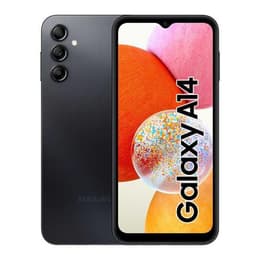

Galaxy A14 5G Vs Google Pixel 8 Pro

Galaxy A14 5G
Galaxy A14 5G
Starting at

Refurbished price:£80.00

Versus £289.00 new

See options
Google Pixel 8 Pro
Google Pixel 8 Pro
Starting at

Refurbished price:£253.00

Versus £960.91 new

See options

Ratings

The Samsung Galaxy A14 5G, released in January 2023, and the Google Pixel 8 Pro, launched in October 2023, are both Android smartphones designed for different user needs. While the Galaxy A14 5G focuses on delivering essential smartphone functionalities, the Pixel 8 Pro offers a more advanced experience with a strong emphasis on camera capabilities and software integration. Both devices operate on the Android platform, but they differ significantly in their hardware and software support commitments.

Scores

Durability

When considering the long-term usability of these devices, their release timelines and software support policies are key differentiators.

  • Software Longevity: The Google Pixel 8 Pro stands out with an exceptional commitment to software support, promising seven years of Android OS upgrades, security updates, and Feature Drops, extending its support well into 2030. This ensures a prolonged period of access to the latest features and security enhancements. In contrast, the Samsung Galaxy A14 5G was launched with Android 13 and is expected to receive two major OS upgrades (up to Android 15) and four years of security updates, with security patches continuing until 2027.
  • Repairability: The Samsung Galaxy A14 5G generally offers a more straightforward repair experience, with a repairability score of 8 out of 10. Its design includes features like adhesive pull tabs for the battery, making battery replacement relatively easier. The Google Pixel 8 Pro, while designed with some repairability in mind, has a lower repairability score, often cited around 4 out of 10, primarily due to the complexity of accessing internal components like the battery, which requires disassembling several parts and dealing with strong adhesives.
  • Practical Lifespan: The Pixel 8 Pro's extended software support and robust build contribute to a longer practical lifespan for users who prioritize up-to-date software and security. The Galaxy A14 5G, while offering decent support for its category, will see its software updates conclude sooner.

Year of Release

2023

2023

Compatible with latest Update

Yes

Yes

Foldable

No

No

Performance

The performance of a smartphone is crucial for daily tasks, and these two devices offer distinct experiences based on their internal hardware.

  • Processing Power: The Google Pixel 8 Pro is equipped with a current-generation processor designed for demanding applications, advanced AI features, and smooth multitasking. Users can expect seamless navigation, rapid app loading, and efficient handling of graphically intensive games and complex computations. The Samsung Galaxy A14 5G, powered by a processor suitable for its segment, handles everyday tasks like browsing, social media, and light gaming competently. Some users have reported occasional slowdowns or overheating during more intensive use or when running many applications simultaneously.
  • Multitasking and Storage: The Pixel 8 Pro typically comes with 12GB of RAM, facilitating robust multitasking and keeping numerous applications open in the background without significant performance degradation. It offers various storage options up to 1TB. The Galaxy A14 5G is available with 4GB or 6GB of RAM, which is sufficient for general use but may lead to more frequent app reloads when switching between many applications. It offers 64GB or 128GB of internal storage, with the added benefit of expandable storage via a microSD card.
  • Battery Behavior: Both devices feature large battery capacities. The Pixel 8 Pro has a 5050 mAh battery, with user experiences varying from good to mixed, some noting faster drainage and slower charging compared to other high-end devices. The Galaxy A14 5G includes a 5000 mAh battery, and many users praise its excellent battery life, often lasting a full day or more on a single charge.

Memory (GB)

4 GB

12 GB

Screen quality

The display is a primary interface for smartphone interaction, and there are notable differences in the screen technology and viewing experience offered by these two models.

  • Display Technology and Resolution: The Google Pixel 8 Pro features a 6.7-inch LTPO OLED display, referred to as a "Super Actua" display, which provides deep blacks, vibrant colors, and excellent contrast. It boasts a high resolution of 1244 x 2992 pixels, resulting in sharp and detailed visuals. The Samsung Galaxy A14 5G uses a 6.6-inch PLS LCD panel with a resolution of 1080 x 2408 pixels (FHD+). While offering clear visuals for everyday use, it does not match the contrast or color depth of an OLED screen.
  • Brightness and Refresh Rate: The Pixel 8 Pro's display is exceptionally bright, reaching up to 1600 nits for HDR content and a peak brightness of 2400 nits, making it highly visible even in direct sunlight. It also features an adaptive refresh rate that can scale from 1Hz to 120Hz, providing smooth scrolling and animations while conserving battery life. The Galaxy A14 5G offers a 90Hz refresh rate, which provides a smoother experience than standard 60Hz displays, but it lacks the adaptive capabilities and peak brightness levels of the Pixel 8 Pro, which might affect outdoor visibility.
  • Viewing Experience: Users prioritizing a premium visual experience with superior color accuracy, contrast, and brightness for media consumption and outdoor use will find the Pixel 8 Pro's display more suitable. The Galaxy A14 5G provides a functional and clear display for general tasks.

Resolution

1080 x 2408

1344 x 2992

Screen type

PLS LCD

LTPO OLED

Audiovisual

The camera systems on these smartphones cater to different levels of photography and videography needs.

  • Rear Camera System: The Google Pixel 8 Pro features a versatile triple-camera setup, including a 50MP main sensor, a 48MP ultrawide lens, and a 48MP telephoto lens with 5x optical zoom and up to 30x Super Res Zoom. This configuration allows for high-quality photos across various scenarios, including excellent low-light performance and detailed zoomed-in shots. The Samsung Galaxy A14 5G comes with a triple-camera system comprising a 50MP main sensor, a 2MP macro lens, and a 2MP depth sensor. Its primary camera is capable of capturing good everyday photos, but the auxiliary lenses offer more limited functionality compared to the Pixel 8 Pro's advanced setup.
  • Front Camera and Video: For selfies, the Pixel 8 Pro includes a 10.5MP front camera with autofocus, delivering sharp and detailed self-portraits. Its video recording capabilities are considered world-class, though some users note that stabilization could be improved in certain situations. The Galaxy A14 5G has a 13MP front camera, suitable for video calls and casual selfies. Its video recording quality is functional for general use.
  • Overall Photography Experience: Users who prioritize advanced photography features, superior image processing, and versatility in different lighting conditions will find the Pixel 8 Pro's camera system to be a significant advantage. The Galaxy A14 5G offers a capable camera for basic photography needs.

Main camera

50 megapixels

50 megapixels

Front camera

13 megapixels

10.5 megapixels

Miscellaneous

Beyond the core components, several practical elements contribute to the overall user experience and device utility.

  • Connectivity and Ports: Both devices support 5G connectivity for fast mobile data. The Google Pixel 8 Pro includes modern Wi-Fi and Bluetooth standards, along with a USB-C port for charging and data transfer. The Samsung Galaxy A14 5G also features 5G, Wi-Fi 802.11 a/b/g/n/ac, Bluetooth 5.2, and a USB Type-C 2.0 port. A notable inclusion on the Galaxy A14 5G is a 3.5mm headphone jack, which is absent on the Pixel 8 Pro.
  • Biometric Security and Sensors: The Pixel 8 Pro offers advanced facial recognition and an under-display fingerprint scanner for secure unlocking. The Galaxy A14 5G typically features a side-mounted fingerprint sensor for biometric authentication. Both devices include standard sensors like accelerometers and proximity sensors.
  • Design and Handling: The Pixel 8 Pro has dimensions of 162.6 x 76.5 x 8.8mm and weighs 213g, featuring a refined design with premium build materials. The Galaxy A14 5G measures 167.7 x 78 x 9.1mm and weighs around 202-204g, offering a sturdy build with a plastic back panel. The Pixel 8 Pro's design is often praised for its aesthetics and feel, while the Galaxy A14 5G provides a practical and durable form factor.

Weight

201 g

213 g

Screen size (in)

6.6

6.7

Mobile network

5G

5G

SIM card

Dual Physical SIM

Physical SIM + eSIM

Carrier compatibility

Unlocked

Unlocked

User feedback for the Google Pixel 8 Pro frequently highlights its exceptional camera quality, smooth software experience, and the long-term commitment to software updates as major strengths. However, some users have expressed mixed opinions regarding battery life, with reports of it draining quickly for heavy users and slower charging speeds. Overheating during intensive tasks or charging has also been mentioned. The Samsung Galaxy A14 5G is often praised for its impressive battery life and its capable main camera for everyday photos. Criticisms sometimes point to occasional performance slowdowns, buggy behavior, and less vibrant screen quality compared to higher-end devices.

Users prioritizing a cutting-edge camera system, a premium display, and the longest possible software support will find the Google Pixel 8 Pro well-suited to their needs. Its advanced AI features and clean Android experience cater to those who value software innovation. Conversely, individuals seeking a device with excellent battery endurance, a reliable main camera for general use, and expandable storage will likely find the Samsung Galaxy A14 5G to be a practical choice. It serves users who need essential smartphone functions without the most advanced features.

For those looking to make an informed and sustainable choice, considering quality-assured refurbished options for either model can provide an eco-friendly alternative to purchasing new.


See all articles

Our recent comparisons